
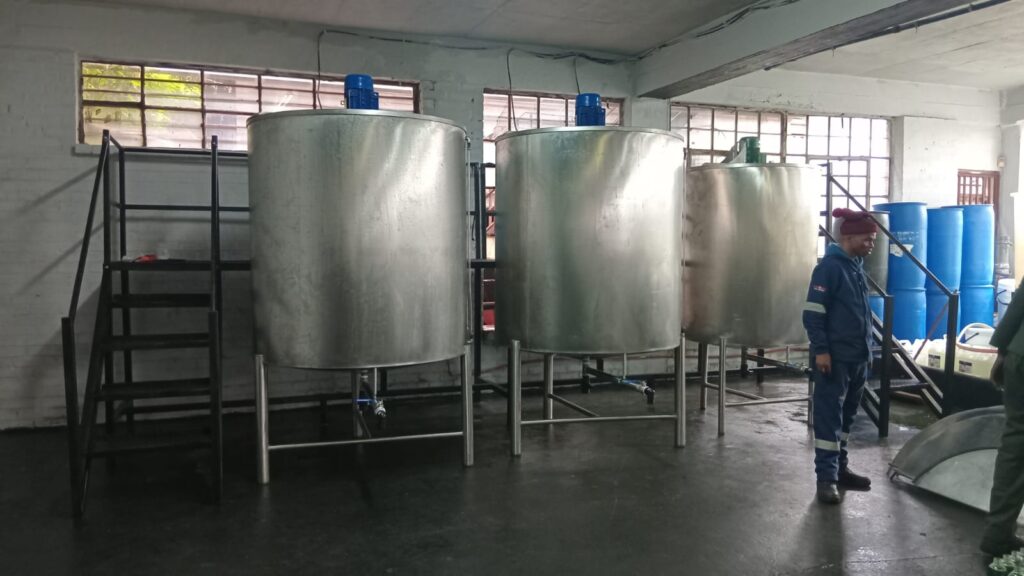
If you’re setting up a chemical, detergent or cleaning-products operation, one of the first decisions is the mixing tank itself: do you buy plastic (polyethylene) or stainless steel? Plastic looks like the cheap, easy answer, and for some jobs it genuinely is. For others it becomes an expensive mistake within a year.
This guide compares the two honestly, including the cases where plastic is the better choice, so you can pick the right tank for what you actually mix.
Plastic vs Stainless Steel at a Glance
| Factor | Plastic (polyethylene) | Stainless steel |
|---|---|---|
| Upfront cost | Lower | Higher |
| Heating / jacketing | Not suitable for heated batches | Can be jacketed for heating and cooling |
| Agitator and homogenizer | Limited; the tank wall can flex under load | Rigid; supports heavy agitators and high-shear mixers |
| Hygiene and cleaning | Surface scratches and can hold residue | Smooth, easy to clean and sanitise |
| Strong acids and bleach | Often the better material | Can corrode, depending on grade |
| Working life | Shorter under heat, sunlight and heavy use | Many years with basic care |
| Repair and modification | Hard to repair or add fittings later | Easy to weld and modify |
When a Plastic Tank Makes Sense
Plastic earns its place in a few situations. If you are mixing or storing a cold product at low volume, the lower price is hard to argue with. Some aggressive chemicals, such as strong hydrochloric acid or sodium hypochlorite (bleach), attack stainless steel, so a chemically resistant plastic tank is usually the safer vessel for those.
- Cold blending of simple liquids with a small, light paddle.
- Storage of chemicals that are incompatible with steel.
- Short-term or start-up use while you prove a product before investing further.
Where Stainless Steel Wins
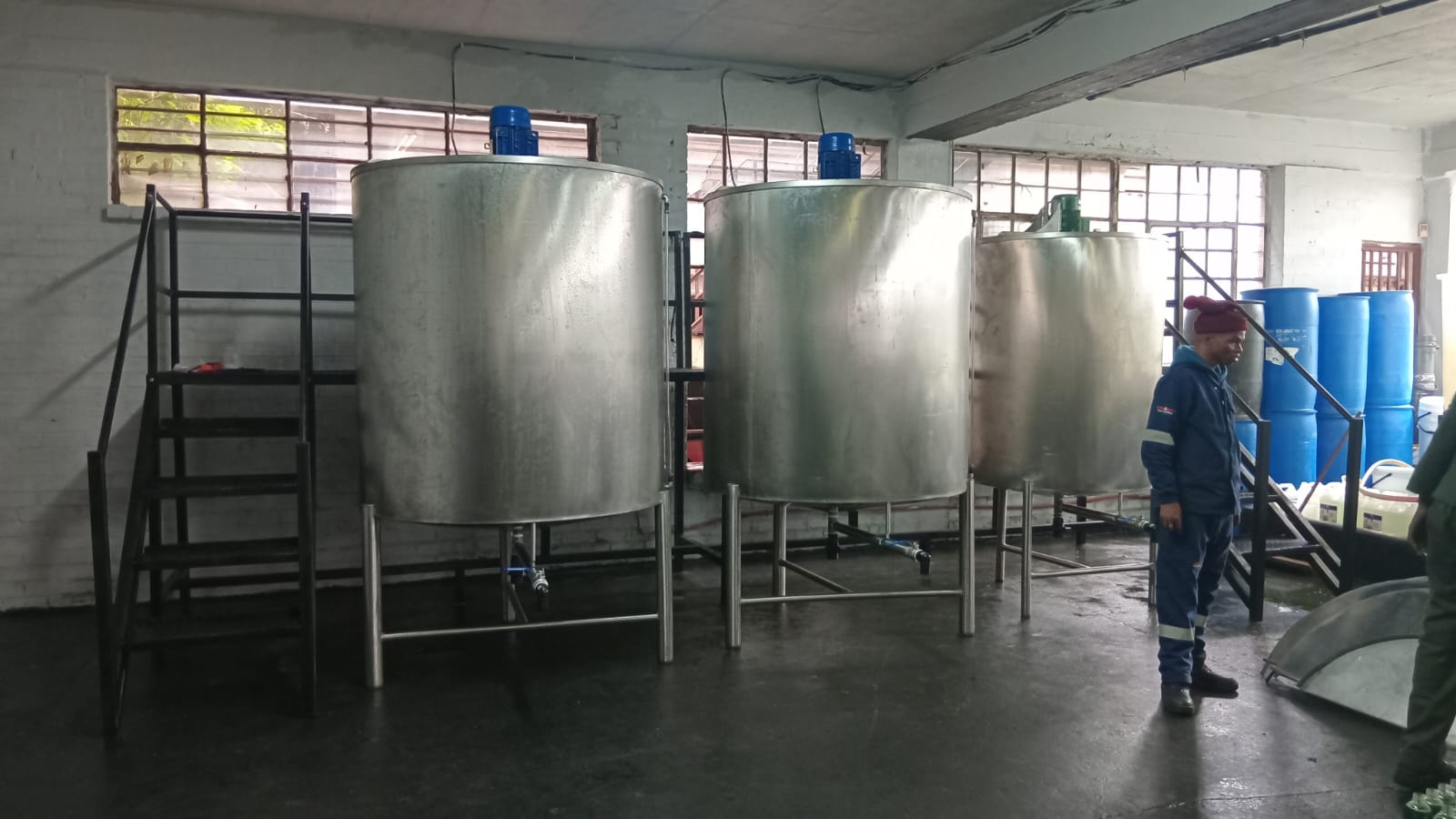
Once a business grows past simple cold blending, stainless steel usually pays for itself. The tank is rigid, so it carries a heavy agitator without flexing, and it can be fitted with a heating jacket, a bottom outlet valve, level fittings and a motor mount built to your process.
- Heat: many products, including creams, waxes and some detergents, blend properly only at a controlled temperature. A jacketed stainless tank heats and cools evenly; plastic cannot.
- Mixing power: thick or emulsified products need strong agitation or a high-shear homogenizer, which needs a rigid vessel.
- Hygiene: a smooth steel surface is easy to clean and sanitise between batches, which matters for skin care, food and anything customers use on their bodies.
- Longevity: a stainless tank can be repaired, re-fitted and re-used for years, while plastic tanks tend to crack, discolour and stain with age.
304 vs 316 Stainless: Which Grade?
Not all stainless steel is the same. Grade 304 is the common choice for most food, detergent and general chemical work. Grade 316 contains molybdenum, which gives better resistance to salts and chlorides, so it is the safer pick if your product is salty, mildly acidic or used in harsher cleaning conditions. If you are unsure, tell us what you are mixing and we will recommend the grade.

Cost Over Time, Not Just the Price Tag
A plastic tank wins on the day you buy it. Stainless often wins over the following years, because you are not replacing a cracked or stained vessel, not losing batches to poor mixing, and not working around a tank that cannot be heated. If you expect your volumes to grow, factor that into the decision. Our mixing tank price guide explains what drives the cost of a stainless tank.
How to Choose: A Quick Checklist
- Does the product need heat? If yes, choose a jacketed stainless tank.
- Is it thick, emulsified or must it be perfectly smooth? Choose stainless with a suitable agitator or homogenizer.
- Is it a skin, food or cosmetic product? Choose stainless for hygiene.
- Is it a strong acid or bleach, mixed cold? A chemically resistant plastic tank is usually right.
- Will volumes grow? Size for next year, not today.
Not sure which mixer to pair with your tank? Our guide to industrial mixers walks through the options.
Frequently Asked Questions
Q: Can I heat a plastic mixing tank?
Generally no. Polyethylene softens under heat and cannot take a heating jacket or direct heating. If your process needs controlled temperature, you need a jacketed stainless steel tank.
Q: Is stainless steel safe for all chemicals?
No. Stainless resists most detergents, oils and food products, but strong hydrochloric acid and bleach can corrode it, and grade 304 is more vulnerable than 316. Check compatibility for your specific chemical before you buy any tank.
Q: Does SME Machinery make plastic tanks?
We build stainless steel mixing tanks, made to order in Germiston. If your chemical needs plastic, we will tell you so rather than sell you the wrong tank.
Q: Can a stainless tank be fitted with a mixer later?
Yes. Stainless tanks are rigid and easy to modify, so you can add an agitator, a homogenizer, a jacket or extra fittings as your process grows.
Conclusion
Plastic is fine for cold, simple jobs and for chemicals that attack steel. For anything that needs heat, strong mixing, hygiene or a long working life, stainless steel is the safer investment. The right answer depends on what you mix, so start with your product and work backwards.
Need a mixing tank built for your product?
SME Machinery builds stainless steel mixing tanks, jacketed tanks and mixer combinations in Germiston. Tell us what you are mixing and your batch size and we will recommend the right setup.
+27 (73) 646-5211 · smemachinery2@gmail.com · 8 Moller Street, Germiston South, Factory C2