
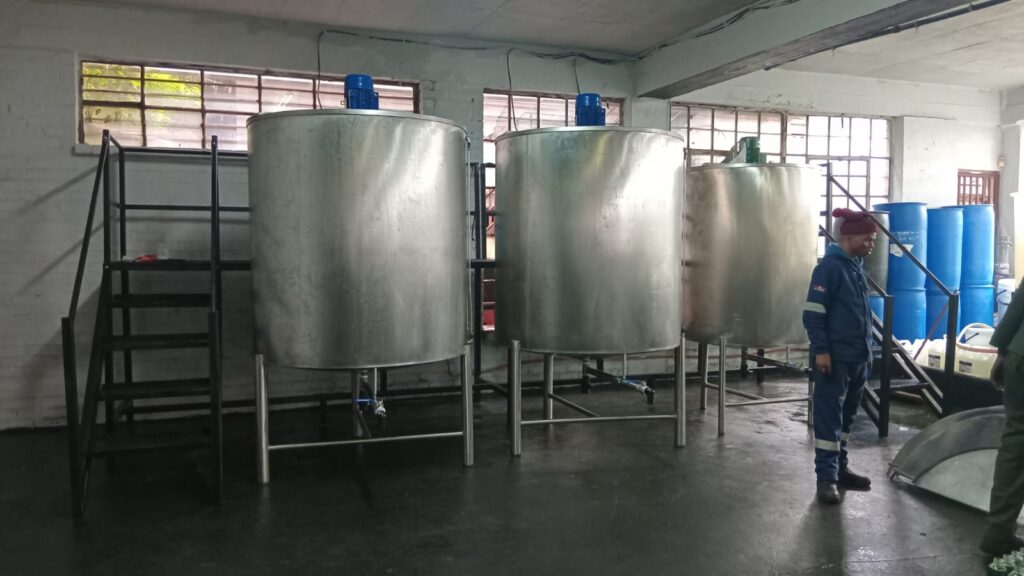
Industrial mixing tanks are widely used across multiple industries, including food processing, cosmetics, chemicals, and pharmaceuticals. These tanks play a critical role in blending, heating, and processing raw materials into finished products.
Understanding the industrial mixing tank price in South Africa helps businesses choose the right equipment based on production needs, budget, and scalability.
What is an Industrial Mixing Tank?
An industrial mixing tank is a stainless steel vessel designed to mix, blend, or process liquids and semi-solid materials. These tanks are commonly equipped with agitators, mixers, or homogenizers to ensure uniform consistency.
They are used to produce:
- Liquid detergents
- Creams and lotions
- Shampoo and cosmetics
- Food products and beverages
- Chemical solutions
Average Industrial Mixing Tank Prices in South Africa
Prices vary depending on size, features, and level of automation. Below is a general pricing guide:
Small Mixing Tanks (50L – 100L)
- Price range: approximately R25,000 – R45,000
- Suitable for: startups, small businesses, laboratories
Medium Mixing Tanks (200L – 500L)
- Price range: approximately R50,000 – R90,000
- Suitable for: growing businesses and medium-scale production
Large Industrial Tanks (1000L and above)
- Price range: approximately R80,000 – R150,000+
- Suitable for: factories and large-scale manufacturing
Advanced Mixing Systems (Heated or Homogenizer Tanks)
- Price range: R120,000 – R500,000+
- Suitable for: cosmetics, pharmaceuticals, and high-end production
Factors That Affect Mixing Tank Prices
Capacity (Size)
Larger tanks require more materials and engineering, making them more expensive.
Material Type
- SS304: Standard stainless steel
- SS316: Higher corrosion resistance and more costly
Heating and Cooling Systems
Jacketed tanks with heating or cooling features increase the overall price.
Mixing Technology
- Basic agitators are more affordable
- Homogenizers and high-shear mixers increase cost
Automation Level
Manual systems are cheaper, while fully automated systems are more expensive.
Types of Industrial Mixing Tanks
Stainless Steel Mixing Tank
Used for general mixing in food, cosmetics, and chemicals.
Jacketed Mixing Tank
Includes heating or cooling for temperature-sensitive products.
Homogenizer Mixing Tank
Used for producing smooth and stable emulsions like creams and lotions.
Agitator Mixing Tank
Basic mixing solution for liquids and low-viscosity products.
Industries That Use Mixing Tanks
Industrial mixing tanks are essential in:
- Food and beverage manufacturing
- Cosmetic and skincare production
- Chemical processing
- Pharmaceutical manufacturing
These industries rely on efficient mixing systems to maintain product quality and consistency.
What You Can Produce
With an industrial mixing tank, businesses can manufacture:
- Liquid soaps and detergents
- Skincare products and lotions
- Hair care products
- Juices and beverages
- Industrial chemicals
This versatility makes mixing tanks a valuable investment.
How to Choose the Right Mixing Tank
For Startups
- Choose smaller tanks (100L – 300L)
- Lower investment with flexible production
For Growing Businesses
- Medium tanks (300L – 1000L)
- Increased efficiency and output
For Industrial Production
- Large tanks (1000L+) with heating and automation
- Suitable for high-volume manufacturing
Benefits of Investing in an Industrial Mixing Tank
Improved Product Consistency
Ensures uniform mixing across all batches.
Increased Efficiency
Reduces production time and manual effort.
Hygienic Production
Stainless steel design meets industry standards.
Scalability
Supports business growth and expansion.
Why Invest in South Africa?
South Africa offers strong opportunities for manufacturing due to:
- Growing demand for consumer goods
- Expanding food and cosmetic industries
- Access to local and regional markets
Investing in industrial equipment allows businesses to capitalize on these opportunities.
Conclusion
The industrial mixing tank price in South Africa depends on capacity, features, and automation level. Small units are affordable for startups, while large, advanced systems require a higher investment but offer greater efficiency and scalability.
Choosing the right mixing tank ensures consistent product quality, improved production efficiency, and long-term business growth.
FAQ Section (SEO Optimized)
What is the price of an industrial mixing tank in South Africa?
Prices range from around R25,000 for small tanks to over R150,000 for large industrial systems.
What is the best mixing tank for cosmetics?
A homogenizer mixing tank is ideal for producing creams and lotions.
Can I start with a small mixing tank?
Yes, small tanks are suitable for startups and product testing.
What materials are used for mixing tanks?
Most tanks are made from stainless steel such as SS304 or SS316.