
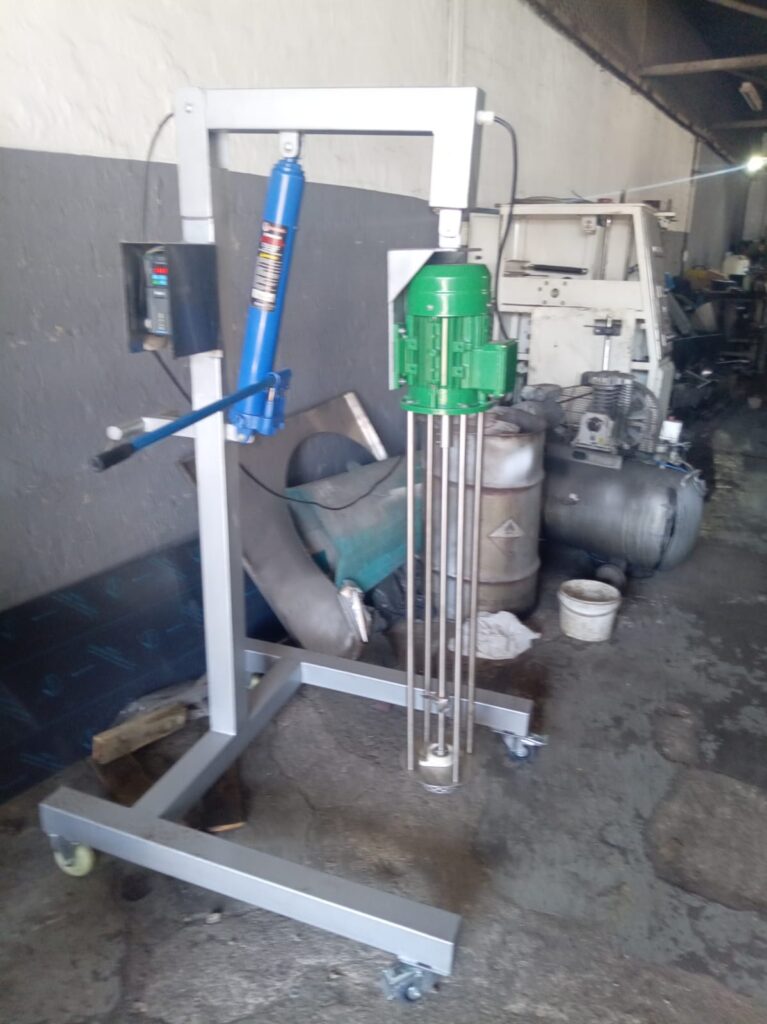
If you’ve ever wondered how a face cream stays smooth for a year on the shelf, or how a sauce stays perfectly blended without separating, the answer is usually the same machine: a Silverson-type high-shear homogenizer mixer. It’s one of the most versatile pieces of equipment a South African manufacturer can own, used everywhere from food production to skincare to industrial oil processing.
This guide explains what a homogenizer mixer actually does, how the mixing action works, and how to tell if your business needs one.
What Is a Silverson-Type Homogenizer Mixer?
A homogenizer mixer is a high-shear mixing head mounted on a mobile stand, designed to be lowered into a tank, drum or vat of product. Unlike a paddle or ribbon mixer, which folds ingredients together gently, a homogenizer works through intense mechanical shear — it’s built specifically to break down particles, disperse powders evenly, and emulsify liquids that wouldn’t normally mix, like oil and water.
How High-Shear Mixing Works
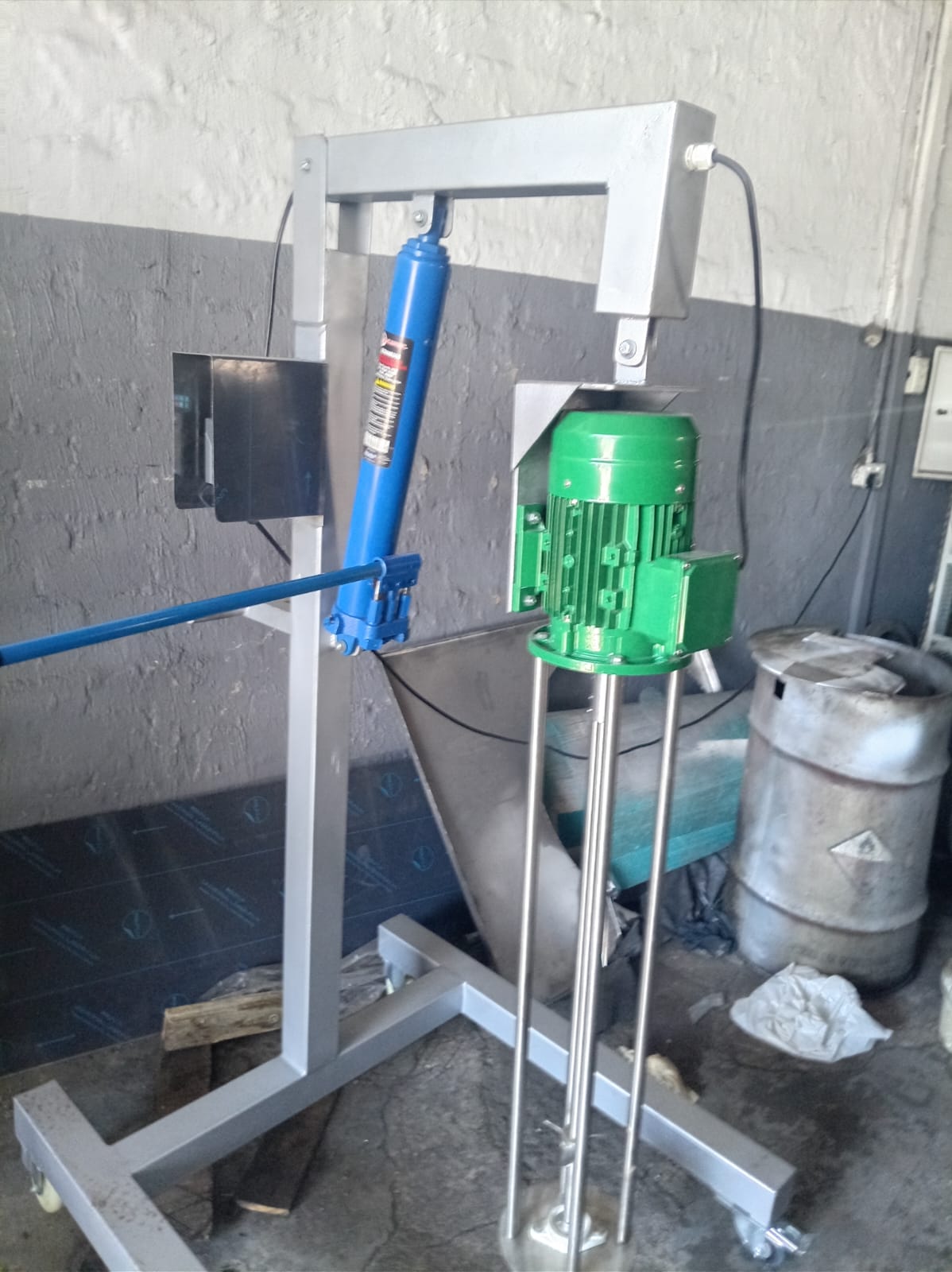
The mixing head sits at the bottom of the shaft, made up of a rotor spinning at high speed inside a closely fitted stationary stator. As the rotor turns, it draws product in from the top and bottom, forces it through the narrow gap between rotor and stator at very high velocity, then expels it back out sideways into the tank. This cycle repeats continuously, pulling the entire batch through the head again and again until the product reaches a uniform, stable consistency.
The intense shear generated in that narrow gap is what sets a homogenizer apart from a basic mixer — it’s strong enough to break solid particles down to a fine, even size, fully disperse powders into liquid without clumping, and emulsify oil and water into a stable mixture that won’t separate again once it settles.
Industries That Use Homogenizer Mixers
Homogenizer mixers earn their place across a wide range of production lines because the same core action — emulsifying, dispersing, breaking down particles — shows up in very different products:
- Food & beverage: sauces, dressings, dairy blends and beverages that need a smooth, stable texture with no separation.
- Skin care, haircare & cosmetics: creams, lotions and shampoos that rely on a properly emulsified oil-and-water base.
- Oil processing: blending and emulsifying oils that would otherwise separate on standing.
- Pharmaceutical-adjacent and chemical manufacturing: suspensions and dispersions that need consistent particle size batch to batch.
If your product needs to look and feel the same in every batch — no lumps, no separation, no inconsistent texture — a homogenizer is almost always the machine doing that work behind the scenes.
Homogenizer Mixer in Action
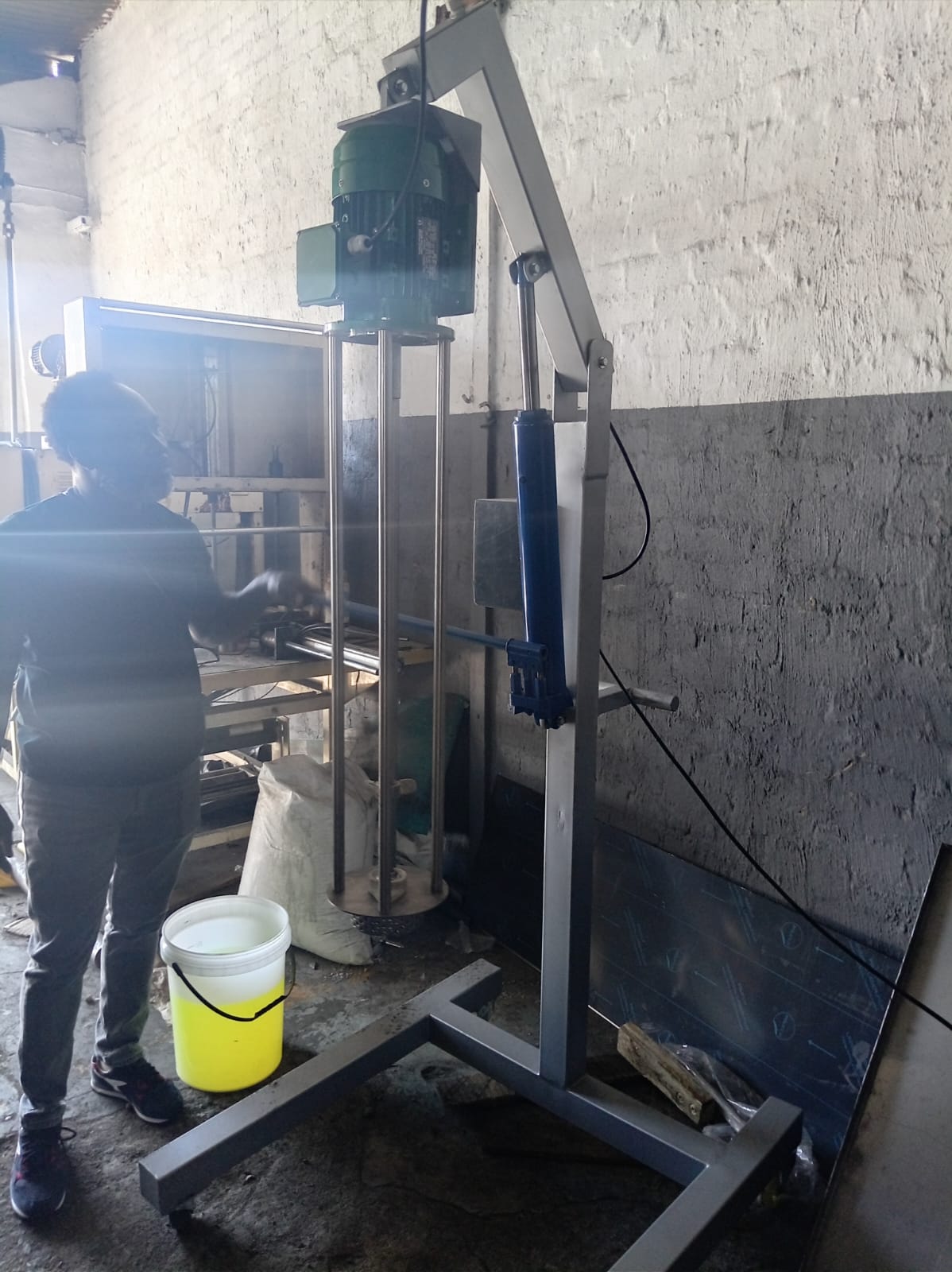
In practice, the mixer head is lowered into the tank on its mobile, height-adjustable stand, positioned so the rotor-stator sits fully submerged in the product, and run until the batch reaches the required consistency. Batch time depends on volume and how difficult the product is to emulsify — a thin liquid blend can finish in minutes, while a thick, high-viscosity cream may need a longer run to fully disperse.
Choosing the Right Homogenizer Mixer for Your Business
- Batch size: size the mixer’s motor and head to your typical batch volume, with some headroom for growth.
- Viscosity: thicker products need a more powerful motor to maintain shear speed under load.
- Heating requirement: if your formulation needs to be held at temperature to emulsify properly, pair the homogenizer with a jacketed tank.
- Mobility: a stand-mounted unit like this one can move between multiple tanks, which suits facilities running several product lines.
Keeping Your Homogenizer Mixer Running
The rotor-stator head takes the most wear since it’s doing all the mechanical work, so it should be inspected regularly for gap wear and cleaned thoroughly between different products to avoid cross-contamination. The motor, shaft seals and mobile stand’s lift mechanism should also be checked on a routine schedule, especially on machines running multiple batches a day.
Frequently Asked Questions
Q: What’s the difference between a homogenizer and a regular mixer?
A regular paddle or ribbon mixer folds ingredients together gently, while a homogenizer forces product through a narrow rotor-stator gap at high speed, generating far more shear. That extra shear is what allows it to emulsify liquids and break down particles that a standard mixer can’t.
Q: Can a homogenizer mixer handle thick products like creams?
Yes — homogenizers are specifically built for viscous emulsions like creams and lotions, provided the motor is sized for that viscosity. Very thick products are often paired with a jacketed tank so the formulation stays at the right temperature during mixing.
Q: Do I need a homogenizer if I already have a paddle mixer?
It depends on your product. If everything you make is a dry or semi-wet blend, a paddle mixer may be all you need. But if any product needs emulsifying, fine particle dispersion, or a perfectly smooth, stable texture, a homogenizer fills a gap a paddle mixer can’t.
Q: How long does a typical homogenizing batch take?
It varies by product and volume — thin liquids can reach full consistency in just a few minutes, while thicker, harder-to-emulsify products may need a longer run to fully disperse and stabilise.
Conclusion
A Silverson-type homogenizer mixer is the machine behind the smooth, stable texture in everything from sauces to skincare to industrial oil blends. If your product needs proper emulsification, even particle dispersion, or a consistency that holds up batch after batch, it’s almost certainly the right equipment for the job.
Need a homogenizer mixer for your production line?
SME Machinery builds Silverson-type high-shear homogenizer mixers in Germiston, sized to your product and batch volume. Tell us what you’re making and we’ll help you spec the right setup.