
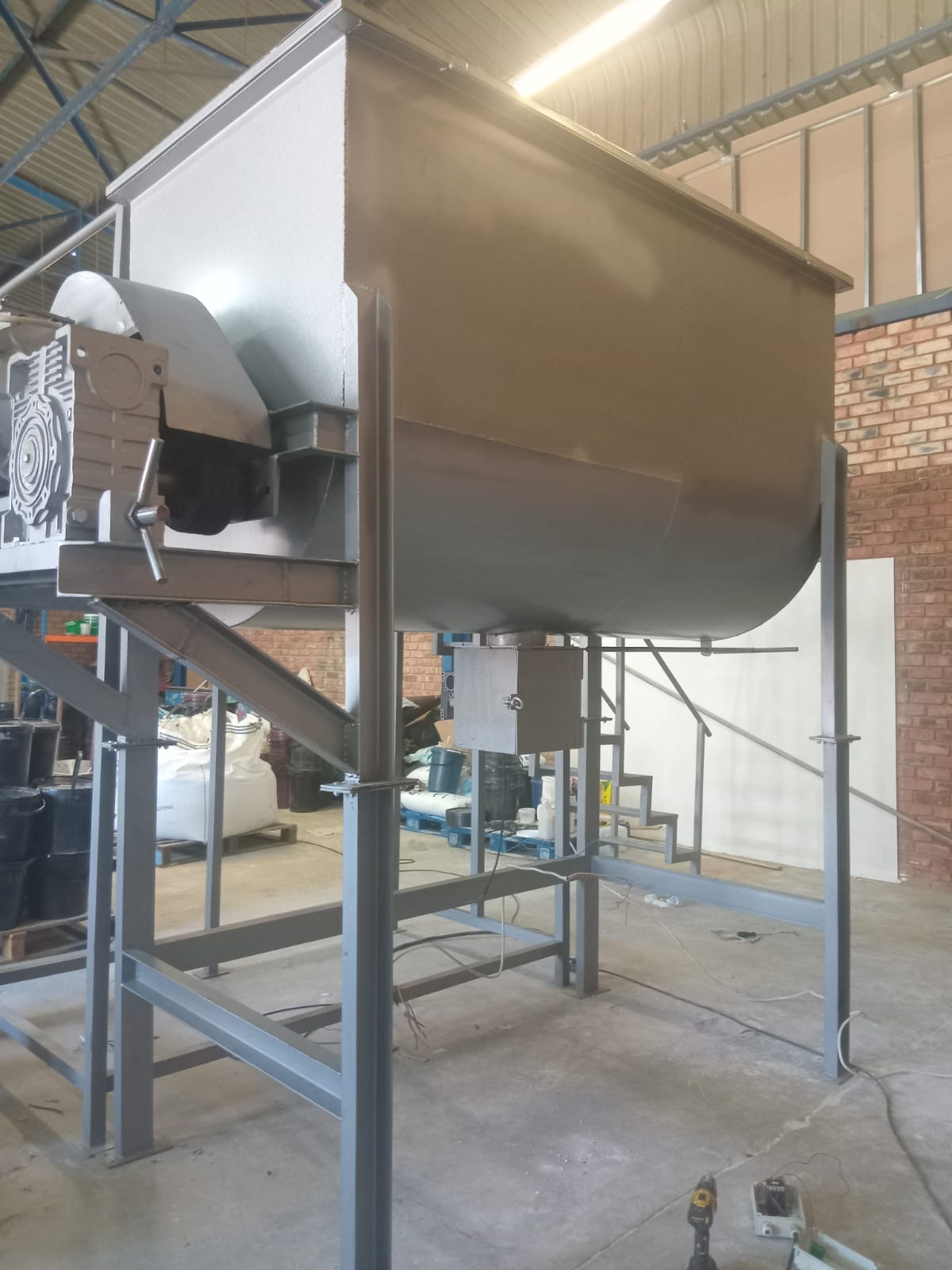
If you are searching for a reliable ribbon blender manufacturer, you need more than just a machine supplier. You need a production partner that understands mixing technology, material behavior, motor engineering, and industrial durability. This comprehensive guide explains: What Does a Ribbon Blender Manufacturer Do? A professional ribbon blender manufacturer designs, fabricates, and tests industrial mixing machines used for blending powders, granules, and low-viscosity materials. A quality manufacturer provides: Types of Ribbon Blenders Manufactured 1️⃣ U-Trough Horizontal Ribbon Blender Most common industrial model featuring: Used for powders, chemicals, detergents, and food mixing. 2️⃣ Jacketed Ribbon Blender Includes heating or cooling jacket for: 3️⃣ Vacuum Ribbon Blender Designed for: Ribbon Blender Technical Specifications A professional ribbon blender manufacturer typically offers: Specification Range Capacity 100 kg – 5000 kg Volume 200L – 10,000L Motor Power 2.2 kW – 55 kW Material Mild Steel / SS304 / SS316 Mixing Time 5 – 20 minutes Discharge Pneumatic / Manual / Screw Motor Sizes & Batch Capacities Motor power depends on density and resistance. Batch Size Motor Size 100 kg 2.2 – 3 kW 500 kg 7.5 – 11 kW 1000 kg 15 – 22 kW 2000 kg 30 – 37 kW 5000 kg 45 – 55 kW A reliable ribbon blender manufacturer calculates motor torque based on: Industries Served A professional ribbon blender manufacturer supplies to: Customization Options Leading manufacturers provide: How to Choose the Right Ribbon Blender Manufacturer 1️⃣ Check Engineering Capability Ask for: 2️⃣ Verify Fabrication Quality Look for: 3️⃣ Confirm After-Sales Support 4️⃣ Evaluate Experience A manufacturer with multiple industry projects is more reliable than a reseller. Ribbon Blender Price Factors Prices vary depending on: Typical price ranges: (Exact prices depend on region and specifications.) Why Work with a Professional Ribbon Blender Manufacturer? ✔ Better mixing uniformity✔ Higher production efficiency✔ Reduced energy consumption✔ Long service life✔ Proper torque calculation✔ Safer operation
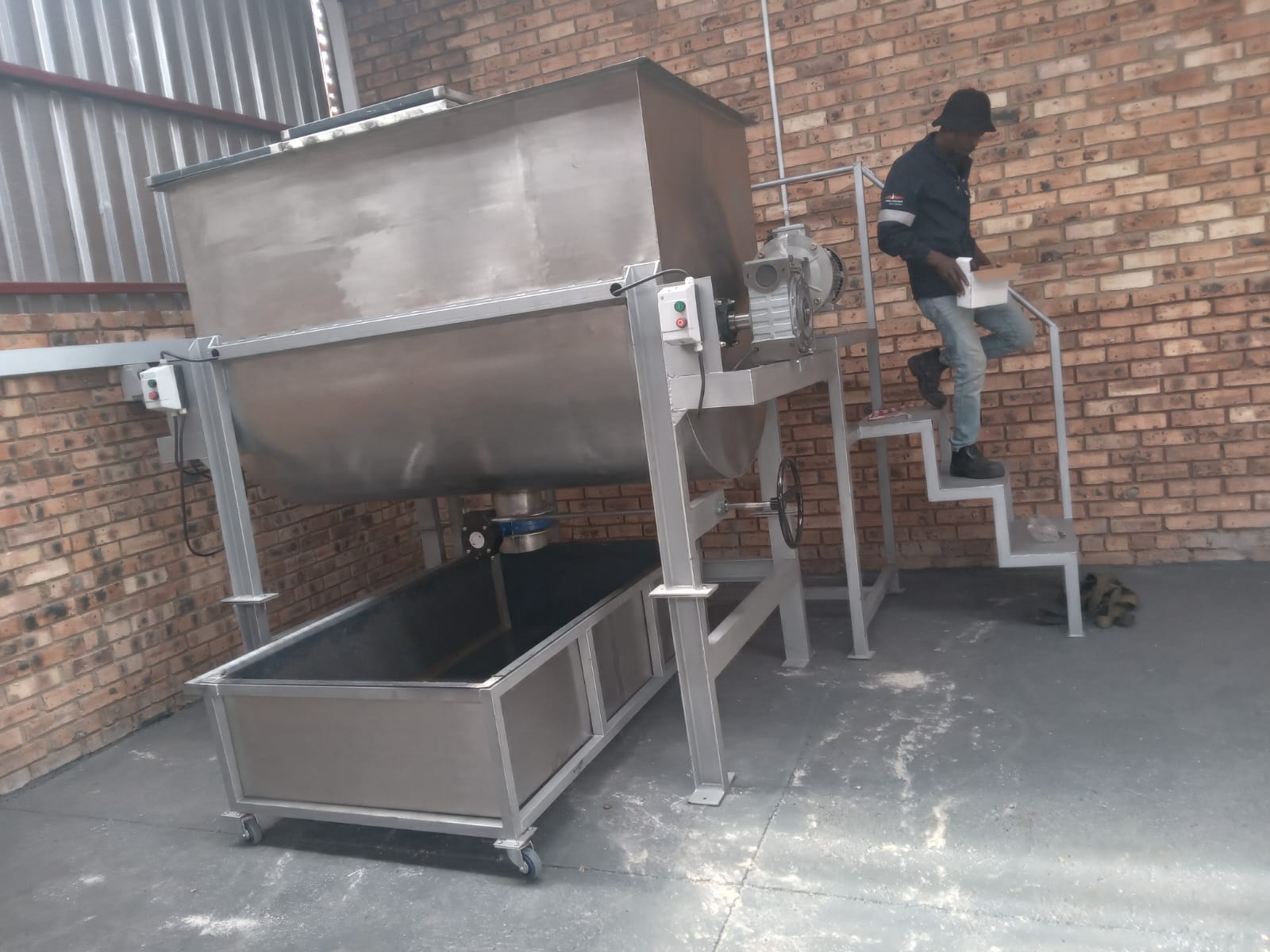
How to Calculate the Capacity of a Ribbon Blender (Complete Technical Guide)
If you are planning to purchase or manufacture a ribbon blender, one of the most critical technical calculations is capacity. Incorrect capacity estimation leads to underperformance, poor mixing uniformity, motor overload, or inefficient production cycles. This guide explains: What Is Ribbon Blender Capacity? Ribbon blender capacity refers to: ⚠️ Important: A ribbon blender is typically filled only 40%–70% of its total volume for optimal mixing efficiency. Step 1: Calculate Total Volume of the Ribbon Blender Most ribbon blenders have a U-shaped trough. For industrial calculations, we approximate the tank as: Basic Volume Formula (Simplified) If the tank is approximated as a full cylinder:V=π×(D2÷4)×LV = π × (D² ÷ 4) × LV=π×(D2÷4)×L Where: If U-shaped, use:V=(π×R2÷2)×L+(Rectangular volume)V = (π × R² ÷ 2) × L + (Rectangular\ volume)V=(π×R2÷2)×L+(Rectangular volume) For practical factory estimation, manufacturers often provide geometric volume based on CAD measurements. Step 2: Calculate Working Capacity Ribbon blenders do NOT operate at 100% volume. Standard Fill Level: Working Volume=Total Volume×Fill PercentageWorking\ Volume = Total\ Volume × Fill\ PercentageWorking Volume=Total Volume×Fill Percentage Example:If total volume = 2 m³Working Volume=2×0.6=1.2m3Working\ Volume = 2 × 0.6 = 1.2 m³Working Volume=2×0.6=1.2m3 Step 3: Convert Volume to Batch Capacity (kg) This is where bulk density becomes critical.Batch Capacity(kg)=Working Volume(m3)×Bulk Density(kg/m3)Batch\ Capacity (kg) = Working\ Volume (m³) × Bulk\ Density (kg/m³)Batch Capacity(kg)=Working Volume(m3)×Bulk Density(kg/m3) Understanding Bulk Density Different materials have different densities: Material Approx Bulk Density (kg/m³) Washing powder 300–600 Flour 500–600 Cement 1200–1500 Chemical powders 400–900 Spices 250–500 Example Calculation (1000 kg Ribbon Blender) Assume: Step 1: WorkingVolume=1.8×0.6=1.08m3Working Volume = 1.8 × 0.6 = 1.08 m³WorkingVolume=1.8×0.6=1.08m3 Step 2: BatchCapacity=1.08×900=972kgBatch Capacity = 1.08 × 900 = 972 kgBatchCapacity=1.08×900=972kg ≈ 1000 kg ribbon blender Example: 2000 kg Ribbon Blender If bulk density = 1000 kg/m³ Required working volume:2000÷1000=2m32000 ÷ 1000 = 2 m³2000÷1000=2m3 If fill level = 60%TotalVolume=2÷0.6=3.33m3Total Volume = 2 ÷ 0.6 = 3.33 m³TotalVolume=2÷0.6=3.33m3 So, the ribbon blender should have approximately 3.3–3.5 m³ total volume. Motor Size Calculation (General Industrial Guideline) Motor size depends on: Typical motor sizes: Capacity Motor Power 100 kg 2.2 – 3 kW 500 kg 7.5 – 11 kW 1000 kg 15 – 22 kW 2000 kg 30 – 45 kW ⚠️ Higher density materials require larger motors. Formula Summary 1️⃣ Total Volume V=π×(D2÷4)×LV = π × (D² ÷ 4) × LV=π×(D2÷4)×L 2️⃣ Working Volume Working Volume=Total Volume×0.5 to 0.7Working\ Volume = Total\ Volume × 0.5\ to\ 0.7Working Volume=Total Volume×0.5 to 0.7 3️⃣ Batch Capacity (kg) Capacity=Working Volume×Bulk DensityCapacity = Working\ Volume × Bulk\ DensityCapacity=Working Volume×Bulk Density Why Correct Capacity Calculation Matters ✔ Prevents motor overload✔ Ensures proper mixing uniformity✔ Improves production efficiency✔ Reduces power consumption✔ Extends machine lifespan Common Mistakes When Calculating Ribbon Blender Capacity ❌ Using total volume instead of working volume❌ Ignoring bulk density❌ Overfilling above 70%❌ Under-sizing motor❌ Not considering future production scale
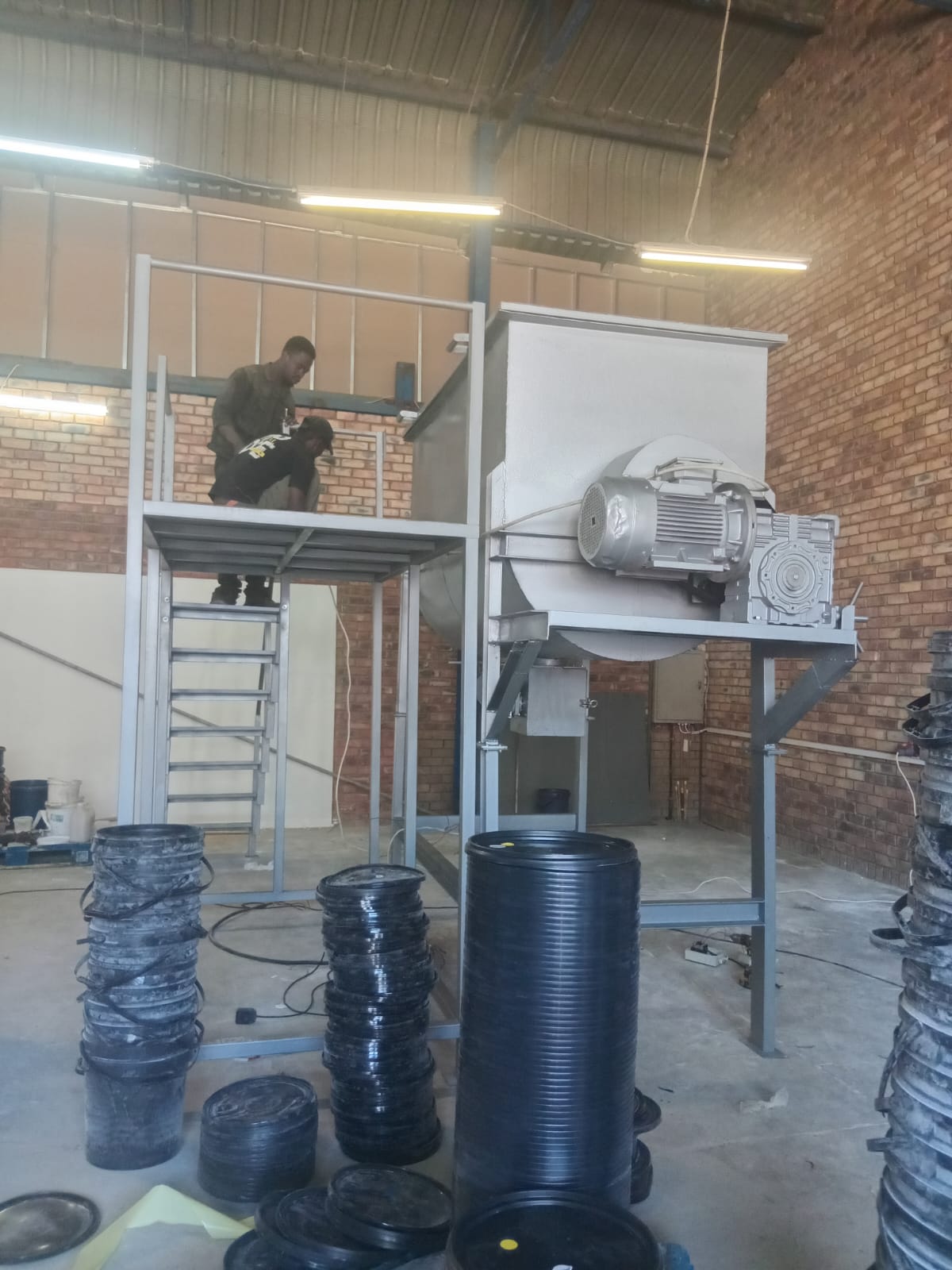
2000 kg Ribbon Blender Price – Buying Guide & Cost Factors
Investing in a 2000 kg ribbon blender is a key decision for manufacturers who need to mix powders and light pastes at industrial scale. One of the most common questions before purchase is: 👉 “How much does a 2000 kg ribbon blender cost?” This guide breaks down the typical price ranges, what influences cost, and how to decide which model maximizes value for your business. 📊 Typical Price Ranges for 2000 kg Ribbon Blenders Prices can vary widely depending on materials, automation level, features, and factory customization. 💰 Indicative 2000 kg Ribbon Blender Price Ranges Model Configuration Approximate Price Range Basic Mild Steel (MS) Standard Stainless Steel (SS304) High-Grade Stainless (SS316) Jacketed / Heated Model Fully Automatic With PLC Note: Prices are approximate and may vary by supplier, region, and currency fluctuations. Local taxes and shipping are not included. 🛠 Factors That Affect the Price Several key factors influence how much a 2000 kg ribbon blender will cost: 1. Material of Construction 2. Motor and Drive System 3. Automation & Controls 4. Jacketed or Non-Jacketed 5. Discharge Valve Type 6. Optional Add-Ons Each optional feature adds to both capability and cost. 🧴 Why Higher-Tier Models Cost More Stainless Steel & Hygiene Requirements Food, cosmetic, and pharmaceutical use require stainless steel — which significantly increases fabrication cost compared to mild steel. Automation & Control Systems Adding PLC control panels, sensors, and automation improves usability and precision but increases complexity and price. Heated & Jacketed Options For products that require blending at specific temperatures, heated or jacketed units include additional piping, insulation, and pressure controls — raising the price. 📌 Typical Costs Breakdown Base Industrial Unit Food-Grade Unit Chemical/Pharma-Grade Unit Fully Automated Line 🧭 How to Get the Best Value When budgeting for a 2000 kg ribbon blender, consider: 1. Required Material GradeIs this for food, chemical, or general industrial use? 2. Automation LevelDo you need simple operation or advanced control with PLC? 3. Optional Add-OnsWill liquid dosing, dust control, or heated mixing improve ROI? 4. After-Sales SupportLocal service, spare parts, and warranty help reduce long-term cost. 🛠 Pros & Cons of Investing in a 2000 kg Ribbon Blender Pros Cons 📊 Is a 2000 kg Ribbon Blender Worth the Investment? For operations that produce bulk powder blends, feed mixes, detergent powders, spice premixes, or large-volume products, a 2000 kg ribbon blender is often worth the upfront cost due to: ✔ Improved production throughput✔ Consistent and uniform blending✔ Lower labour costs over time✔ Scalability for future growth The key is choosing the configuration that matches your specific needs rather than opting for the highest price tag. 🧠 Frequently Asked Questions Q: What size motor does a typical 2000 kg ribbon blender use?A: Generally 15–20 HP (higher for viscous product mixes). Q: Can a 2000 kg ribbon blender handle liquids?A: Yes, light liquids and spray systems can be integrated, but this type is best suited for dry powders and light pastes. Q: Is SS316 necessary for all industries?A: Only when corrosion resistance is critical (e.g., chemicals, pharma). SS304 is usually sufficient for food and general industrial use. 🚀 Conclusion Understanding 2000 kg ribbon blender price helps you balance budget, capability, and long-term value. By assessing material grade, automation, optional features, and service support, you can choose a mixer that boosts productivity, consistency, and profitability — without paying for features you won’t use.
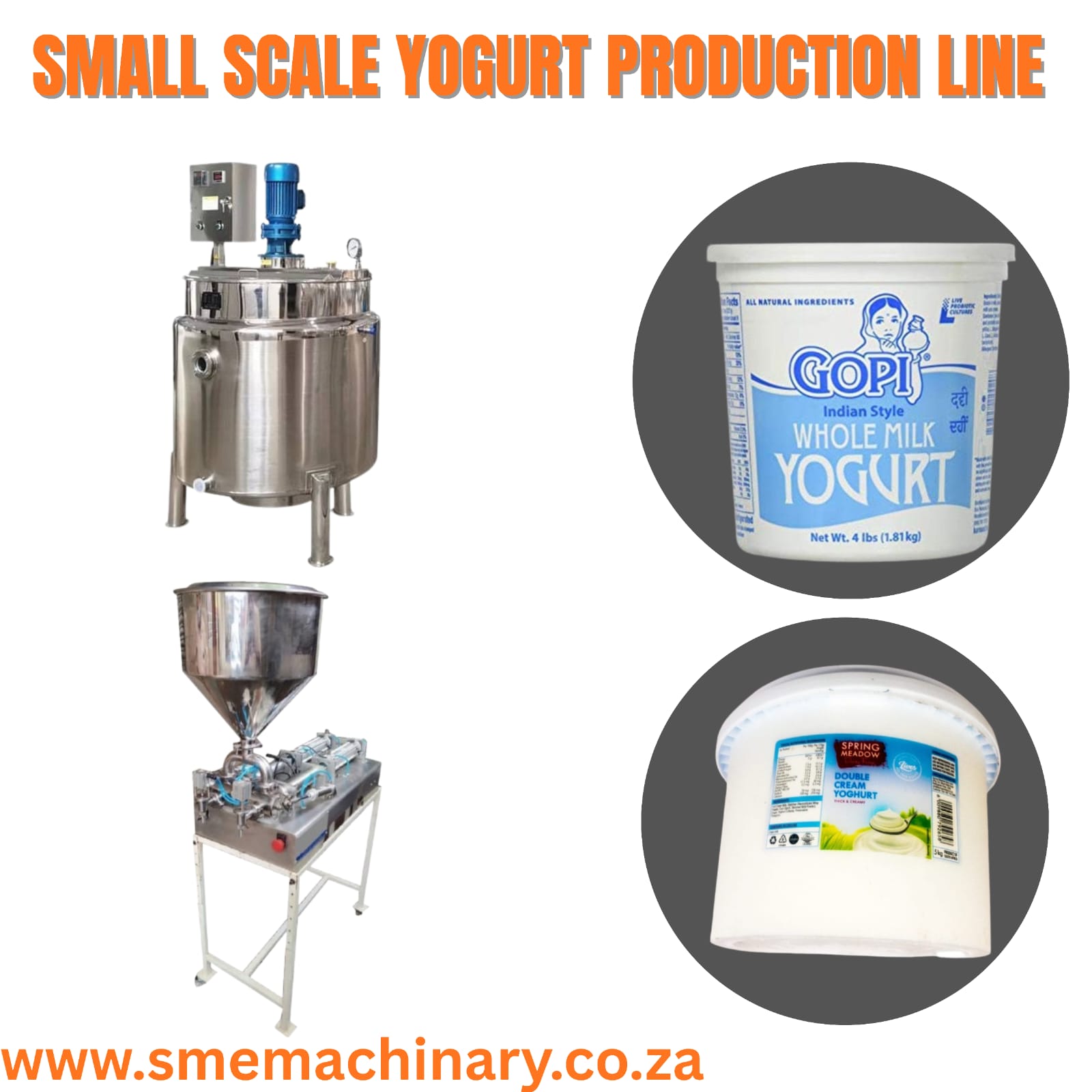
Yogurt Making / Manufacturing Machine
Complete Industrial Yogurt Production Equipment for Commercial Dairy Processing If you are searching for a yogurt making machine or yogurt manufacturing machine, you need reliable equipment that ensures consistent fermentation, precise temperature control, hygienic processing, and scalable production capacity. Whether you are a small dairy startup or a large commercial producer, a complete yogurt manufacturing system helps you produce: This page explains everything you need to know before buying a yogurt production machine. What Is a Yogurt Manufacturing Machine? A yogurt manufacturing machine is a complete processing system designed to handle: The system ensures safe dairy processing and consistent product texture. Main Components of a Yogurt Production Line 1. Milk Pasteurization Tank 2. Homogenizer 3. Fermentation Tank 4. Cooling System 5. Mixing & Flavor Blending Unit 6. Filling & Packaging Machine Key Features of a Yogurt Making Machine ✔ Food-grade stainless steel (SS304 / SS316)✔ Temperature-controlled jacketed tanks✔ Automated fermentation control✔ PLC control panel option✔ CIP (Clean-In-Place) system✔ Energy-efficient heating✔ Hygienic design compliant with dairy standards✔ Scalable production capacity Available Capacities Capacity Production Output 100 L Small dairy startup 200 L Local distribution 300 L Medium dairy plant 500 L Commercial production 1000 L Large-scale operation 2000 L+ Industrial production line Custom-built yogurt production lines are available based on daily output requirements. Types of Yogurt Production Machines Small Yogurt Making Machine Semi-Automatic Yogurt Production Line Fully Automatic Yogurt Manufacturing Plant Applications Benefits of Investing in a Yogurt Manufacturing Machine Consistent Product Quality Precise fermentation control ensures stable taste and texture. Increased Production Capacity Scale from small batch production to large commercial output. Food Safety Compliance Meets hygienic dairy processing standards. Reduced Labor Costs Automation reduces manual processing errors. Faster Return on Investment Growing demand for yogurt makes this machine highly profitable. Yogurt Manufacturing Machine Price Guide The price depends on: For accurate pricing, specify: Why Buy a Professional Yogurt Manufacturing Machine? If you are serious about entering or expanding in the dairy industry, professional equipment ensures: Yogurt is one of the fastest-growing dairy products globally, making this investment strategically valuable.
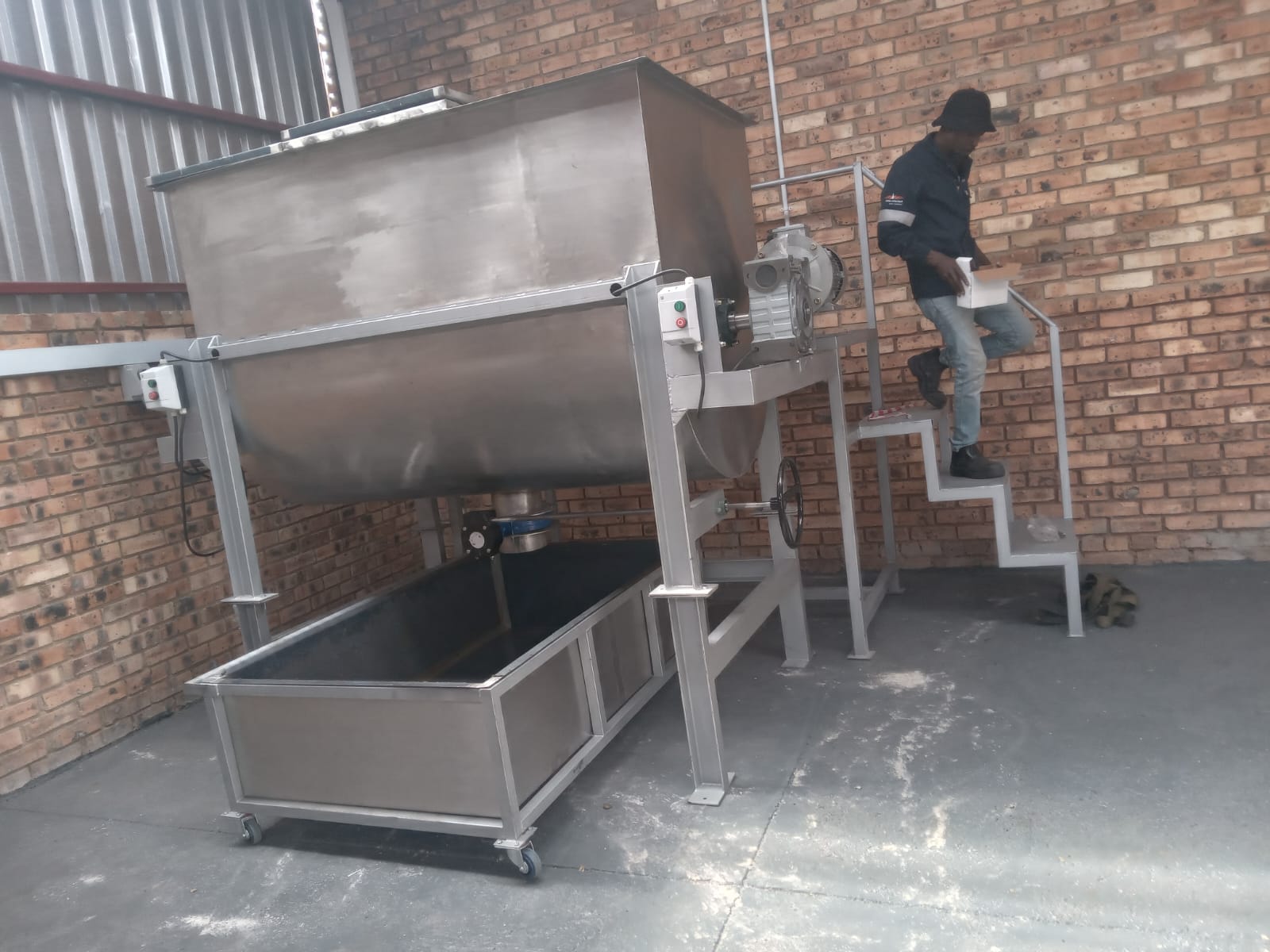
2000 kg Ribbon Blender – Pros & Cons
A 2000 kg ribbon blender (2 ton capacity) is a large industrial mixing machine widely used for bulk powder, granule, and light paste mixing across food, feed, detergent, cosmetic, and chemical industries. Understanding its strengths and limitations helps manufacturers make informed buying decisions. ✅ Pros of a 2000 kg Ribbon Blender 1. High Production Capacity A 2000 kg ribbon blender is ideal for medium-to-large manufacturing facilities. It can mix up to 2,000 kg of material per cycle, reducing the number of batches and improving production throughput. 2. Uniform Mixing Quality The dual-ribbon agitator ensures consistent three-dimensional mixing: This makes it excellent for products requiring consistent formulation and texture across every batch. 3. Versatile Material Handling 2000 kg ribbon blenders can mix a wide range of products: ✔ Powders and granules✔ Feed blends and premixes✔ Detergent powders✔ Chemical compounds✔ Food ingredients✔ Cosmetic powders Optional liquid spray systems let you introduce oils, flavors, or binders for light paste formulations. 4. Heavy-Duty Industrial Design These mixers are built to handle: With robust motors, gearboxes, and thick ribbons, they are engineered for durability and reliability. 5. Reduced Labour & Energy Automation and efficient mixing action reduce manual labour and energy consumption: This cuts labour costs and improves production consistency. 6. Easy Discharge With a bottom discharge valve (slide, butterfly or pneumatic), 2000 kg ribbon blenders allow: Efficient discharge reduces downtime between batches. ⚠️ Cons of a 2000 kg Ribbon Blender 1. Large Physical Footprint Because of its capacity and industrial design, a 2000 kg ribbon blender requires significant floor space. 2. Higher Initial Cost Compared to smaller mixers, 2000 kg units have: This can be a barrier for startups or very small operations. 3. More Complex Maintenance Due to its size and industrial components: Proper maintenance planning becomes essential. 4. Limited to Bulk Powders & Light Pastes Ribbon blenders excel at dry and light paste mixing, but they don’t handle high-viscosity liquids or thick heavy doughs as effectively as alternative mixers (e.g., high-shear mixers or planetary mixers). 5. Potential for Dust Generation Powder mixing can generate dust, especially if feed and discharge points are not sealed. This requires: Without mitigation, airborne dust can affect workshop conditions. When a 2000 kg Ribbon Blender Is the Right Choice ✅ You produce large batches consistently✅ You blend powders or light pastes (feed, detergent, chemicals)✅ You want uniform and repeatable mixing✅ You need high throughput and reliable operation✅ Your facility has adequate space and power When It Might Not Be Ideal ❌ Your production scale is small or intermittent❌ You mix highly viscous liquids or thick pastes❌ Floor space and startup capital are limited❌ Your products require high-shear dispersion Summary – 2000 kg Ribbon Blender Pros & Cons at a Glance Pros Cons High production capacity (up to 2 ton) Requires large floor space Uniform, repeatable mixing Higher upfront cost Handles various powders & light pastes More complex maintenance Heavy-duty industrial build Limited for high-viscosity products Efficient discharge & reduced labour Possible dust issues Conclusion A 2000 kg ribbon blender is a powerful asset for manufacturers focused on high-volume powder blending with uniform results and efficient operations. Its industrial build and large capacity make it a reliable choice for serious production environments — especially where consistency and throughput matter. At the same time, it’s important to balance capacity, space, and maintenance demands with your actual production needs to ensure you choose the right equipment for your long-term success.
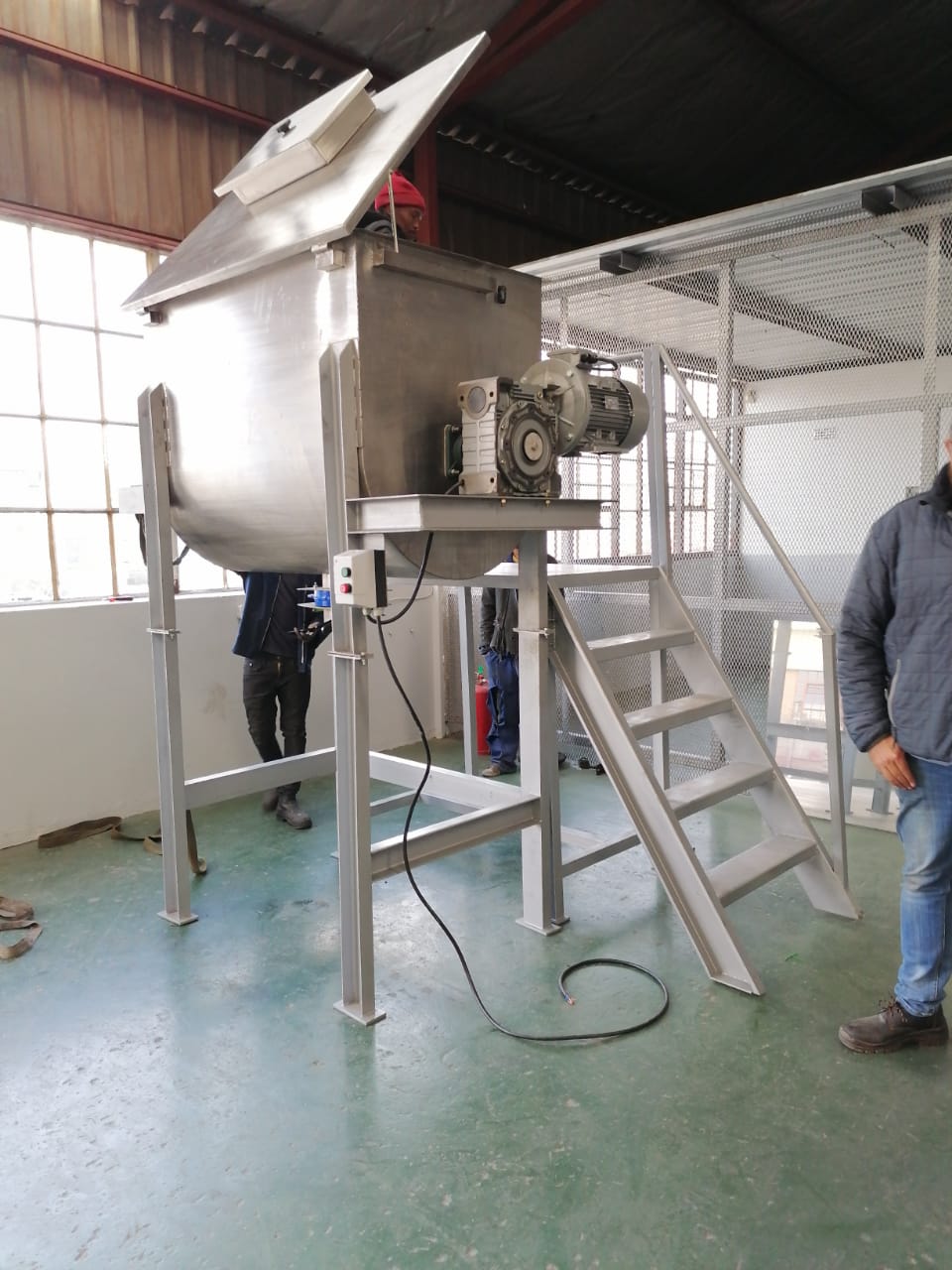
1000 kg Ribbon Blender
Heavy-Duty 1 Ton Industrial Powder Mixer for Large-Scale Production If you are searching for a 1000 kg ribbon blender, you need a machine that delivers uniform mixing, industrial durability, and high-volume output. A 1 ton ribbon blender is designed for medium to large manufacturers who require consistent batch blending of powders, granules, and light pastes. This machine is widely used in food processing, detergent production, animal feed manufacturing, pharmaceuticals, and chemical blending plants. What Is a 1000 kg Ribbon Blender? A 1000 kg ribbon blender (1 ton capacity) is a horizontal industrial mixing machine equipped with dual helical ribbons mounted on a central shaft. The inner and outer ribbons rotate in opposite flow patterns to ensure: It is ideal for dry powder mixing and can also handle light paste materials. Key Features of a 1000 kg Ribbon Blender ✔ 1 Ton Batch Capacity Designed to mix up to 1000 kg per batch, depending on product density. ✔ Strong Industrial Motor Typically equipped with a 10 HP – 20 HP motor, providing high torque performance for heavy loads. ✔ Durable Construction Available in: ✔ Efficient Discharge System ✔ Fast Mixing Time Uniform blending in approximately 10–15 minutes per batch. ✔ Optional Heating Jacket For temperature-controlled mixing when required. 1000 kg Ribbon Blender Specifications Specification Details Batch Capacity 1000 kg Total Volume Approx. 1500 – 1800 Litres Motor Power 10 – 20 HP Mixing Time 10 – 15 minutes Material MS / SS304 / SS316 Power Supply 380V – 415V, 3 Phase Discharge Type Bottom Valve Transmission Gearbox Driven Custom sizes and automation upgrades available. Applications of a 1000 kg Ribbon Blender Food Industry Detergent & Chemical Industry Animal Feed Production Pharmaceutical Industry Why Choose a 1000 kg Ribbon Blender? High Production Output Ideal for manufacturers producing multiple tons daily. Uniform Mixing Quality Dual ribbon system ensures complete homogeneity. Reduced Labor Costs Automated mixing reduces manual effort. Long Service Life Heavy-duty shaft, bearings, and gearbox ensure durability. Low Maintenance Simple mechanical design with easy cleaning access. 1000 kg Ribbon Blender Price Guide Pricing depends on: Estimated Price Range: For an exact quotation, provide: Optional Add-Ons Who Needs a 1000 kg Ribbon Blender? This machine is perfect for: ✔ Large detergent manufacturers✔ Food production plants✔ Chemical blending factories✔ Feed manufacturing companies✔ Export-scale production facilities If your production requires reliable 1 ton batch mixing with consistent quality, this ribbon blender is a strategic investment. Frequently Asked Questions How long does a 1000 kg ribbon blender take to mix? Typically 10–15 minutes depending on material density. Can it mix liquids with powders? Yes, with optional spray systems for liquid addition. Is stainless steel necessary? Food and pharmaceutical industries require stainless steel for hygiene compliance.