
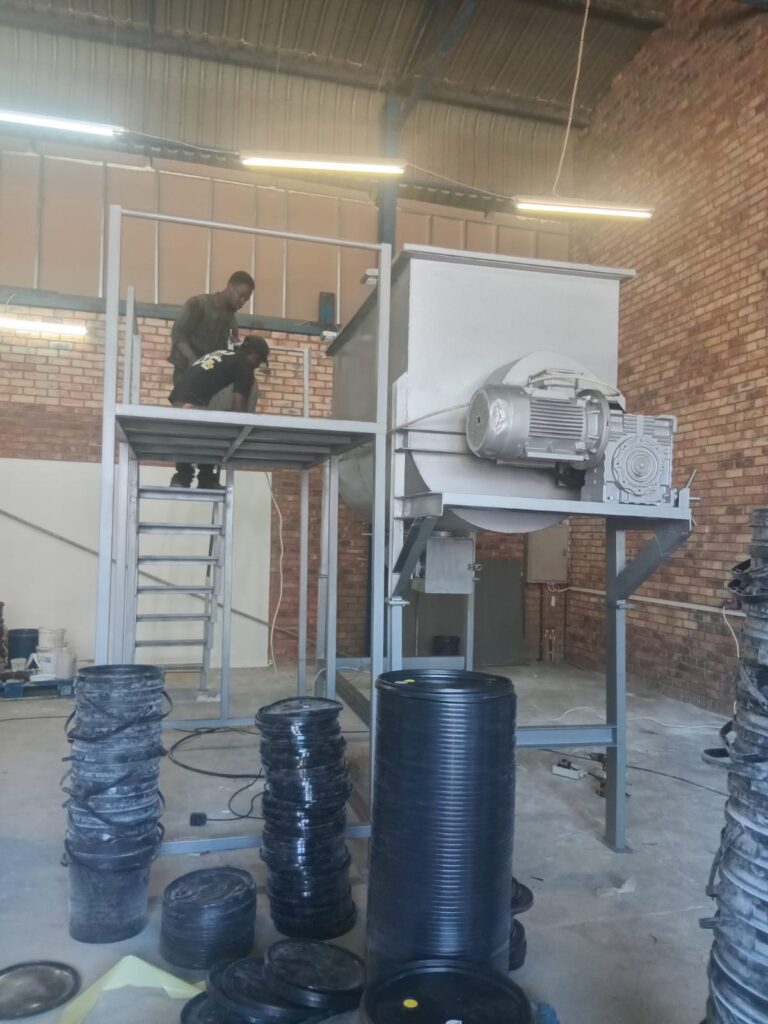
Investing in a 2000 kg ribbon blender is a key decision for manufacturers who need to mix powders and light pastes at industrial scale. One of the most common questions before purchase is:
👉 “How much does a 2000 kg ribbon blender cost?”
This guide breaks down the typical price ranges, what influences cost, and how to decide which model maximizes value for your business.
📊 Typical Price Ranges for 2000 kg Ribbon Blenders
Prices can vary widely depending on materials, automation level, features, and factory customization.
💰 Indicative 2000 kg Ribbon Blender Price Ranges
| Model Configuration | Approximate Price Range |
|---|---|
| Basic Mild Steel (MS) | |
| Standard Stainless Steel (SS304) | |
| High-Grade Stainless (SS316) | |
| Jacketed / Heated Model | |
| Fully Automatic With PLC |
Note: Prices are approximate and may vary by supplier, region, and currency fluctuations. Local taxes and shipping are not included.
🛠 Factors That Affect the Price
Several key factors influence how much a 2000 kg ribbon blender will cost:
1. Material of Construction
- Mild Steel (MS): Lower price, suitable for non-food industrial use
- Stainless Steel 304: Common food-grade choice for most industries
- Stainless Steel 316: Corrosion-resistant for chemical and pharmaceutical applications
2. Motor and Drive System
- Larger motors (15–30 HP) increase cost
- Heavy-duty gearboxes add durability and price
3. Automation & Controls
- Manual controls: lower cost
- PLC and touchscreen controls: higher price but better efficiency
4. Jacketed or Non-Jacketed
- Heated ribbon blenders with jackets (steam or thermal oil) cost more
- Standard dry mixers are lower cost
5. Discharge Valve Type
- Slide gate valve: standard
- Pneumatic butterfly valve: adds cost
6. Optional Add-Ons
- Variable Speed Drive (VFD)
- Load cell weighing system
- Dust containment system
- Liquid spray integration
Each optional feature adds to both capability and cost.
🧴 Why Higher-Tier Models Cost More
Stainless Steel & Hygiene Requirements
Food, cosmetic, and pharmaceutical use require stainless steel — which significantly increases fabrication cost compared to mild steel.
Automation & Control Systems
Adding PLC control panels, sensors, and automation improves usability and precision but increases complexity and price.
Heated & Jacketed Options
For products that require blending at specific temperatures, heated or jacketed units include additional piping, insulation, and pressure controls — raising the price.
📌 Typical Costs Breakdown
Base Industrial Unit
- 2000 kg capacity
- Standard gearbox and drive
- Basic discharge
Expected Price: Mid-range
Food-Grade Unit
- SS304 interior and ribbons
- Hygienic finishes
- Better seals
Expected Price: Higher than base
Chemical/Pharma-Grade Unit
- SS316 stainless steel
- Enhanced corrosion resistance
Expected Price: Premium
Fully Automated Line
- PLC and touchscreen
- Integrated spray and weighing
- Safety interlocks
Expected Price: Top tier
🧭 How to Get the Best Value
When budgeting for a 2000 kg ribbon blender, consider:
1. Required Material Grade
Is this for food, chemical, or general industrial use?
2. Automation Level
Do you need simple operation or advanced control with PLC?
3. Optional Add-Ons
Will liquid dosing, dust control, or heated mixing improve ROI?
4. After-Sales Support
Local service, spare parts, and warranty help reduce long-term cost.
🛠 Pros & Cons of Investing in a 2000 kg Ribbon Blender
Pros
- Large batch capacity
- Uniform mixing
- Strong build and durability
- Flexible applications
Cons
- Higher upfront cost
- Needs larger floor space
- Maintenance and parts cost
📊 Is a 2000 kg Ribbon Blender Worth the Investment?
For operations that produce bulk powder blends, feed mixes, detergent powders, spice premixes, or large-volume products, a 2000 kg ribbon blender is often worth the upfront cost due to:
✔ Improved production throughput
✔ Consistent and uniform blending
✔ Lower labour costs over time
✔ Scalability for future growth
The key is choosing the configuration that matches your specific needs rather than opting for the highest price tag.
🧠 Frequently Asked Questions
Q: What size motor does a typical 2000 kg ribbon blender use?
A: Generally 15–20 HP (higher for viscous product mixes).
Q: Can a 2000 kg ribbon blender handle liquids?
A: Yes, light liquids and spray systems can be integrated, but this type is best suited for dry powders and light pastes.
Q: Is SS316 necessary for all industries?
A: Only when corrosion resistance is critical (e.g., chemicals, pharma). SS304 is usually sufficient for food and general industrial use.
🚀 Conclusion
Understanding 2000 kg ribbon blender price helps you balance budget, capability, and long-term value. By assessing material grade, automation, optional features, and service support, you can choose a mixer that boosts productivity, consistency, and profitability — without paying for features you won’t use.