
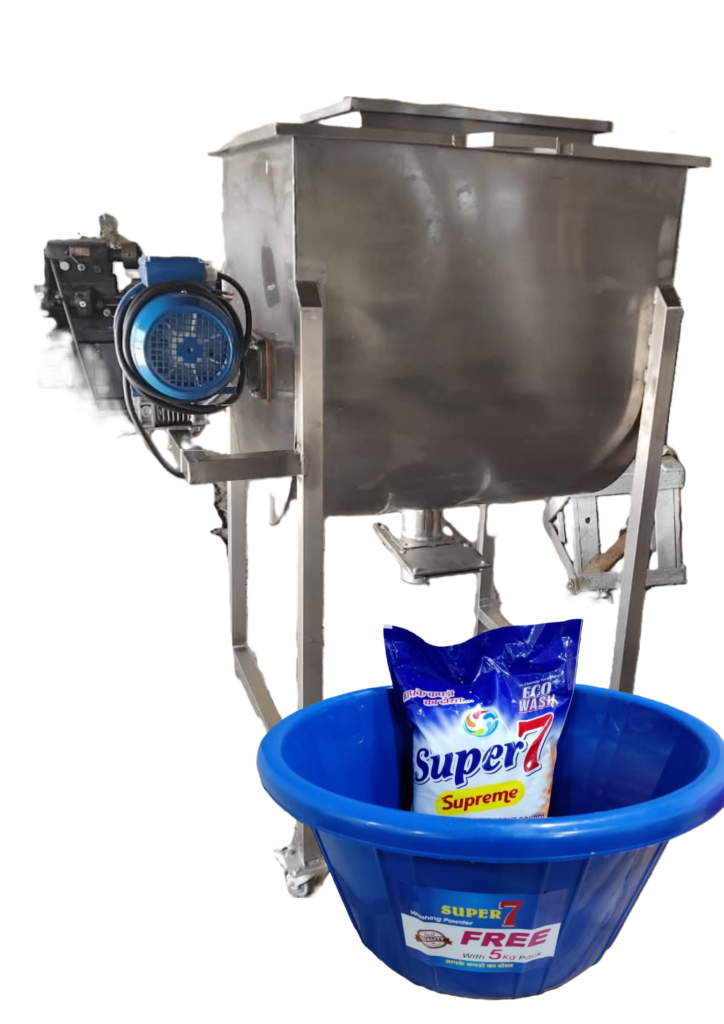
A powder manufacturing machine is industrial equipment used to process raw materials into fine, uniform powders for use in food processing, pharmaceuticals, chemicals, cosmetics, agriculture, and mining industries.
These machines can perform grinding, crushing, pulverizing, mixing, drying, and screening operations depending on the final powder requirements.
Modern powder manufacturing systems are designed to produce consistent particle sizes, improve production efficiency, and reduce labor costs.
What is a Powder Manufacturing Machine?
A powder manufacturing machine converts solid materials into powder form through mechanical, thermal, or chemical processing methods.
The machine may be used independently or as part of a complete powder production line that includes:
- Crushing
- Grinding
- Pulverizing
- Mixing
- Sieving
- Packaging
The choice of equipment depends on the raw material and desired particle size.
Types of Powder Manufacturing Machines
Hammer Mill Machine
Hammer mills use rotating hammers to break materials into smaller particles.
Applications
- Spices
- Animal feed
- Herbs
- Grains
- Agricultural products
Advantages
- High output
- Low operating costs
- Easy maintenance
Pulverizer Machine
Pulverizers create ultra-fine powders through high-speed impact grinding.
Applications
- Chemicals
- Pharmaceuticals
- Food ingredients
- Mineral powders
Advantages
- Fine particle size
- Uniform output
- High efficiency
Pin Mill Machine
Pin mills use rotating pins to grind products into fine powders.
Applications
- Sugar powder
- Starch
- Food additives
- Seasonings
Advantages
- Precise particle control
- Hygienic design
- Fast processing
Air Classifier Mill
Combines grinding and classification in a single machine.
Applications
- Pharmaceutical powders
- Chemical powders
- Mineral processing
Advantages
- Consistent particle size
- Reduced waste
- High precision
Ribbon Blender
Ribbon blenders are used after grinding to create homogeneous powder mixtures.
Applications
- Spice blending
- Protein powders
- Food ingredients
- Chemical products
Advantages
- Excellent mixing quality
- Large batch capacities
- Fast mixing cycles
Powder Manufacturing Process
Step 1: Raw Material Preparation
Materials are cleaned and inspected before processing.
Step 2: Crushing
Large particles are reduced to manageable sizes.
Step 3: Grinding
The material is milled into powder.
Step 4: Screening
Powder is classified according to particle size.
Step 5: Mixing
Different ingredients are blended uniformly.
Step 6: Packaging
Finished powder is packed for storage and distribution.
Common Materials Processed into Powder
Food Industry
- Sugar
- Spices
- Coffee
- Cocoa
- Flour
- Protein powders
Chemical Industry
- Detergents
- Pigments
- Fertilizers
- Industrial additives
Pharmaceutical Industry
- Active ingredients
- Nutritional supplements
- Medical powders
Agricultural Industry
- Animal feed
- Feed additives
- Mineral supplements
Powder Manufacturing Machine Sizes
| Machine Capacity (kg/hr) | Motor Power (kW) | Suitable Production Scale |
|---|---|---|
| 20 – 50 | 3 – 5.5 | Small Business |
| 50 – 100 | 5.5 – 7.5 | Startup Production |
| 100 – 300 | 11 – 15 | Medium Factory |
| 300 – 500 | 18.5 – 22 | Industrial Production |
| 500 – 1000 | 30 – 45 | Large Manufacturing Plant |
| 1000 – 3000 | 55 – 110 | High-Volume Production |
Advantages of Powder Manufacturing Machines
High Production Efficiency
Automated systems significantly increase output.
Consistent Product Quality
Uniform particle size improves product performance.
Reduced Labor Costs
Modern machines require minimal operator intervention.
Versatile Applications
Suitable for food, pharmaceutical, chemical, and agricultural products.
Scalable Production
Available in capacities suitable for small businesses and large industrial facilities.
How to Choose the Right Powder Making Machine
Material Type
Different materials require different grinding technologies.
Required Particle Size
Ultra-fine powders may require pulverizers or air classifier mills.
Production Capacity
Choose a machine capable of meeting current and future demand.
Hygiene Requirements
Food and pharmaceutical applications typically require stainless steel construction.
Energy Consumption
Evaluate operating costs alongside production output.
Industries That Use Powder Manufacturing Equipment
| Industry | Typical Products |
|---|---|
| Food Processing | Spices, Flour, Sugar Powder |
| Pharmaceuticals | Medical Powders, Supplements |
| Chemicals | Pigments, Detergents |
| Cosmetics | Face Powders, Beauty Products |
| Agriculture | Feed Additives, Fertilizers |
| Mining | Mineral Powders |
Why Invest in a Powder Manufacturing Machine?
A powder manufacturing machine enables businesses to produce high-quality powders efficiently, reduce production costs, and maintain consistent product standards. Whether processing food ingredients, chemicals, pharmaceuticals, or agricultural materials, the right powder production equipment can significantly improve productivity and profitability.
Frequently Asked Questions
What is a powder manufacturing machine used for?
It is used to convert raw materials into fine powders for food, pharmaceutical, chemical, cosmetic, and agricultural applications.
Which machine is best for making fine powder?
Pulverizers, pin mills, and air classifier mills are commonly used for producing fine powders.
Can one machine handle different materials?
Many industrial powder machines can process multiple materials, provided they are properly cleaned between batches.
What capacity powder machine should I choose?
The ideal capacity depends on your production requirements, raw material type, and expected future growth.
What industries use powder making machines?
Food processing, pharmaceuticals, chemicals, cosmetics, agriculture, mining, and manufacturing industries all use powder production equipment.