
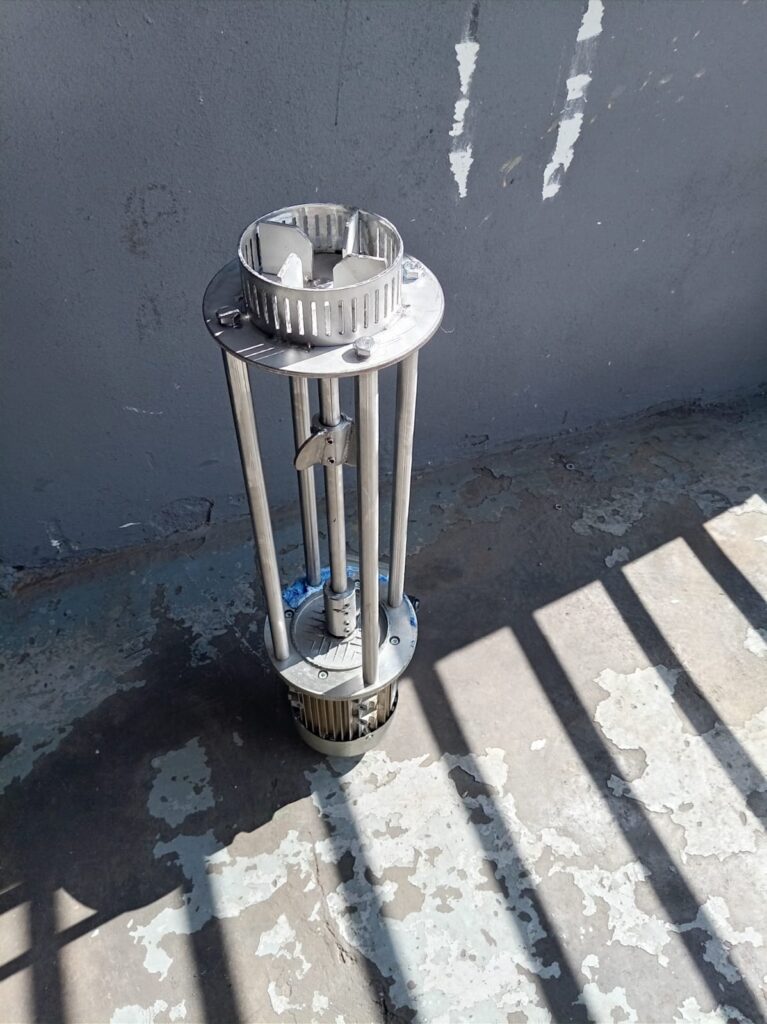
The skincare industry in South Africa is growing rapidly, with increasing demand for high-quality products such as creams, lotions, serums, and body butters. To achieve smooth textures and stable formulations, manufacturers rely on industrial homogenizers.
An industrial homogenizer for skincare manufacturing is a critical machine used to mix, emulsify, and refine cosmetic products to professional standards.
What is an Industrial Homogenizer?
An industrial homogenizer is a high-performance mixing machine designed to reduce particle size and create uniform, stable emulsions. It ensures that oil and water phases combine properly, resulting in smooth and consistent products.
Homogenizers are widely used in:
- Skincare and cosmetics
- Pharmaceuticals
- Food processing
- Chemical manufacturing
They are essential for producing high-quality emulsions like creams and lotions.
Why Homogenizers are Essential in Skincare Manufacturing
Smooth Texture
Homogenizers break down particles to create fine, silky textures in creams and lotions.
Stable Emulsions
They prevent separation of oil and water phases, ensuring product stability.
Professional Quality
Industrial homogenizers deliver consistent results across large batches.
Enhanced Absorption
Finer particles improve how products absorb into the skin.
Types of Industrial Homogenizers
High Shear Homogenizer
Uses rotor-stator technology to rapidly mix and emulsify ingredients.
Vacuum Emulsifying Homogenizer
Removes air during mixing, preventing bubbles and improving product quality.
High-Pressure Homogenizer
Uses pressure to reduce particle size and create ultra-fine emulsions.
Inline Homogenizer
Used in continuous production systems for large-scale manufacturing.
How a Homogenizer Works
Mixing Phase
Ingredients are introduced into the mixing tank.
High-Speed Rotation
The rotor spins at high speed, creating shear forces.
Particle Size Reduction
Large particles are broken down into smaller ones.
Emulsification
Oil and water phases are combined into a stable mixture.
This process ensures uniform consistency and prevents separation.
Applications in Skincare Products
Industrial homogenizers are used to manufacture:
- Face creams and moisturizers
- Body lotions and butters
- Serums and gels
- Sunscreens
- Hair care products
These machines are essential for achieving high-end cosmetic quality.
Features of Industrial Homogenizers
Stainless Steel Construction
Typically made from SS304 or SS316 for hygiene and durability.
High-Speed Mixing
Delivers efficient and fast processing.
Temperature Control
Jacketed systems allow heating and cooling during production.
Vacuum System (Optional)
Improves product quality by removing air bubbles.
Adjustable Speed
Allows control over mixing intensity and consistency.
Industrial Homogenizer Capacity Options
Small-Scale (5L – 50L)
- Ideal for startups and lab production
- Used for product testing
Medium-Scale (50L – 300L)
- Suitable for growing businesses
- Balanced production capacity
Large-Scale (300L – 2000L+)
- Designed for industrial manufacturing
- High output and efficiency
For example, some industrial cosmetic homogenizers offer capacities around 300L for large-scale production.
Price of Industrial Homogenizers in South Africa
Prices vary based on size and features:
- Small lab homogenizers: from around R30,000+
- Mid-range systems: moderate investment
- Large industrial homogenizers: high investment for full production lines
Advanced systems with vacuum and heating features cost more but provide superior results.
Benefits of Investing in an Industrial Homogenizer
Consistent Product Quality
Ensures uniform texture across all batches.
Increased Production Efficiency
Reduces processing time and improves output.
Scalability
Supports business growth and expansion.
Versatility
Suitable for multiple cosmetic and personal care products.
Skincare Manufacturing in South Africa
South Africa presents strong opportunities for skincare manufacturing due to:
- Growing beauty and personal care market
- Increasing demand for locally produced products
- Opportunities for small and medium manufacturers
Many local suppliers provide homogenizers, mixing tanks, and full cosmetic production lines tailored to skincare businesses.
How to Choose the Right Homogenizer
For Startups
Choose small or lab-scale homogenizers with basic features.
For Growing Businesses
Invest in medium-capacity machines with heating and emulsifying capabilities.
For Industrial Production
Choose large vacuum homogenizers with automation and advanced controls.
Conclusion
An industrial homogenizer for skincare manufacturing in South Africa is essential for producing high-quality cosmetic products. It ensures smooth textures, stable emulsions, and efficient production.
Whether you are starting a skincare brand or scaling your factory, investing in the right homogenizer will improve product quality, increase efficiency, and support long-term business growth.
FAQ Section (SEO Optimized)
What is a homogenizer used for in skincare?
It is used to mix and emulsify ingredients to create smooth creams and lotions.
What is the best homogenizer for cosmetics?
A vacuum emulsifying homogenizer is ideal for high-quality skincare products.
How much does a homogenizer cost in South Africa?
Prices start from around R30,000 for small units and increase for industrial systems.
Can I start with a small homogenizer?
Yes, small units are suitable for startups and product testing.