
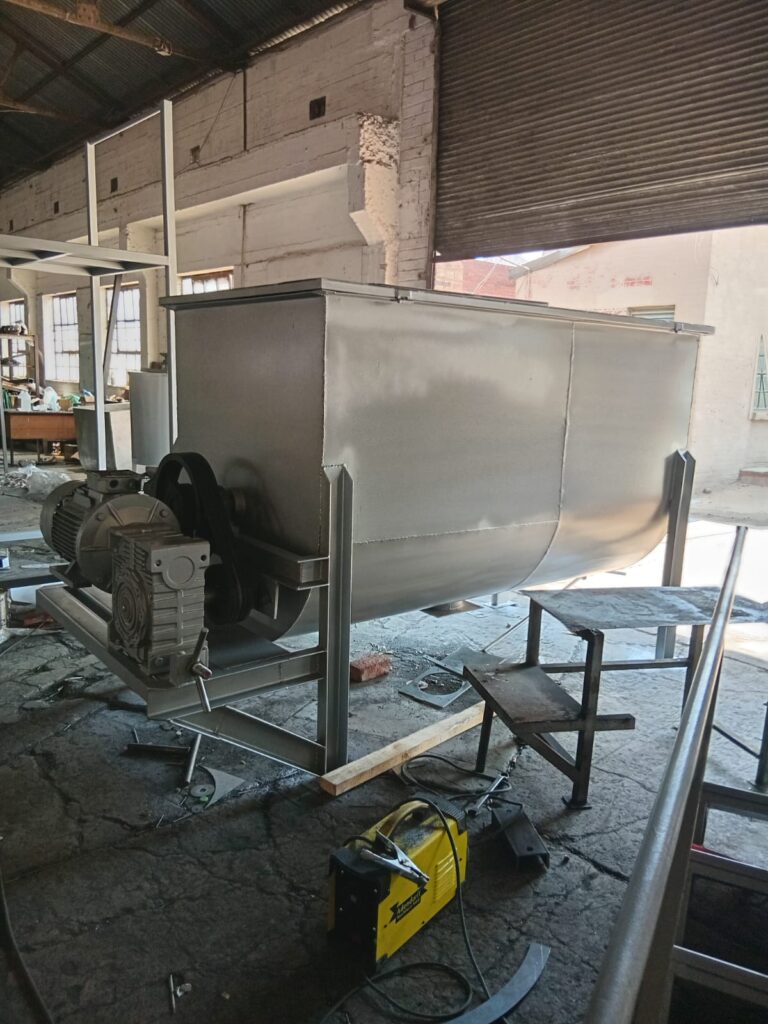
🧪 What Is a “Washing Powder Machine”
A “washing powder machine” refers broadly to any equipment used to produce powdered detergents — including blenders/mixers, sifters, grinders, filling & packing machines, and full detergent-powder production lines.
A used washing powder machine is a pre-owned unit — maybe from a previous factory, a closed business, or a partial line — which you can buy at a lower cost than new. For many small or medium operations, this can be a smart entry point into detergent manufacturing or expansion.
✅ Why Buying Used Makes Sense (and What You Save)
- Lower upfront cost compared to new equipment — good for startups or small/medium businesses.
- Reduced depreciation risk — most value loss already taken by previous owner.
- Opportunity to afford larger-capacity or better-quality machines that would be too expensive new.
- Faster return on investment — with lower capital outlay and potentially quick production launch.
- Test business viability first — cheaper to experiment with product lines using used machines.
🔎 What to Check When Inspecting a Used Washing-Powder Machine
Before you commit to buying, it’s crucial to inspect thoroughly. Key things to check:
- Mixer/Blender condition: Ensure blades, shafts, motors, seals are intact and functioning. For ribbon blenders or powder mixers — no rust, wear, or bent internals.
- Structural integrity: Frame, body, welds, mounting should be stable and not compromised by corrosion or damage.
- Wear on critical parts: Bearings, seals, paddles or agitators, discharge valves should be in good shape; worn parts can compromise performance or hygiene.
- Cleanliness & Residue: Powder machines should be clean, free of leftover detergent residue or contamination — especially important for hygiene/chemical safety.
- Sifters / Sieving equipment (if included): Screens, motors, vibration parts must work — clogged or broken sifters reduce quality.
- Filling or packing units: Check dispensing heads, weighing mechanisms, bagging or sealing parts — misalignment or wear leads to inaccurate fill or poor packaging.
- Electrical / Motor / Gearbox: Test under load if possible — listen for noise, check heating, ensure smooth operation.
- Spare parts availability: For older or uncommon machines, verify whether replacement parts (belts, seals, screens, motors) can be sourced locally or made.
- Real production test: If possible, run a small batch with actual materials to confirm mixing uniformity, discharge, sieving, and packing work as expected.
- Documentation & History: Ask for past usage data, maintenance history — helps estimate remaining lifespan and likely maintenance needs.
⚠️ Advantages and Trade-Offs of Used Equipment
👍 Advantages
- Lower purchase price and lower financial risk
- Ability to start or expand production affordably
- Sometimes you get robust industrial-scale machines at budget price
- Good for trial products or multiple detergent types before scaling
⚠️ Challenges / Risks
- Wear and tear — seals, bearings, screens might need replacement
- Hygiene or contamination risk if previous cleaning was poor
- Spare parts may be difficult or expensive to source, especially for older models
- Unknown maintenance history — could lead to unexpected downtime or repair costs
- Possibly lower efficiency or speed compared to new machines
- No warranty — all repairs and adjustments at buyer’s cost
🏭 What a Used Washing-Powder Production Setup Might Look Like
When buying used, you may assemble a functional production line by combining:
- A used ribbon blender or powder mixer for blending raw ingredients
- A sifter / vibrating screen to remove lumps or oversized particles
- A packing / filling machine suitable for powder packaging (bags, pouches, small packs) — used or refurbished
- Optional conveyor or elevator if handling larger volume or heavy batches
This setup — even though used — can offer a cost-effective entry pathway into detergent powder manufacturing, especially for small/medium output or as a pilot setup.
💡 Who Should Consider a Used Washing Powder Machine
A used washing-powder machine makes sense if you:
- Are a start-up or small business wanting to start detergent production without large investment
- Want to expand existing production but manage capital carefully
- Produce multiple product variants (different detergents, sizes) — flexibility of a used setup helps test variety before committing to new lines
- Are prepared to inspect, maintain, service the machine properly — cleaning, part replacement, testing
- Plan to scale slowly — start with used equipment, then upgrade when revenue grows
🛠️ Practical Tips for Buying Used Washing-Powder Equipment
- Always inspect in person if possible — don’t rely solely on photos or descriptions.
- Test with actual powder or raw mix to see how the machine performs under real conditions.
- Negotiate price based on what repairs or replacements you expect (seals, blades, screens).
- Have a budget for refurbishment — include spare parts, cleaning, maybe welding or re-machining.
- Ensure safety & hygiene compliance especially if making detergents for sale or export — clean, food/chemical-grade materials when required.
- Check power, installation requirements — some machines may need three-phase power, space, or setup for safe operation.
- Estimate capacity realistically — used machines may perform below original spec if worn; start small and gauge performance.
✅ Conclusion — Used Machines: Smart Entry Point with Caution
Buying a used washing powder machine can offer a cost-effective, lower-risk route into detergent production. For startups, small manufacturers, or anyone testing the waters, it represents a practical entry — saving capital while allowing flexibility.
However — success depends on careful inspection, realistic assessment of condition, and readiness to maintain or refurbish. When you choose wisely and do your homework, a used powder-production setup can serve well for years and deliver strong value for money.