
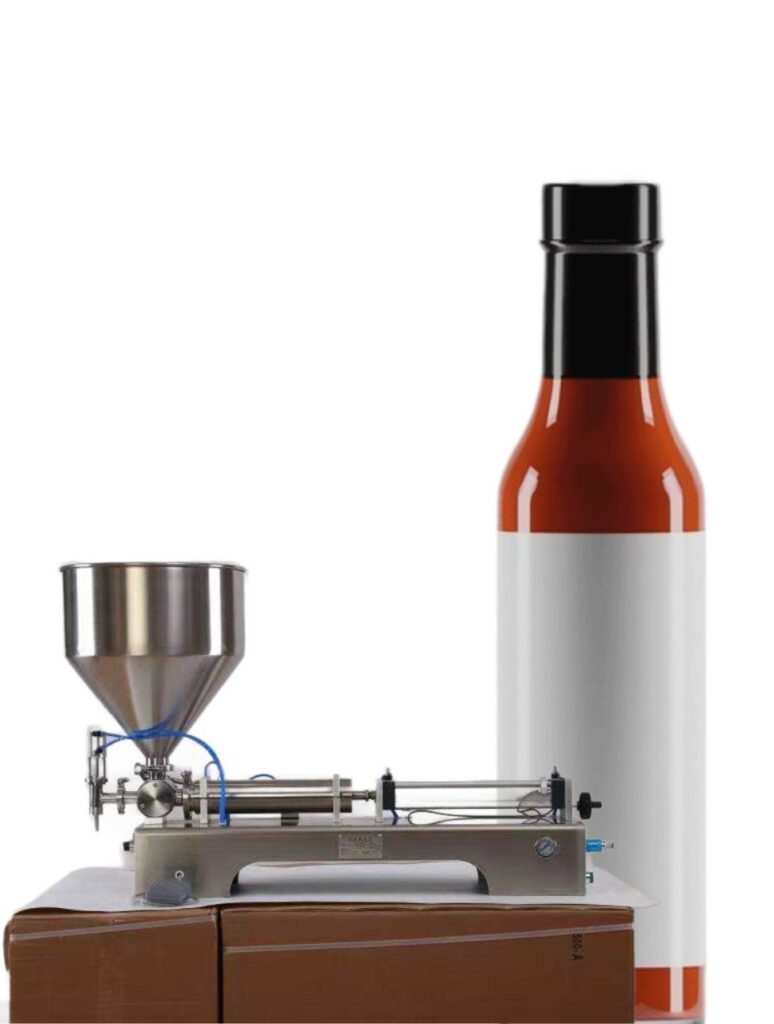
What Is a Small Sauce Filling Machine?
A small sauce filling machine is a compact, relatively low-capacity piece of equipment designed to fill bottles, jars, or small containers with sauces, condiments, jams, syrups, or other semi-liquid food products. Unlike large industrial fillers, this type of machine is suitable for small or medium-scale production — ideal for artisan sauce makers, startups, or small factories producing limited batches.
These machines often use piston mechanisms, gear pumps, or simple volumetric dosing systems to handle sauces that are more viscous or have some texture, ensuring accurate fill volume and reducing wastage or mess.
Why a Small Sauce Filling Machine Makes Sense for Smaller Producers
✅ Cost-effective: With lower purchase price and simpler setup requirements compared to full-scale bottling lines, small sauce fillers are budget-friendly for growing businesses or startups.
✅ Manageable Batch Sizes: Perfect for small-batch or seasonal production, limited runs, or when experimenting with new sauces without committing to massive volume.
✅ Flexibility: Can handle different container sizes (small bottles, jars, pouches) and variable batch volumes.
✅ Accurate & Clean Filling: Ensures consistent fill volumes, minimizes spillage and waste — important for thick or pulpy sauces.
✅ Easier Maintenance and Cleaning: Compact size means easier access, thorough cleaning, and simplified maintenance between batches — ideal when switching products regularly.
Types of Small Sauce Filling Machines
Depending on your product type, container size, and budget, there are several common types:
- Piston / Positive-Displacement Fillers: Good for medium to thick sauces; draws a measured amount then dispenses reliably.
- Gear-Pump or Rotary Pump Fillers: Suitable for sauces with a smooth consistency or slightly viscous products; provides smooth flow and steady filling.
- Semi-Automatic Fillers: Operator loads containers manually, machine fills — balanced cost and efficiency, ideal for small enterprises.
- Volumetric or Dosing Fillers: Provides set-volume dispensing — useful when producing multiple sauce variants or container sizes.
- Small Batch Tabletop Fillers: Extremely compact units for micro-producers, test batches, or home-based sauce makers scaling up production.
Key Features to Evaluate When Buying a Small Sauce Filling Machine
Before purchasing, ensure the machine meets these criteria:
- Product Compatibility: Can it handle sauce viscosity? Smooth sauces flow easily, but thicker or chunky sauces need stronger pumps or pistons.
- Container Flexibility: Adjustable to various bottle or jar sizes (diameter, height) if you plan to produce more than one product.
- Fill Volume Accuracy: Good dosing system to ensure consistent fill volumes and avoid overfilling or wastage.
- Material Contact Parts: Should be stainless steel or food-grade material for hygiene, easy cleaning, and longevity.
- Ease of Cleaning & Maintenance: Parts must be accessible and easy to disassemble, especially important when switching between different sauces.
- Throughput Capacity: While “small” machines don’t match factory speed, check how many containers per hour you can realistically fill — enough for your batch runs.
- Simplicity of Operation: Ideally minimal training needed — manual loading, simple start, reliable operation.
- Durability & Build Quality: Even small machines should handle continuous use without frequent breakdowns.
- Spare Parts Availability: Check if spare pistons, seals, nozzles or pumps can be sourced or replaced without difficulty.
Common Use Cases for Small Sauce Filling Machines
- Artisan sauce producers — hot sauce, chilli sauces, salsas, chutneys, dressings
- Small-batch jam, marmalade, or preserves producers
- Specialty condiment makers (e.g. gourmet mustard, gourmet sauces)
- Home-based or micro-business bottling lines scaling up production
- Startups testing recipes and gauging market demand before scaling
- Small factories producing niche or seasonal products
Benefits and Limitations
Benefits:
- Affordable entry into mechanised bottling
- Low overhead cost compared to large-scale lines
- Flexible for multiple product types and small batch runs
- Lower wastage and improved consistency
- Easier cleaning and maintenance
Limitations:
- Slower throughput — not ideal for high-volume demands
- May struggle with extremely thick or chunky sauces without proper pump/piston setup
- Requires careful cleaning to avoid contamination, especially when switching sauces
- Manual labour still needed for loading containers (unless semi-automatic or automatic)
- Not ideal for continuous large-scale manufacturing — more suitable for batch production
Who Should Invest in a Small Sauce Filling Machine?
You should consider investing in one if:
- You run a small or medium-scale sauce or condiment business
- You produce in batches rather than mass production
- You experiment with different recipes and need flexibility
- You want to scale beyond manual filling but don’t yet need a full production line
- You prioritize hygiene, consistency, and professional packaging without huge capital investment
Practical Advice & Tips for Getting Started
- Test Fill with Your Sauce Sample: Always trial the machine with the actual sauce you intend to bottle — viscosity and texture affect performance.
- Plan for Cleaning: Have cleaning protocols between batches, especially if switching sauces or containers.
- Maintain Seals & Nozzles: Inspect seals, nozzles, and pistons regularly — ensure they are intact and functioning well.
- Train Operators: Even small machines require attention to hygiene, correct loading, and operation — proper training ensures longevity.
- Scale Thoughtfully: As demand grows, you may upgrade to larger or semi-automatic machines — choose equipment that can scale or be adapted.
- Budget Wisely: Include maintenance, spare parts, cleaning supplies, and labour when estimating the real cost.
🧾 Conclusion: Why Small Sauce Filling Machines Are Ideal for Startups & SMEs
For small-scale sauce producers, artisan condiments makers, or emerging food businesses, a small sauce filling machine offers the perfect balance of affordability, flexibility, and professionalism. It helps you move beyond manual filling — improving consistency, hygiene, packaging quality, and output volume — without the high cost or complexity of industrial-scale bottling lines.
If you want to grow your brand, serve more customers, or move from home-based production to small-scale factory bottling, a small sauce filler can be a game-changer. Carefully choose a machine that matches your sauce type, production volume, and long-term growth plans — and it will serve as a reliable partner in your business journey.