
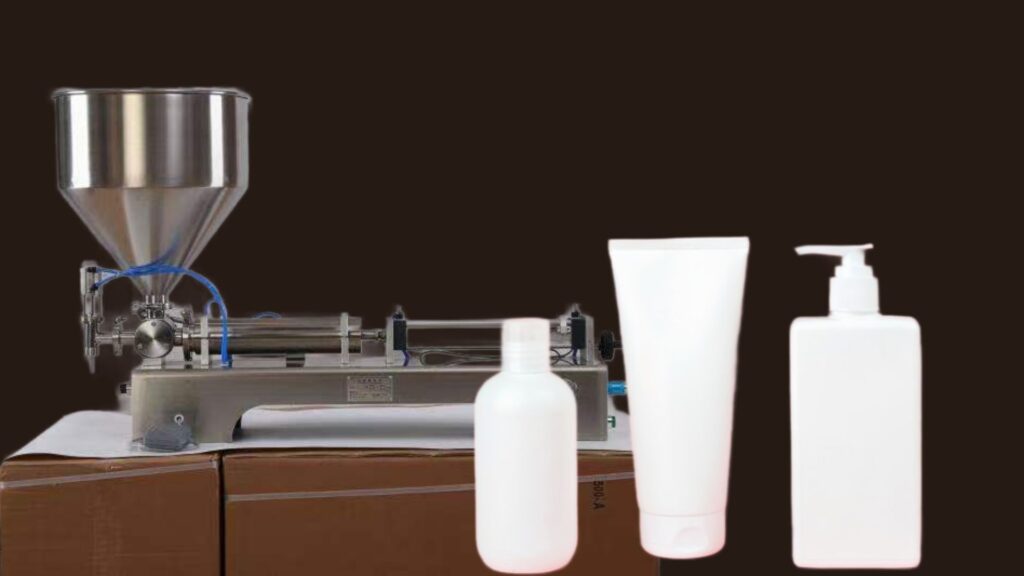
What Is a Cosmetic Filling Machine?
A cosmetic filling machine is equipment designed to dispense cosmetic products — like creams, lotions, gels, shampoos, oils, ointments or balms — into containers such as bottles, jars, tubes, or bottles. These machines handle a wide range of viscosities, from thin liquids to thick creams or pastes, ensuring accurate, hygienic, and consistent fill volumes batch after batch.
Depending on the design, the machine may work via piston pumps, gear pumps, peristaltic pumps or volumetric dosing — selected based on the product’s viscosity and packaging requirements.
Why Cosmetic Brands Should Use a Filling Machine
- Consistency & Accuracy: Machines ensure every container is filled to the exact same volume — critical for product quality, consumer trust, and regulatory compliance.
- Speed & Efficiency: Automating the filling process allows small to large production runs far faster than manual filling; ideal for scaling up or fulfilling large orders.
- Hygiene & Cleanliness: Modern cosmetic filling machines are built with sanitary, easy-clean material, reducing contamination risks and meeting hygiene standards — essential for personal care products.
- Reduced Waste: Automation reduces over-fill, spillage, or product loss that often happens with manual filling. That lowers material wastage and improves profit margins.
- Flexibility: Many machines are adjustable — for different container sizes, product types (from thin lotions to thick creams), and batch volumes — great for businesses with multiple cosmetic lines.
Types of Cosmetic Filling Machines & What They’re Used For
| Type | Best For / Strengths |
|---|---|
| Piston / Positive-Displacement Fillers | Creams, lotions, semi-thick products — good volume control for viscous cosmetic creams or balms. |
| Gear-Pump or Peristaltic/Pump Fillers | Lotions, shampoos, oils — works well with liquid to medium-viscosity products; gentle pumping helps avoid product shear. |
| Semi-Automatic Fillers | Small to medium batch production — great for start-ups, small cosmetic brands, artisanal suppliers. |
| Fully Automatic Multi-Head Fillers | Large-scale operations — high throughput, filling many bottles/jars per minute, suited for mass-market cosmetic production. |
| Vacuum / Vacuum-Assist Fillers | For sensitive formulations requiring minimal air exposure — creams, serums, lotions prone to oxidation or separation. |
What to Check When Buying a Cosmetic Filling Machine
When evaluating a cosmetic filling machine, ensure:
- Material Contact Parts are stainless steel (or food-/cosmetic-grade) to prevent contamination or corrosion.
- Pump or Mechanism matches your product’s viscosity — thick creams need piston or gear-pump; thin lotions need gentler pumping.
- Container Size & Type Compatibility — machine should adjust to different bottle or jar sizes (diameter, height) if you have multiple SKUs.
- Fill Accuracy & Repeatability — tight tolerance reduces overfill/underfill; crucial for cosmetic products sold by weight or volume.
- Cleanability & Maintenance Ease — parts should disassemble easily for cleaning, especially if switching products often.
- Sealing & Hygiene Features — sealing, air filters or vacuum options help maintain product stability and avoid contamination.
- Output Rate vs Business Needs — match machine speed to your expected production volume to avoid under- or over-capacity.
- Power & Utility Requirements — check electric supply, air or vacuum needs depending on machine design.
Who Should Invest in a Cosmetic Filling Machine?
- Start-ups & Small Cosmetic Brands — semi-automatic machines offer affordable entry-level automation and consistent results compared to manual filling.
- Growing Businesses — those scaling up production volumes and needing reliable, repetitive filling for creams, lotions, balms, shampoos, etc.
- Multi-Product Producers — companies offering varied cosmetic lines (light lotion, thick cream, oil serums) benefit from a versatile machine capable of different viscosities.
- Contract Manufacturers / Private Labelers — needing efficiency and hygiene to serve multiple clients and maintain high throughput.
Benefits & Trade-Offs
Benefits:
- Consistent product quality and packaging
- Higher production speed and throughput
- Reduced labour and human error
- Better hygiene and compliance
- Flexibility across product types
Trade-Offs / Challenges:
- Initial investment cost (especially for fully automatic systems)
- Maintenance and cleaning requirements, especially with sticky or thick products
- Need for correct matching of machine to product viscosity
- Possible downtime during changeovers or cleaning
Final Thoughts
A cosmetic filling machine is a fundamental investment for any cosmetics or personal-care brand aiming for professionalism, quality, and scalability. Whether you start small with a semi-automatic filler or go big with a fully automated line, the right filling machine ensures your lotions, creams, shampoos, and other cosmetic products are filled correctly, hygienically, and consistently.
For brands serious about growth, packaging quality, and market professionalism — a cosmetic filling machine is not just a convenience, it’s a strategic asset.