
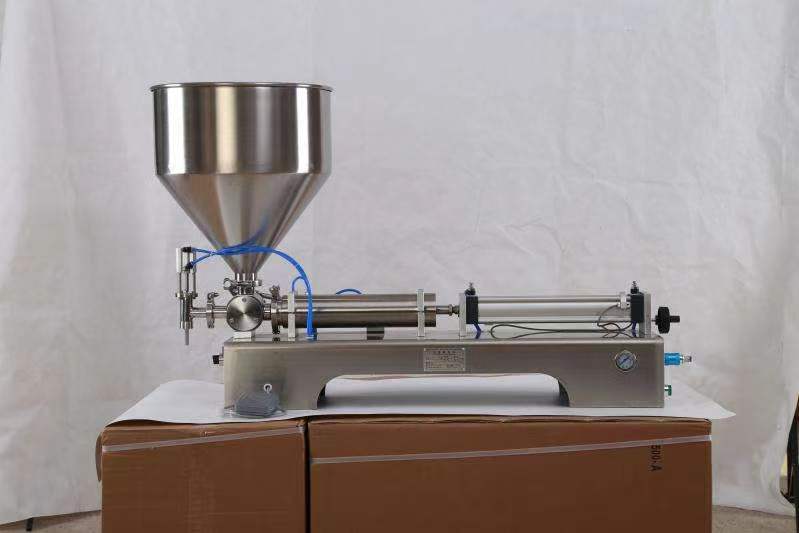
What Is a Piston Filling Machine?
A piston filling machine is a type of filler designed to fill containers — bottles, jars, tubes — with liquids, creams, pastes, or semi-viscous products. It uses a piston mechanism to draw in a defined volume of product, then pushes that volume into the container when triggered. This ensures accurate, repeatable fill volumes — unlike gravity fillers that depend on liquid flow.
Piston fillers handle a range of product viscosities — from thin liquids to thick creams or gels — making them versatile for food, cosmetics, chemicals, and more.
Why Buying a Used Piston Filling Machine Can Make Sense
✅ Lower Capital Investment
Used machines typically cost significantly less than new ones, making them ideal for small or medium enterprises, startups, or pilot runs with limited budgets.
✅ Faster Return on Investment
Because you pay less upfront, even modest output can quickly recoup the purchase cost. The savings on manual labour and increased output speed add up fast.
✅ Access to Higher-Spec Machines
Used machines sometimes offer higher specs — multi-head piston fillers, larger capacity — at prices affordable only through second-hand purchase.
✅ Durable and Proven Technology
Piston fillers are built to handle rugged industrial use: heavy-duty pumps, stainless steel wetted parts, and robust frames. A well-maintained used unit can still deliver years of reliable service.
What to Inspect When Buying a Used Piston Filling Machine
Before purchasing, carefully evaluate these elements to avoid future problems:
- Piston & Cylinder Condition: Inspect for corrosion, scoring, wear, or leakage. A damaged piston or worn seals can cause inaccurate fills or contamination.
- Seals, Gaskets, and Valves: These parts wear over time — check for brittleness, cracks, or leakage. Replacing them is often necessary for used units.
- Pump/Motor Drive: Run the machine (empty or with water) — listen for unusual noise, vibration, or loss of power. Motor and gearbox should operate smoothly.
- Nozzle Integrity: Nozzles must be intact, unclogged, and the dispensing tip should produce clean, controlled filling. Bent or worn nozzles ruin fill accuracy.
- Hopper and Hopper Feed System: If there is a hopper or reservoir for product, check for contamination, rust, or residue. For viscous products, ensure the feed system is clean and functional.
- Frame & Structure: Examine welds, mounting, stability. A shaky or corroded frame can be dangerous and cause inconsistent results.
- Control System & Safety Features: Make sure switches, timers, emergency stops, and any sensors work correctly.
- Cleanability: Since this is used, check if parts can be disassembled for thorough cleaning — especially if you handle food or cosmetics.
- Compatibility with Your Product: Ask to see the machine run with a sample similar to what you plan to fill — this tests viscosity handling and dispensing quality.
- Spare Parts Availability: Older machines sometimes lack readily available parts — ensure pumps, seals, nozzles or pistons can still be sourced or replaced.
Advantages & Drawbacks of Using a Second-Hand Piston Filler
Advantages
- Affordable entry point to mechanised filling
- Quick payback when used in productive lines
- Flexibility across liquid to paste products
- Lower depreciation vs new equipment
- Potential to get a more advanced machine than budget allows
Drawbacks / Risks
- Wear & tear on critical components (seals, pistons)
- Possible hygiene or contamination issues if not cleaned properly
- Higher maintenance needs initially after purchase
- Limited or uncertain warranty / no after-sales support
- May require adjustments or refurbishment before using
Who Should Consider a Used Piston Filling Machine?
- Startups & small-scale producers of sauces, creams, lotions, or chemicals who want to avoid large capital outlays
- Expanding SMEs testing new product lines without committing big budgets
- Artisan brands producing cosmetics, ointments, or small-batch items
- Manufacturers needing batch flexibility — ability to switch containers, product types, and fill volumes without committing to expensive new machines
Buying Strategy & Smart Tips for Second-Hand Machines
- Request live demonstration or video of the machine filling a product — not just water, ideally something similar to what you produce.
- Negotiate based on required repair or replacement costs (seals, pistons, valves) before you buy.
- Schedule full maintenance or refurbishment immediately after purchase — replace seals, test valves, clean thoroughly.
- Test fill accuracy: check multiple fills for consistency — any variation indicates potential mechanical issues.
- Ensure compliance with hygiene standards if you produce food, cosmetics, or pharmaceutical products.
- Have spare parts ready or on order before production starts — better to have replacements on hand from day one.
- Train your operators properly — misuse or lack of cleaning can quickly ruin performance of a used machine.
Final Thoughts
A used piston filling machine offers a smart, cost-effective solution for businesses looking to automate filling of liquids, creams, sauces, or pastes — without huge upfront costs.
With careful inspection, proper refurbishment, and good maintenance practices, a well-chosen used pistol filler can deliver years of reliable service. For small and medium-sized producers, it’s often the most budget-friendly path to professional-grade packaging and higher output.
If you’re ready to grow your production without overspending, a used piston filling machine could be the ideal next step.