
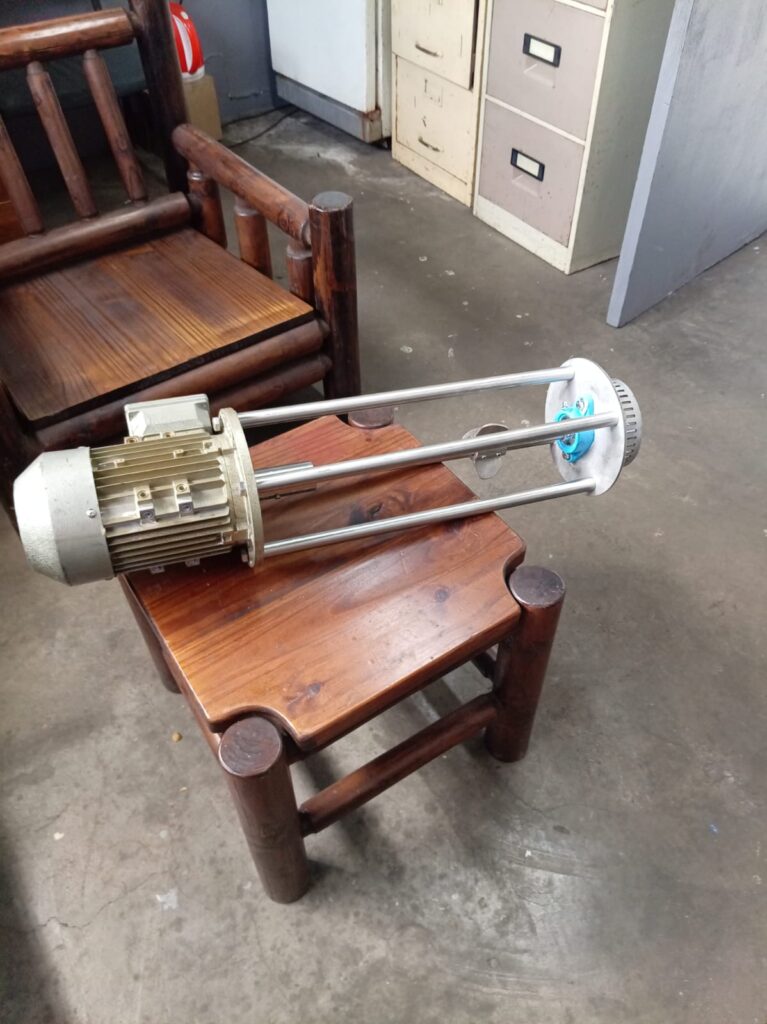
Homogenizers are essential machines in industries such as cosmetics, food processing, pharmaceuticals, and chemicals. They are used to create smooth, stable mixtures by reducing particle size and blending ingredients uniformly.
Understanding the homogenizer machine cost in South Africa is important for businesses planning to invest in production equipment. Prices vary widely depending on machine type, size, and features.
What is a Homogenizer Machine?
A homogenizer machine is designed to mix and emulsify substances by breaking down particles into smaller sizes. This process ensures a smooth and stable final product.
Homogenizers are commonly used to produce:
- Creams and lotions
- Liquid detergents
- Food products such as sauces and juices
- Pharmaceutical formulations
Homogenizer Machine Cost in South Africa
The cost of homogenizers depends mainly on capacity, technology, and automation level.
Small Lab Homogenizers (5L – 50L)
- Approximate price: R20,000 – R80,000
- Suitable for testing and small-scale production
- Ideal for startups and R&D
Medium-Scale Homogenizers (50L – 300L)
- Approximate price: R80,000 – R250,000
- Used by small to medium businesses
- Balanced performance and capacity
Large Industrial Homogenizers (300L – 2000L+)
- Approximate price: R250,000 – R1,000,000+
- High production capacity
- Suitable for factories and large-scale manufacturing
Vacuum Emulsifying Homogenizers
- Approximate price: R150,000 – R800,000+
- Advanced systems with vacuum and heating
- Used for high-end cosmetic production
Factors That Affect Price
Capacity
Larger machines cost more but produce higher volumes.
Type of Homogenizer
High shear, vacuum, and high-pressure homogenizers have different price ranges.
Material Quality
Stainless steel (SS316) machines are more expensive but offer better durability and hygiene.
Automation Level
Fully automated systems increase efficiency but come at a higher cost.
Additional Features
Heating, cooling, vacuum systems, and control panels increase the price.
Types of Homogenizer Machines
High Shear Homogenizer
Uses rotor-stator technology for fast mixing and emulsification.
Vacuum Emulsifying Homogenizer
Removes air during mixing, improving product quality.
High-Pressure Homogenizer
Uses pressure to achieve ultra-fine particle size.
Inline Homogenizer
Used in continuous production systems.
Applications Across Industries
Cosmetics
Creams, lotions, serums, and gels.
Food Industry
Sauces, juices, dairy products.
Chemical Industry
Detergents, cleaning products.
Pharmaceutical Industry
Ointments and medicinal liquids.
Benefits of Investing in a Homogenizer
Smooth Product Texture
Creates high-quality, uniform products.
Stable Emulsions
Prevents separation of ingredients.
Increased Efficiency
Speeds up production processes.
Versatility
Suitable for multiple industries.
How to Choose the Right Homogenizer
For Startups
Choose small lab-scale machines with basic features.
For Growing Businesses
Invest in medium-capacity homogenizers with improved performance.
For Industrial Production
Select large vacuum homogenizers with advanced automation.
Cost vs Value
While homogenizers can be expensive, they provide:
- Improved product quality
- Reduced production time
- Increased consistency
- Better customer satisfaction
This makes them a valuable long-term investment.
Homogenizer Market in South Africa
South Africa’s manufacturing sector continues to grow, especially in:
- Skincare and cosmetics
- Food processing
- Chemical production
This has increased demand for homogenizer machines across the country.
Conclusion
The homogenizer machine cost in South Africa varies widely depending on size, type, and features. From small lab units to large industrial systems, there are options for every business level.
Choosing the right homogenizer ensures efficient production, consistent quality, and long-term success in your industry.
FAQ Section (SEO Optimized)
How much does a homogenizer machine cost in South Africa?
Prices range from around R20,000 for small units to over R1,000,000 for large industrial systems.
What is the best homogenizer for cosmetics?
A vacuum emulsifying homogenizer is ideal for high-quality skincare products.
Can I start with a small homogenizer?
Yes, small machines are suitable for startups and product testing.
What industries use homogenizers?
Cosmetics, food, pharmaceuticals, and chemicals all use homogenizers.