
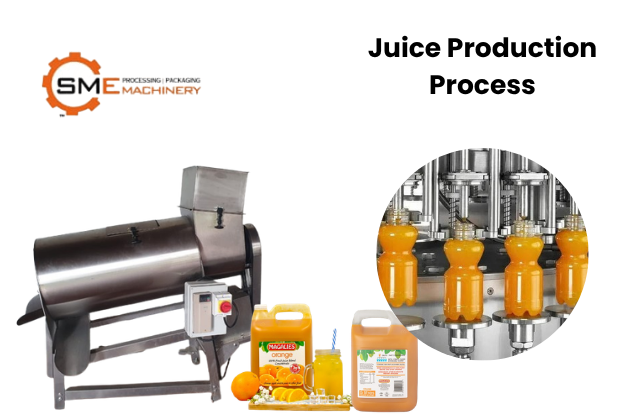
The juice industry is growing rapidly as consumers demand healthier and more natural beverage options. From fresh fruit juices to packaged drinks, manufacturers rely on efficient systems to produce high-quality products at scale.
Understanding the juice production process is essential for anyone looking to start or optimize a juice manufacturing business. This guide covers every stage of production, from raw fruit handling to final packaging.
What is Juice Production?
Juice production is the process of extracting liquid from fruits or vegetables and converting it into a consumable beverage. This process involves several steps to ensure the juice is safe, स्वादिष्ट, and long-lasting.
Juice can be produced in different forms:
- Fresh juice
- Concentrated juice
- Blended fruit beverages
- Flavored drinks
Step-by-Step Juice Production Process
Step 1: Fruit Selection
High-quality, ripe fruits are selected to ensure good taste and nutritional value.
Step 2: Washing and Cleaning
Fruits are thoroughly washed to remove dirt, pesticides, and contaminants.
Step 3: Sorting and Inspection
Damaged or spoiled fruits are removed to maintain quality.
Step 4: Peeling and Cutting
Some fruits are peeled and cut into smaller pieces for easier processing.
Step 5: Crushing and Extraction
Fruits are crushed, and juice is extracted using presses or extractors.
Step 6: Filtration
The juice is filtered to remove pulp, seeds, and unwanted particles.
Step 7: Mixing and Blending
Ingredients such as sugar, preservatives, or flavors may be added.
Step 8: Pasteurization
Heat treatment is applied to kill bacteria and extend shelf life.
Step 9: Cooling
The juice is cooled quickly to maintain quality.
Step 10: Filling and Packaging
The final product is filled into bottles, cartons, or sachets and sealed.
Types of Juice Production Processes
Fresh Juice Production
Minimal processing with no preservatives, typically consumed quickly.
Concentrated Juice Production
Water is removed to create concentrate, which is later reconstituted.
Blended Juice Production
Different fruit juices are combined to create new flavors.
Equipment Used in Juice Production
A complete juice production line typically includes:
- Fruit washing machine
- Juice extractor or press
- Filtration system
- Mixing tank
- Pasteurization unit
- Filling machine
- Packaging system
Each machine plays a role in ensuring efficiency and product quality.
Benefits of Industrial Juice Production
High Efficiency
Machines process large volumes quickly.
Consistent Quality
Ensures uniform taste and texture.
Hygienic Production
Meets food safety standards.
Scalability
Supports growth from small to large production levels.
Challenges in Juice Production
Maintaining Freshness
Preserving natural taste and nutrients is critical.
Contamination Risks
Proper hygiene and processing are essential.
Equipment Costs
Initial investment can be significant.
Tips for Successful Juice Production
Use Fresh Raw Materials
Quality fruits result in better juice.
Maintain Hygiene
Clean equipment prevents contamination.
Optimize Processing Time
Avoid over-processing to retain nutrients.
Invest in Reliable Equipment
High-quality machines improve efficiency and output.
What You Can Produce
With a juice production system, you can manufacture:
- Orange juice
- Mango juice
- Apple juice
- Pineapple juice
- Mixed fruit beverages
Why Invest in Juice Production?
- Growing demand for healthy drinks
- High profitability potential
- Wide product variety
- Opportunities for branding and export
Conclusion
The juice production process involves multiple stages, from fruit preparation to final packaging. Each step is essential to ensure product quality, safety, and shelf life.
By understanding and optimizing the production process, businesses can produce high-quality juice efficiently and meet market demand.
Investing in the right equipment and processes will position your juice manufacturing business for long-term success.
FAQ Section (SEO Optimized)
What are the main steps in juice production?
Washing, extraction, filtration, pasteurization, and filling are the main steps.
What machines are used in juice production?
Washing machines, extractors, mixers, pasteurizers, and filling machines are commonly used.
Is juice production profitable?
Yes, due to high demand for natural and healthy beverages.
Can I start juice production on a small scale?
Yes, small-scale equipment is available for startups.