
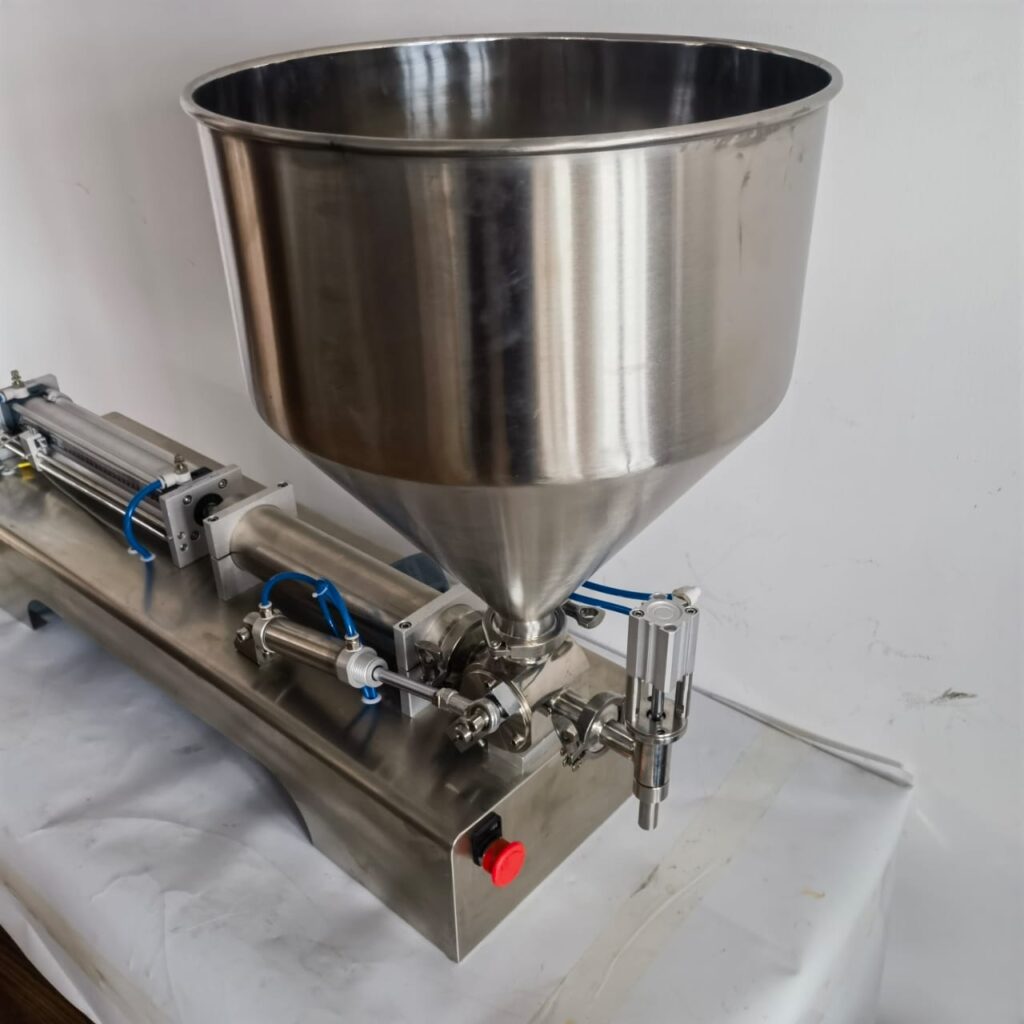
What Is a Paste Filler?
A paste filler is a machine designed to fill viscous or semi-solid products — such as creams, lotions, sauces, ointments, pastes, gels — into containers (jars, bottles, tubes) with controlled volume and consistency.
Instead of relying on gravity or thin-liquid flow, paste fillers use mechanical systems (pistons, pumps, or screw delivery) to handle thick or sticky materials that are difficult to fill manually.
Why Consider a Second Hand Paste Filler?
✅ Cost Savings
A used paste filler can cost significantly less than a brand-new machine. For small or start-up businesses, this lower capital investment helps you get professional-quality equipment without spending too much.
✅ Faster ROI for Small / Medium Production
Because paste fillers speed up the filling process and improve consistency, you can start recouping your investment quickly. Buying used reduces the initial cost and improves cash flow.
✅ Proven Durability
Many paste fillers are built to last — stainless steel frames, durable pump or piston systems — so a well-maintained used unit can still run efficiently for years.
✅ Lower Depreciation Risk
New machines lose value quickly once purchased; a used machine’s value has already stabilized. Buying second hand reduces risk of rapid depreciation.
✅ Access to Higher-Spec Machines at Lower Prices
You may afford a larger or more feature-rich machine second hand — perhaps one with multi-head pistons or heated hoppers — that a new budget wouldn’t allow.
What to Check When Buying a Used Paste Filler
Before you commit, carefully inspect and test the machine to avoid costly mistakes. Here’s a checklist:
- Pump or piston condition: Ensure the pump, piston, or screw mechanism moves smoothly and seals properly; leaks or jerky movement indicate wear.
- Nozzles and valves: Check for wear, clogging, or damage, especially important for paste viscosity.
- Hopper & container condition: Look for corrosion, dents, or sanitary issues if you’re filling food, cosmetics, or chemicals.
- Frame & mechanical parts: Inspect for rust, weakened frame joints, or worn bearings and shafts.
- Motor & drive: Run the motor empty first — listen for unusual noises or overheating; check for smooth operation under load.
- Control system: Ensure controls (manual knobs, pneumatic switches, foot pedals) function correctly.
- Cleanability: Verify that the machine can be disassembled or cleaned easily — old paste machines often have hardened residue.
- Compatibility with your product: Some fillers struggle with very thick pastes or those with particulate matter — test with your actual paste if possible.
- Power and pneumatic requirements: Confirm that electricity supply (voltage, phase) or air compressor (if pneumatic) match your facility’s capacity.
- Spare parts availability: Even for used machines, check if replacement parts (seals, nozzles, valves) are available locally or via supplier.
Advantages & Limitations of Used Paste Fillers
Advantages
- Lower upfront cost
- Faster break-even for small production runs
- Potential to get a higher-capacity or feature-rich machine
- Proven build and durability
Limitations / Risks
- Wear and tear — pump seals, valves, bearings may need replacement
- Hygiene or contamination risk — especially important in food/cosmetics
- Possible difficulty finding spare parts depending on age/model
- No warranty, or limited guarantee compared to new machines
- Potential adaptation needed to match your container sizes or paste viscosity
Who Should Consider a Second Hand Paste Filler?
- Startups and small manufacturers working with creams, sauces, or pastes who can’t afford new equipment
- Growing businesses looking to upgrade from manual filling without large capital expenditure
- Artisan & niche producers — e.g. natural cosmetics, small-batch sauces, lubricants, ointments — needing accurate filling but modest output
- Businesses testing new product lines — a used machine reduces risk while evaluating product demand
Smart Buying Tips for Used Paste Fillers
- Always request a demonstration — test the filler using a sample similar to your paste.
- Negotiate price — used machines should sell below new-market value, especially if requiring maintenance or part replacement.
- Budget for refurbishment — sealing rings, gaskets, valves, and cleaning may be needed before regular use.
- Ensure compatibility — confirm the filler handles your container sizes, paste viscosity, and hygiene standards.
- Plan for maintenance — create a maintenance schedule (cleaning, lubrication, seal replacement) to prolong machine life.
- Check logistics — transport cost, installation requirements, power/air supply, and operator training may add to your costs.
Conclusion
A second hand paste filler can be a very smart investment — especially for small to medium-sized producers or startups working with creams, sauces, ointments, or other viscous products. If carefully inspected and maintained, a used machine offers almost all the benefits of a new one, but at a fraction of the expense.
When buying used: prioritize mechanical and sanitary condition, test with real product, and plan for maintenance before starting production. With the right approach, a second hand paste filler can boost your productivity, improve consistency, and give your business a competitive edge — all without a heavy financial burden.