
Detergent manufacturing is one of the more accessible manufacturing businesses to start in South Africa — the core formulations are well understood, the raw materials are locally available, and the equipment needed is far less capital-intensive than most other production industries. That said, “accessible” doesn’t mean easy money. Producers who skip proper planning on equipment, compliance, and distribution often stall within the first year.
This guide walks through what it actually takes to go from an idea to a functioning detergent manufacturing business in South Africa — the legal steps, the equipment, realistic startup costs, and where most new producers go wrong.
Why Detergent Manufacturing Is a Realistic SME Opportunity
A few factors make this sector genuinely attractive for South African entrepreneurs right now:
- Consistent, non-discretionary demand — households and businesses buy cleaning products regardless of economic conditions
- Low barrier to entry compared to other manufacturing — formulations are well documented, and entry-level equipment is far cheaper than, say, food processing lines requiring refrigeration
- Price sensitivity favours local producers — import and forex volatility push retailers and consumers toward locally made alternatives
- B2B and informal market potential — spaza shops, cleaning contractors, car washes, and guest houses all buy in bulk and are often underserved by major brands
- Private label opportunities — many retailers and wholesalers are open to stocking a white-label or house-brand detergent line from a reliable local supplier
The opportunity is real, but it’s also competitive at the bottom end of the market (basic dishwashing liquid and all-purpose cleaner are commodity products). Differentiation through niche formulations, packaging, or specific industry focus (industrial, agricultural, hospitality) tends to perform better than competing purely on price against established brands.
Legal and Business Registration Steps
Before buying any equipment, get the business foundation in place:
- Register the company with the CIPC (Companies and Intellectual Property Commission) — a Pty Ltd is the standard structure for a manufacturing business
- Register for tax with SARS, including VAT once you cross the compulsory registration threshold
- Check municipal zoning and business licensing — manufacturing, even small-scale, usually requires a business premises that’s zoned for light industrial or commercial use, not purely residential
- Register with the Department of Employment and Labour once you take on staff, including UIF and Compensation Fund (COIDA) registration
- Check product-specific regulatory requirements — certain cleaning chemical categories fall under NRCS compulsory specifications, and some fragranced or scented products may require additional disclosure
Many first-time producers manufacture informally for months before registering properly. This works short-term but becomes a liability the moment you want to supply a formal retailer, apply for finance, or bring on a partner — all of which require a properly registered entity.
Core Equipment Needed to Start
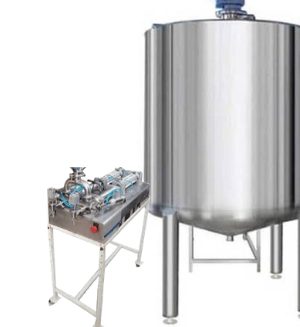
The exact equipment list depends on which products you’re producing, but a typical starter detergent line includes:
- Mixing tank or detergent manufacturing machine — the central piece for blending liquid detergents, dishwashing liquid, and similar products
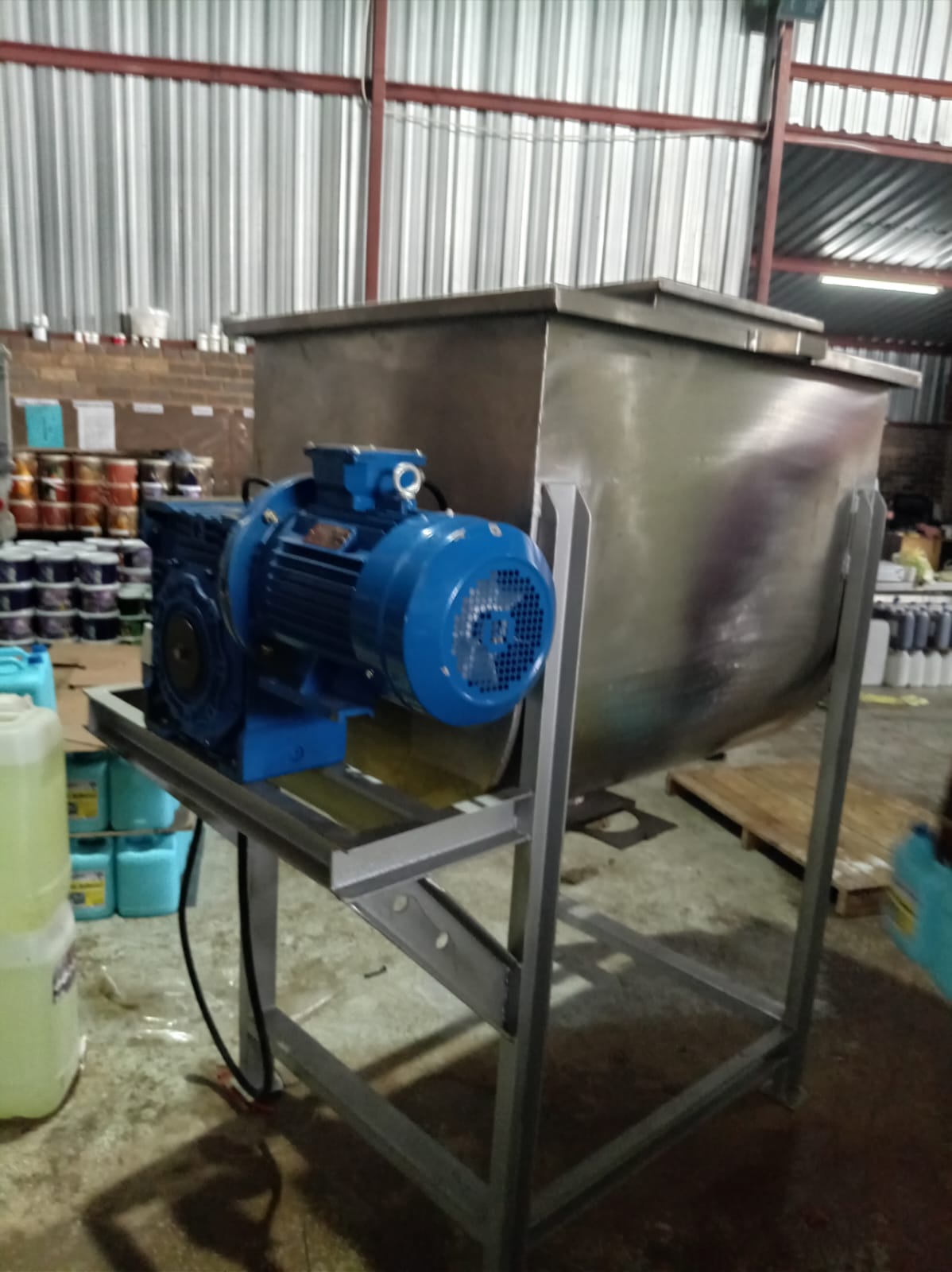
- Ribbon blender or paddle mixer — required if you’re also producing powder detergents, since powder blending needs a different mixing action to liquids
- Filling equipment — gravity, piston, or inline filling machines to get the finished product into bottles, pouches, or containers accurately and consistently
- Capping machine — manual at the smallest scale, semi-automatic as volume grows
- Labelling equipment — manual application is common at startup; automatic labelling applicators become worthwhile once batch sizes grow
- Basic quality control tools — a pH meter and viscosity cup are inexpensive and essential for consistency between batches
- Storage — raw material drums, finished goods shelving, and a dedicated clean space separate from general storage
Most new producers start with a single mixing tank and manual filling, then add automation (capping, labelling) as order volume justifies the investment — trying to automate everything from day one usually means overspending before you’ve proven demand.
Realistic Startup Cost Breakdown
Exact figures vary by supplier, tank size, and how much you automate, but a realistic startup budget generally spans these categories:
| Category | What it covers |
|---|---|
| Equipment | Mixing tank, filling machine, basic QC tools |
| Business registration | CIPC, SARS, municipal licensing |
| Premises | Deposit and first months’ rent on zoned space, or converting part of an existing property |
| Raw materials | First production run of surfactants, thickeners, fragrance, packaging |
| Packaging and labelling | Bottles, pouches, labels, caps — often underestimated as a cost centre |
| Branding and basic marketing | Logo, label design, initial sales materials |
| Working capital buffer | Covers the gap between production cost and first sales income |
Equipment is usually the single largest line item, which is exactly where rent-to-own or asset finance can make the difference between starting this year or waiting another year to save up cash. Get an itemised quote against your specific product plan before finalising a budget — a generic online cost range will rarely match your actual setup.
Sourcing Raw Materials and Formulation Basics
Raw material sourcing is where many new producers either overpay or end up with inconsistent product quality. A few practical points:
- Buy from established chemical suppliers, not one-off online sellers — consistency of raw material quality directly affects your finished product
- Start with proven, simple formulations rather than trying to innovate on your first batch — dishwashing liquid and all-purpose cleaner formulations are widely documented and forgiving to learn on
- Keep a written formulation record for every product, including exact quantities and mixing order — this is what lets you reproduce a batch reliably six months later
- Test before you scale — run small trial batches (5–10 litres) before committing a full tank, so a formulation mistake costs you a few rand in raw materials, not a wasted 200-litre batch
- Understand your ingredient costs per litre before pricing your finished product — many new producers price based on what competitors charge rather than their actual cost structure, and only discover their margins are too thin once they’re already selling
Premises Requirements
You don’t need an industrial park to start, but you do need a space that works. Key considerations:
- Zoning — confirm with your local municipality whether the property is zoned for the scale of manufacturing you’re planning; residential zoning often restricts commercial production
- Water and drainage — detergent production uses water heavily, and some processes need proper drainage for cleaning tanks and equipment between batches
- Ventilation — fragrance and raw chemical fumes need adequate airflow, both for product quality and worker safety
- Floor space for flow — ideally a layout that moves in one direction: raw materials in, mixing, filling, labelling, finished goods out, rather than a cramped space where everything overlaps
- Security and storage — a lockable area for finished stock and a separate space for chemical raw materials, away from general foot traffic
Many producers start in a garage or a small rented unit and move to larger premises once volume justifies it — this is a sensible way to avoid overcommitting to rent before revenue is proven.
Compliance, Testing, and Certification
Compliance isn’t optional, and it’s cheaper to build in from the start than to retrofit once you’re already selling:
- NRCS compulsory specifications — check whether your specific product category requires registration before sale
- Hazard labelling — irritant, corrosive, or flammable products need appropriate warning symbols and handling instructions on the label
- Ingredient and net content disclosure — required under consumer protection regulation
- Batch coding and traceability — essential for recalls, quality disputes, and larger buyer due diligence
- SABS certification — not always compulsory, but often a prerequisite for supplying national retail chains or government tenders
If you plan to approach formal retail or distribution channels, ask what their supplier onboarding requires before you finalise your product line — some retailers have specific lab testing or documentation requirements that are far easier to meet from the start than to add in retroactively.
Routes to Market
Deciding how you’ll actually sell product shapes everything from formulation to packaging. Common routes for new South African detergent producers:
- Direct to consumer — local markets, social media, delivery within your area; low barrier to start but requires constant marketing effort
- Spaza shops and informal retail — high volume potential, price-sensitive, usually cash-based with smaller pack sizes
- Cleaning contractors and businesses — bulk sales to businesses that use detergent as an input rather than a retail product, often more stable and repeat-order based
- Wholesale and distribution — selling in bulk to a distributor who handles retail placement, trading margin for volume and reduced sales effort
- Private label/white label — manufacturing under a retailer’s own brand, which can provide volume stability but usually at thinner margins
Most successful new producers pick one primary channel to prove the business model before spreading across several — trying to serve direct consumers, wholesalers, and private label simultaneously from day one stretches a small team too thin.
Scaling the Business
Once the core formulations, routes to market, and production process are proven, scaling usually follows a predictable path:
- Add a second mixing tank or upgrade capacity rather than running one tank around the clock, which limits flexibility and creates a single point of failure
- Automate filling and labelling — manual processes that worked at low volume become the production bottleneck as order size grows
- Expand the product range within your existing equipment’s capability before investing in entirely new machinery for a different product category
- Formalise quality control — moving from spot checks to documented batch records as buyers (especially retail and export) start asking for it
- Consider a second shift or additional staff before adding more machines, since labour is often the real constraint once equipment capacity exists
Scaling detergent production is usually equipment-led — the machinery you buy sets your production ceiling, so it’s worth buying slightly ahead of current demand rather than constantly playing catch-up with a machine that’s always maxed out.
Common Pitfalls That Sink New Detergent Businesses
- Underpricing — pricing against established brands without accounting for your own true cost per litre, which erodes margin until the business can’t sustain itself
- No written formulation records — relying on memory for mixing ratios leads to inconsistent batches, which damages trust with repeat buyers fast
- Skipping compliance until a buyer asks — losing a retail or distribution opportunity because documentation wasn’t ready when requested
- Overinvesting in equipment before proving demand — buying automation capacity for volume you don’t have yet, tying up capital that should have gone to marketing or raw materials
- No clear route to market before production starts — manufacturing first and figuring out sales second, rather than the reverse
- Underestimating packaging cost — bottles, caps, and labels often end up costing more per unit than the raw detergent itself, and get overlooked in early budgeting
Getting Started
Starting a detergent manufacturing business in South Africa is genuinely achievable with modest capital, but the businesses that survive their first two years are the ones that got the fundamentals right early: registered properly, priced honestly, documented their formulations, and bought equipment matched to real demand rather than ambition.
If you’re at the equipment stage, get a proper sizing and quote conversation with a supplier before committing — the right-sized machine for your actual volume plan will save far more than the cheapest unit you can find.
Not sure whether your first line needs a mixing tank, a ribbon blender or both? Read our comparison of a ribbon blender vs detergent mixing tank, or contact SME Machinery for sizing advice and a quote on South African-made detergent equipment.