
Paint production is a complex industrial process that demands precision, consistency, and effective mixing at scale. Whether you’re launching a paint brand, expanding a coating plant, or upgrading production lines, choosing the right paint manufacturing machinery ensures quality, efficiency, and competitiveness.
This guide explains the main machinery used in paint production, how each component works, key factors to consider when buying, and how to build a reliable production line.
🧠 What Is Paint Manufacturing Machinery?
Paint manufacturing machinery refers to equipment designed to mix, grind, disperse, store, package, and finish paint products. These machines are engineered to handle raw materials like pigments, resins, solvents, additives, and extenders with thorough blending, high dispersion, and consistent quality.
Different paint types — such as emulsion, acrylic, enamel, industrial coatings, wood finishes, automotive paints — require specific equipment and process parameters.
🔧 Core Machines in a Paint Manufacturing Line
Below are the essential machines involved in producing paint at both small and large scales:
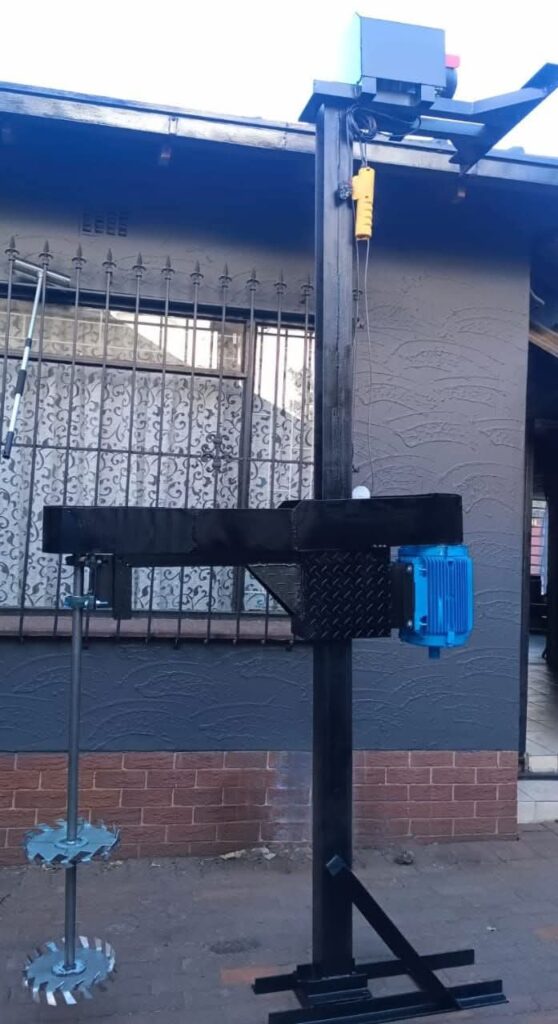
1. High-Speed Dispersers (Mixers)
Function:
Used to thoroughly mix paint ingredients — resins, solvents, pigments, thickeners, and additives — into a uniform slurry.
Key Features:
- Variable speed control
- Paddle or blade designed for high shear
- Built from corrosion-resistant materials
Use Cases:
Initial blending of raw materials before dispersion.
2. Bead Mills / Sand Mills
Function:
Grind and disperse pigments to achieve fine particle size and optimal color consistency.
Key Features:
- High grinding energy
- Adjustable speed and bead size
- Suitable for high-viscosity systems
Use Cases:
Achieving uniform pigment dispersion is critical for paint stability, gloss, and color strength.
3. Planetary Vacuum Mixers
Function:
Mix paints under vacuum to remove entrapped air, minimize bubbles, and improve product quality.
Key Features:
- Vacuum system
- Planetary mixing heads
- Heating and cooling jackets
Use Cases:
Creamy coatings, gel paints, adhesives, and high-gloss finishes that require smooth textures.
4. Storage & Holding Tanks
Function:
Temporary storage of mixed or finished paint batches before packaging.
Key Features:
- Level indicators
- Jackets for temperature control
- Sanitary valves
Use Cases:
Holding batches, blending large volumes, or staging before filling.
5. Paint Filling Machines
Function:
Accurately dispense paint into containers like tins, cans or bottles.
Types:
- Semi-automatic fillers
- Fully automatic fillers
- Volumetric, piston, or pump-based systems
Key Features:
- Adjustable fill volumes
- Multiple heads for fast output
- Anti-drip or nozzle control
Use Cases:
From small tins for retail to large industrial pails.
6. Capping, Sealing & Labeling Machines
Function:
Provide secure closures and professional presentation.
Key Features:
- Adjustable torque settings
- Compatibility with different cap types
- Integrated labeling options
Use Cases:
Ensures paint containers are leak-proof and correctly branded.
7. Conveyors & Line Automation
Function:
Connect production stages — from mixing to filling and packaging — to improve workflow and reduce manual handling.
Key Features:
- Belt conveyors
- Roller systems
- Integration with filling and labeling lines
Use Cases:
Higher throughput paint plants where manual handling would slow production.
🧩 Additional Equipment & Accessories
Depending on production scale and paint type, you may also use:
- Inline high-shear mixers
- Emulsifying systems for water-based paints
- Heat exchangers or cooling systems for temperature control
- Dust extraction or ventilation systems for safety
- Quality control instruments (viscometers, pH meters, colorimeters)
🛠 How Paint Manufacturing Machinery Processes Works
Step 1: Pre-Mixing / Premix
Raw materials are weighed and combined in a pre-mixer. Thickeners, dispersants, resin and solvent systems are blended gently to form a uniform base.
Step 2: High-Shear Mixing & Dispersion
High-speed dispersers break up agglomerates and wet the pigment thoroughly. Bead mills or sand mills then reduce particle size and create a stable dispersion.
Step 3: Vacuum Deaeration
Planetary vacuum mixers eliminate entrapped air to avoid pinholes and watery textures in the finished paint.
Step 4: Storage & Homogenisation
Intermediate tanks hold the batch to equilibrate and ensure consistency before filling.
Step 5: Filling & Packaging
Paint is filled into appropriate containers with precise volume control and sealed for shipment.
📊 Choosing the Right Paint Manufacturing Machinery
When choosing a paint production line, consider:
1. Production Capacity
Calculate litres per day or per batch to determine machine size and number of units.
2. Paint Type
Water-based vs solvent-based coatings require different materials and mixers with proper sealing.
3. Material Compatibility
Machines should withstand corrosion from solvents, resins, and pigments. Stainless steel and industrial coatings are typical.
4. Automation Level
Semi-automatic systems are ideal for small batches, while high-volume industrial operations benefit from fully automated lines.
5. Maintenance & Spare Parts
Easy access to wear parts — blades, bearings, seals — helps reduce downtime.
6. Quality Control
Choose mixers and mills that deliver consistent shear, particle size distribution, and stable formulary.
💡 Benefits of Investing in Proper Machinery
- Consistent quality across all batches
- Faster throughput and reduced labour costs
- Increased product stability and longer shelf life
- Better safety and hygiene in production areas
- Greater compliance with industry standards
- Scalable operations that grow with demand
📈 Typical Cost Considerations
Costs vary based on capacity, automation level, and application, but typical ranges include:
- Basic high-speed dispersers: suitable for startups and small plants
- Mid-range bead/sand mills and mixers: for medium output
- Full industrial lines with conveyors and automated fillers: for large plants
Prices fluctuate based on capacity, features, materials, automation, and whether equipment is new or refurbished.
📌 Final Thoughts
Paint manufacturing machinery forms the backbone of any efficient coatings production line. Whether you are planning a small boutique paint workshop or a large commercial coating plant, having the right machines — from mixers to fillers — ensures quality, consistency, and production speed.
Start by evaluating your production goals, product types, and budget. Then select a machinery configuration that meets those needs without over-complication. With the right setup, you’ll be able to manufacture paint that meets quality standards, scales with demand, and gives your brand a competitive edge.