
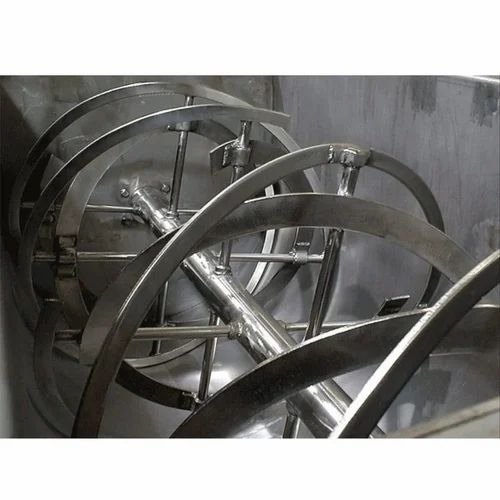
What Is an Electronic Paddle Mixer?
An electronic paddle mixer is a mixing machine powered by an electric motor (as opposed to manual or hand-operated mixers), with one or more paddle blades inside a trough or container. The paddles rotate to stir, fold, and mix powders, granules, or semi-dry materials efficiently and uniformly. These mixers are more powerful and consistent than manual paddling and more compact and affordable than heavy industrial mixers — a useful balance for small to medium-size operations.
Electronic paddle mixers are commonly used in industries like detergent/powder manufacturing, animal feed mixing, chemical powders, dry blends, fertilizers, cement additives, and more.
Why Many South African Producers Choose Electronic Paddle Mixers
✅ Compact Size & Low Floor Space Requirement
Electronic paddle mixers are usually smaller and easier to accommodate than large industrial blenders — ideal for small workshops, back-yard factories, or small-scale production units.
✅ Affordable Compared to Industrial Mixers
Because they are simpler machines, they have a lower upfront cost while still offering mechanical mixing power — a good entry point for SMEs, startups, or small factories.
✅ Adequate for Powder, Granule, and Semi-Dry Mixing
They handle dry powders, granules, light solids, and semi-dry mixtures well — perfect for detergent powders, feed, chemical blends, fertilizers, cement additives, or similar products.
✅ Easier Maintenance & Cleaning
With simple design — paddles, motor, trough — cleaning, maintenance, and repairs are easier and cheaper than with complex industrial mixers.
✅ Flexibility & Batch Control
Good for small to medium batches, custom mixing runs, or production lines where batch size or product mix changes frequently.
Key Features to Look For When Buying an Electronic Paddle Mixer
When shopping for an electronic paddle mixer in South Africa, check the following:
- Mixing Chamber Capacity: Choose a mixer with a chamber size appropriate to your typical batch volume — avoid too small (inefficient) or too big (underutilized).
- Paddle Design & Shaft Quality: Well-engineered paddles, strong shaft and bearings ensure uniform mixing and longevity.
- Motor Power & Drive Gearbox: Motor must be powerful enough for the load; gearbox and drive must be sturdy and smooth for continuous use.
- Material Construction: For powders or chemicals — use stainless steel or suitably coated metal to resist corrosion and ensure durability.
- Discharge Mechanism: A bottom discharge gate or outlet ensures easy emptying of mixed material.
- Ease of Cleaning & Maintenance: Removable parts, accessible trough, and simple design reduce downtime and sanitation effort.
- Safety & Stability: Strong frame, secure fittings, and safety guards to prevent accidents or spillage during mixing.
- Versatility: Ability to handle different powders, granules, or light pastes — useful if you plan multiple product lines.
Typical Use Cases for Electronic Paddle Mixers in South Africa
Electronic paddle mixers are commonly used for:
- Manufacturing detergent or cleaning powders
- Mixing animal feed powders, mineral blends, or supplements
- Blending fertilizer powders, seed treatments or agro-chemicals (where allowed)
- Mixing cement additives, dry construction mixes, tile adhesives, or grout powders
- Small-batch production for SMEs producing cleaning products, powders, or dry blends
These mixers suit businesses that need consistent powder mixing without heavy-duty industrial infrastructure, especially when batch sizes are small to medium.
What to Expect Price-wise & Practical Considerations
Because electronic paddle mixers vary widely in capacity and build quality, prices depend on:
- Chamber size / capacity
- Motor and gearbox ratings
- Material and finish (steel, coated metal, stainless)
- Discharge mechanism and build standards
- Whether new or second-hand / refurbished
Compared to large industrial mixers, electronic paddle mixers are more affordable — making them good for startups, small factories, or businesses scaling up production without huge capital expenditure.
Pros & Cons of Electronic Paddle Mixers
Advantages
- Cost-effective for small-to-medium operations
- Compact, manageable size for small workshops
- Simpler maintenance and cleaning
- Great for powders, granules, light blends — uniform mixing
- Flexibility for batch changes or product variations
Limitations
- Not suited for heavy-duty mixers or very viscous materials / pastes
- Lower throughput than industrial mixers — not ideal for mass production
- Requires careful loading and batch management to ensure uniform mixing
- Limited automation — some manual work remains (loading, discharge)
Who Should Consider Buying an Electronic Paddle Mixer?
You should consider investing in one if you:
- Run a small or medium-scale production line — powders, granules, dry blends, detergents, feed, or chemicals.
- Want affordable mechanical mixing without massive investment.
- Need flexibility — producing different mixes or small batches rather than large volume runs.
- Operate in limited space — small workshop, compact factory area, or basement production.
- Value ease of maintenance and periodic cleaning, rather than heavy industrial systems.
Final Thoughts: Is an Electronic Paddle Mixer the Right Fit?
For businesses in South Africa dealing with powders, granules, and dry blends — such as detergents, feed, fertilizers, or construction powders — an electronic paddle mixer for sale offers one of the most practical, budget-friendly, and efficient ways to mechanize your mixing process.
It balances cost, capacity, simplicity, and flexibility — and is especially suitable if you are starting out, running small batches, or need to keep operational costs manageable while ensuring consistent mixing quality.
If you choose a well-built mixer with the right size and quality, and operate it correctly, an electronic paddle mixer can serve as a reliable backbone for your production — without the overhead of large industrial machinery.