
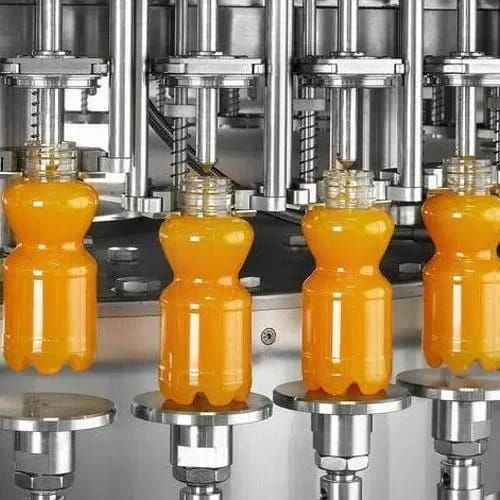
✅ What Is a Liquid Filling Machine?
A liquid filling machine is industrial equipment used to fill bottles, jars, or containers with liquid products—such as water, juice, shampoo, oils, detergents, or any free-flowing or moderately viscous liquid.
Buying a used liquid filler means you acquire a pre-owned machine — often at a much lower price than new, yet still capable of reliable performance. For small or medium businesses expanding production without large capital outlay, this is often a very appealing option.
⚙️ Why Consider a Used Liquid Filling Machine?
- Lower upfront cost — Great for startups, small-scale producers, or businesses testing a new product line.
- Faster return on investment — Less capital tied up means you can begin production sooner with lower risk.
- Proven equipment — Many filling machines are built to last; a well-maintained used unit can still deliver years of service.
- Better affordability for higher-spec machines — You may be able to afford better capacity or more features used than new at the same price.
- Flexibility for SMEs — Ideal if your production volume is moderate, or you need a filler for multiple product types (liquids, oils, shampoos, detergents).
💡 Typical Price Ranges in South Africa (Used & Entry-level Machines)
Based on recent South African market data for semi-automatic and automatic filling equipment: SME Machinery+2SME Machinery+2
| Scenario / Machine Type | Approximate Price Range (New / Semi-New) |
|---|---|
| Basic / semi-automatic filler (single or double head) — small batches | From ~ R 25,000 – R 50,000 SME Machinery+1 |
| Mid-capacity fillers — moderate throughput (medium factory or growing business) | R 50,000 – R 100,000 or more depending on condition and features SME Machinery+1 |
| Larger or multi-head fillers (higher output) — for substantial production runs | Higher price (used or refurbished) but still typically lower than new, depending on configuration and age |
These ranges are indicative; actual cost depends strongly on condition, configuration (heads/nozzles, pump type, capacity), and whether any refurbishment or maintenance is required.
🔍 What to Inspect & Test When Buying Used
When evaluating a used liquid filling machine, thorough inspection and testing are critical. Here’s a checklist:
- Pump / nozzle / valve condition — check for wear, leaks, rust, clogging.
- Seals, gaskets and contact parts — ensure sanitary quality, especially if filling consumables or personal-care liquids.
- Motor and drive mechanism — run the machine (preferably under load or with water) to test for noise, vibration, smooth operation.
- Calibration and fill accuracy — test with actual product or water to confirm consistent fill volumes across many bottles.
- Frame, structure and hygiene compliance — inspect for rust, damaged welds, corrosion, or contamination risks.
- Compatibility with your containers — ensure machine can handle your bottle sizes/materials (glass, PET, plastic), volume range, and shape.
- Ease of cleaning and maintenance — preferable if machine can be dismantled for cleaning, especially when switching liquid types.
- Availability of spare parts and support — older or obscure models may become problematic if parts are not available locally.
- Product history / maintenance history — ask the seller for service logs, leaks, repairs etc. A well-maintained older machine is often better than a poorly maintained newer one.
🧮 Pros & Cons of Opting for a Used Liquid Filling Machine
✅ Advantages
- Lower cost than new machines
- Faster payback in small/medium production settings
- May afford higher-capacity or more advanced machines at reduced price
- Lower capital risk — good for new product lines or small-batch production
- Flexible enough for varied liquids, container sizes, and smaller output
⚠️ Limitations & Risks
- Wear and tear on pumps, seals, nozzles — might need replacement
- Hygiene concerns (especially in food, beverage, cosmetics) if not cleaned properly
- Potential lack of warranty or after-sales support
- Limited availability of spare parts for older models
- Possibly lower efficiency or slower speed compared to new, optimized machines
🏭 What to Consider Before Buying (for SA Buyers)
- Product type and viscosity — thin liquids (water, juice, oils) require different filler settings than viscous liquids (soaps, shampoos, syrups).
- Batch volume and growth potential — choose a machine sized for your current demand but with headroom if you plan to grow.
- Sanitary requirements — if filling consumables or cosmetics, ensure all contact parts are stainless steel and hygienic standards are met.
- Local power and utilities — ensure your facility can supply required power (voltage, phase), and if needed, compressed air (for pneumatic fillers).
- Repair and maintenance capacity — ensure you or your technician can maintain, replace parts, and clean the machine.
- Cost of refurbishment — factor in possible costs to refresh the pump, seals, or nozzles. Add to total investment.
- Logistics & transport cost — older machines may be bulky and need careful shipping or transport if relocated.
🔧 Tips for Smart Buying & Setup
- Request to test-run with water or actual product — never buy “blind”.
- Take your own containers to test fill compatibility (size, shape, height).
- Inspect critical parts (pump, seals, nozzles) and estimate cost of replacement — use this to negotiate price.
- Plan for initial maintenance and cleaning — flush the machine, sanitize, replace worn seals before use.
- Document machine history — date of manufacture, past maintenance, past products filled (food / non-food), previous issues.
- Have spare parts ready or confirm availability locally — avoids downtime if something fails.
- Train operators well — correct use and hygiene practices will extend lifespan and reliability.
🌟 When a Used Liquid Filling Machine Makes Sense
- You’re starting a small to medium manufacturing business (beverages, oils, detergents, shampoos, etc.).
- You want to scale up production from manual bottling but have modest capital.
- You plan to produce multiple products or SKUs and want flexible, adjustable filling capability without big investment.
- You want to test market demand or new products before committing to a fully automated new line.
- You have access to maintenance and spare parts, and are ready to maintain the machine carefully.
✅ Conclusion
A used liquid filling machine in South Africa can be a smart, cost-effective investment — especially for small and medium enterprises, startups, and businesses transitioning from manual to semi-mechanised bottling. With lower upfront cost, flexibility, and potential for good performance, such machines give a path to increased production, consistency, and scalability without breaking the budget.
However — success depends on careful inspection, maintenance readiness, hygiene standards, and ensuring compatibility with your products and bottles. If you approach the purchase with due diligence, a used liquid filler can serve as a reliable backbone for your production line.