
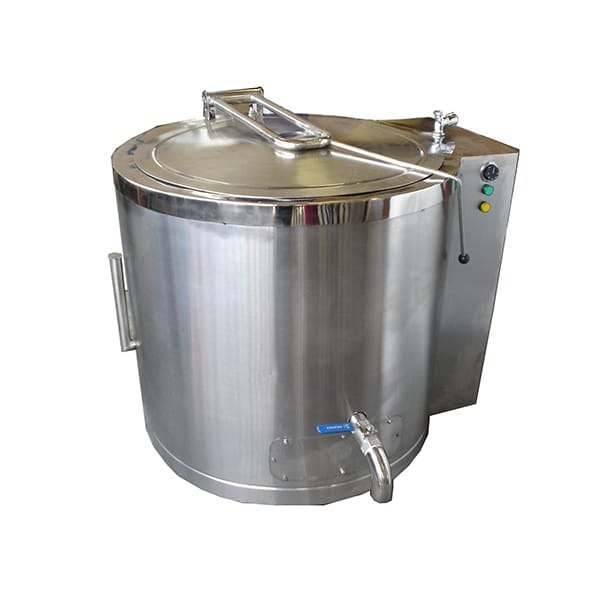
A 100 L water-jacketed pot is a high-efficiency heating vessel designed for medium-batch production. Unlike direct-heated pots, a water jacket circulates hot water through an outer chamber, gently transferring heat to the inner pot. This design provides uniform heating and reduces the risk of scorching or burning sensitive products.
Because of its capacity and heating control, a 100 L water-jacketed pot is a versatile tool for food producers, cosmetic manufacturers, chemical processors, and other industries.
Why Choose a 100 L Water-Jacketed Pot
- Precise and Even Heating
The outer water jacket distributes heat evenly around the cooking chamber, reducing hot spots. This is critical for delicate recipes, emulsions, or sensitive chemical formulations. - Thermal Stability
Maintaining a consistent temperature is crucial in many processes. A water jacket offers steady heat transfer, which helps maintain product integrity. - Safety
Because water is less volatile than steam, water-jacketed pots are generally safer and easier to manage, especially when handling flammable or heat-sensitive materials. - Energy Efficiency
Once the jacket reaches operating temperature, it retains heat well. This reduces the need for continuous high energy input, making the system economical for repeated batch processing. - Suitable Capacity
At 100 litres, the pot is large enough for commercial and pilot operations but still compact enough for smaller facilities or production lines with limited space. - Versatility
This pot can be used to cook sauces, soups, creams, lotions, wax melts, chemical solutions, or other formulations that require gentle and even heating.
Key Features to Look for When Buying
When investing in a 100 L water-jacketed pot, here are essential features to consider:
- Material Quality: Choose stainless steel (304 or 316) for both inner pot and jacket to ensure durability, sanitary conditions, and corrosion resistance.
- Jacket Design: The water jacket should be well-insulated, with proper inlet and outlet ports for hot water circulation.
- Heating Controls: A reliable thermostat or temperature controller is necessary to regulate water temperature and ensure consistent product heating.
- Lid and Access: A hinged or removable lid helps with loading, monitoring, and cleaning.
- Stirring Mechanism (Optional): For viscous or heat-sensitive products, an internal agitator or mixer helps maintain uniform distribution.
- Discharge Valve: A bottom drain or outlet valve enables safe and controlled emptying of the finished batch.
- Safety Measures: Look for safety relief if pressure builds, or a vent system to prevent overheating.
- Mobility and Stability: The pot should have stable legs or a frame, and optionally wheels if you need to move it around.
Typical Applications of a 100 L Water-Jacketed Pot
This pot is well-suited to a variety of industries and production needs, including:
- Food & Beverage: Cooking soups, sauces, dressings, fruit compotes, or delicate sugar syrups.
- Cosmetics: Melting and blending creams, lotions, balms, waxes, or emulsions.
- Chemical Processing: Heating low-flashpoint solutions, reactive mixtures, or formulation blends.
- Pharmaceuticals: Producing salves, ointments, or low-volatility medicinal preparations.
- Research & Development / Pilot Batches: Ideal for small-scale testing, recipe development, or small production runs.
Advantages & Potential Drawbacks
Advantages:
- Uniform, gentle heat transfer
- Stable and controllable temperature
- Safer than steam-heated systems in many scenarios
- Energy-efficient after reaching operating temperature
- Flexible capacity for medium-scale production
Drawbacks:
- Requires a water heating source (boiler or hot-water supply)
- Slower to heat up than steam
- Maintenance needed for jacket plumbing and seals
- Cleaning might be more involved compared to simpler pots
- Potential for scale build-up inside the jacket if water quality is poor
Maintenance Tips for Longevity
- Flush the Jacket Regularly: Remove scale or deposits to maintain heat transfer efficiency.
- Inspect Seals and Gaskets: Ensure that all seals are in good condition to prevent leaks.
- Check Temperature Controls: Calibrate the thermostat or controller periodically for accurate heating.
- Clean Interior After Use: Especially important when processing food, wax, or viscous products.
- Train Staff: Make sure operators know how to safely fill and drain water in the jacket, and how to manage temperature changes.
Buying Advice for South African Producers
If you are looking to buy a 100 L water-jacketed pot in South Africa, here are some practical tips:
- Confirm whether your heating source (boiler or hot-water system) can maintain the required jacket temperature.
- Choose a supplier who offers local installation, training, and spare parts for water jackets.
- Test with your actual product: ask for a demonstration or a trial batch so you can assess how the pot handles your specific materials.
- Make sure the pot meets hygiene standards relevant to your industry (food-grade, cosmetic-grade, etc.).
- Consider service agreements for preventive maintenance, especially for the water jacket system.
Conclusion
A 100 L water-jacketed pot is a highly flexible and efficient heating tool for medium-batch production in diverse industries. Its balanced capacity, precise temperature control, and safety make it ideal for manufacturers who need reliable and gentle heating for sensitive materials.
By carefully selecting a high-quality model with the right safety and control features, you can ensure consistent product quality, lower energy costs, and long-term operational stability. If you run a food, cosmetic, chemical, or R&D business, this pot could become one of your most valuable processing assets.