
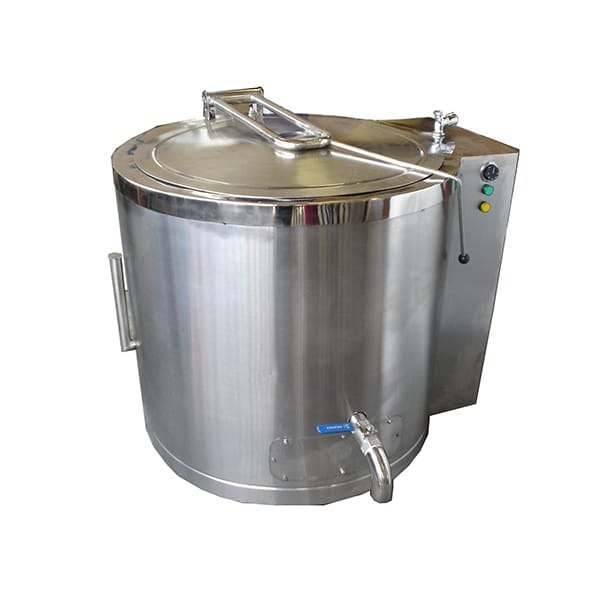
A 50 L oil-jacketed pot is a compact yet powerful cooking or processing kettle that uses thermal oil circulating in a double-walled jacket to heat the inner chamber. This design ensures smooth, even heating without burning or hot spots, making it ideal for small-batch production of sauces, creams, waxes, oils, lotions, and other heat-sensitive materials.
Why Choose a 50 L Oil-Jacketed Pot?
- Gentle, Controlled Heating: The oil jacket maintains a stable temperature and provides gentle thermal transfer, which is perfect for delicate ingredients.
- Small to Medium Batch Capacity: With a 50 L internal capacity, this pot is well-suited to labs, small factories, pilot lines, or specialty product runs.
- Energy Efficiency: Thermal oil systems are very efficient and can maintain heat for longer periods without constant power draw.
- Versatility: Able to handle a variety of products including creams, butters, waxes, edible oils, and chemical melts.
- Safety: Indirect heating via the oil jacket reduces risk of scorching or burning the product.
- Compact Footprint: Smaller than large steam kettles, this 50 L model can fit into modest production spaces while still delivering professional performance.
Key Features to Look For
When selecting a 50 L oil-jacketed pot, consider the following important features:
- Stainless Steel Construction
Use food-grade or chemical-grade stainless steel (304 or 316) for the inner pot and jacket to ensure durability and safety. - Thermal Oil Jacket
Ensures even heat distribution. Look for a pot with quality insulation and temperature controls. - Heating Controls
A thermostat or electronic temperature controller allows precise adjustments to maintain your desired heating profile. - Mixing Capability (Optional)
Some models include a built-in agitator or mixer for creams, waxes, or viscous liquids, which helps prevent burning and ensures uniform texture. - Lid Design
Choose between hinged lids, removable covers, or domed lids depending on how you will access and clean the pot. - Safety Valves and Pressure Relief
Even though the oil jacket is not pressurised like steam, safety valves, over-temperature cutouts, and secure sealing are critical. - Discharge Mechanism
A drain valve or outlet port makes it easy to unload your batch once it’s ready. - Mobility & Stability
Look for stable legs or a cart design that supports the weight of the pot when full, and considers portability if needed.
Common Applications of a 50 L Oil-Jacketed Pot
This size and design of pot are highly valuable in several industries:
- Cosmetics & Personal Care: Melting butters, waxes, and creams for lotions or balms.
- Food Processing: Making small batches of sauces, spreads, caramels, or chocolate.
- Chemical Production: Heating resins, waxes, or adhesives in small-scale production.
- Laboratory or Pilot Production: Testing, R&D, and formulations where precision and small batch size are required.
- Pharmaceutical Compounding: Preparing sensitive creams or medicinal waxes that require controlled heating.
Advantages & Drawbacks
Advantages:
- Precise temperature control and uniform heating
- Compact and suited to small-batch production
- Energy-efficient thanks to the thermal oil jacket
- Versatile applications across industries
- Reduces risk of overheating or burning sensitive material
Drawbacks:
- Higher cost compared to simple direct-heat pots
- Requires a thermal oil heating system or generator
- Maintenance needed for the oil jacket and heating system
- Cleaning can be more involved, especially if used for sticky or viscous products
- Potential safety risk if temperature controls are not set correctly
Maintenance Tips for Longevity
- Periodically inspect the thermal oil level and quality; degrade or contamination in the oil can affect heating performance.
- Clean the inner pot thoroughly after each batch to avoid cross-contamination.
- Check and service the outlet valve to avoid leaks or blockage.
- Inspect and calibrate your temperature control system regularly.
- Train operators on safe handling during heating, draining, and cleaning.
Buying Considerations for South African Manufacturers
If you are buying a 50 L oil-jacketed pot in South Africa, keep in mind:
- Supplier Reliability: Choose a manufacturer or supplier with experience in thermal equipment and local support.
- Spare Parts: Ensure you can get replacement parts like valves, gaskets, and heating elements locally.
- Regulations: Make sure your pot is manufactured to safety standards relevant in South Africa for pressure and temperature systems.
- Power and Utilities: Confirm your workshop or facility can handle the thermal heating system for the oil jacket.
- Service & Warranty: A good warranty and service contract can be invaluable when working with heating equipment.
Summary
A 50 L oil-jacketed pot is a smart and efficient investment for small to medium-scale manufacturing operations. Its precise, gentle heating, compact size, and versatility make it ideal for cosmetics, food, chemical, or R&D applications. By choosing a high-quality pot with strong safety features and local service, you can achieve reliable production, maintain product integrity, and scale your operations confidently.