
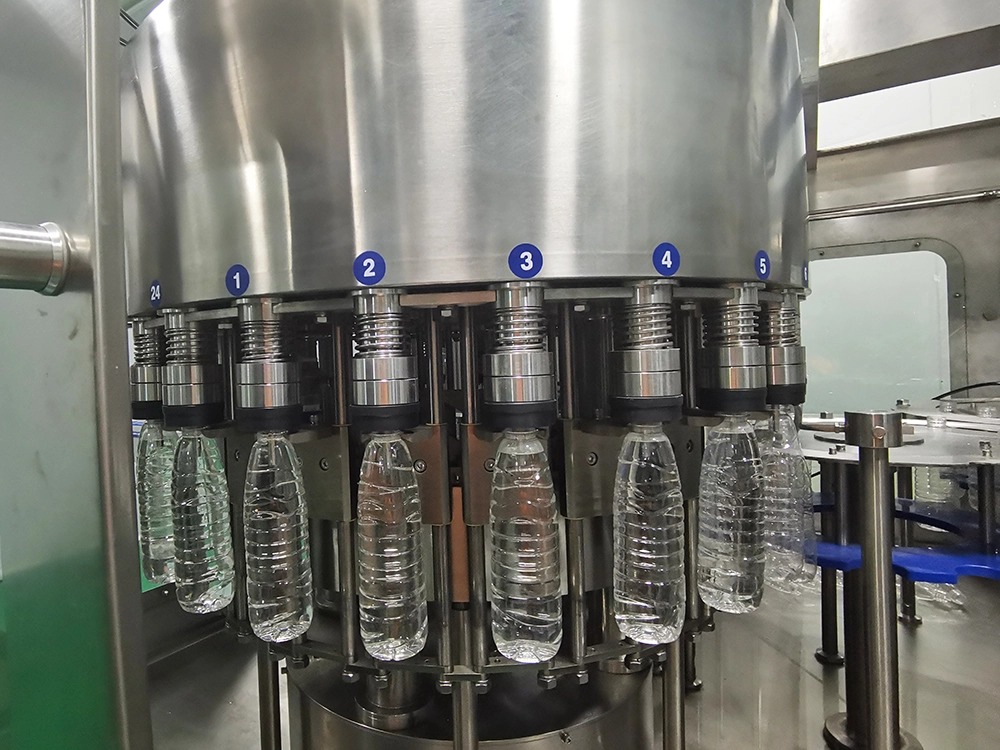
What Is a Water Bottle Filling Machine?
A water bottle filling machine is a piece of equipment designed to accurately and hygienically fill bottles with water for commercial sale. These machines range from manually operated fillers to fully automated high-speed systems, depending on the size of your operation.
Why You Might Want One in South Africa
- Growing Market: Bottled water demand is increasing locally due to health awareness, urban growth, and convenience.
- Cost Efficiency: Automating the bottling process reduces labour costs and avoids spillage or waste.
- Quality Control: Modern machines allow for precise fill volumes and hygienic filling without contamination.
- Scalability: Whether you are a small water distributor or a large bottling plant, filling machines scale with your business.
- Branding & Professionalism: Consistent filling and cap sealing make your product more appealing on shelves.
Types of Water Bottle Filling Machines
- Gravity Fillers
- Best for thin liquids like water.
- Uses gravity to feed liquid into bottles.
- Reliable and simple, with fewer moving parts.
- Overflow Fillers
- Ensures each bottle has exactly the same liquid level.
- Ideal for transparent bottles and customer-facing presentation.
- Pressure or Vacuum Fillers
- Uses pressure differentials to fill — good for faster lines or larger volumes.
- Often used in more technical or industrial-scale bottling lines.
- Semi-Automatic Filling Machines
- Requires manual placing of bottles, but fills automatically.
- Good for small-scale or growing businesses.
- Fully Automatic Filling Lines
- Bottles are fed, filled, capped, and sometimes labelled by the machine.
- High throughput, ideal for large-scale production.
What to Consider When Buying a Water Bottle Filling Machine in South Africa
- Production Capacity: How many bottles per hour do you plan to fill? This determines the size and speed of your machine.
- Bottle Types: Are your bottles glass or PET? Are they standard water bottles, sport bottles, or custom shapes?
- Filling Accuracy: You want very precise filling to avoid product loss or overfill — especially with expensive water brands.
- Sanitation and Food Safety: A machine built with food-grade stainless steel and easy-to-clean parts ensures compliance with hygiene standards.
- Power Requirements: Check your facility’s electricity capacity — 3-phase motors are common for automatic systems.
- Water Quality: If the water is pure or filtered, your machine components must resist corrosion and scale.
- After-Sales Support: Ensure that the supplier or manufacturer can provide maintenance, spare parts, and technical assistance locally.
- Footprint & Layout: Evaluate your factory or plant floor space and place the machine accordingly.
- Validation & Compliance: Make sure your filling line meets local health and packaging regulations.
Price Expectations in South Africa
While actual costs vary by capacity, level of automation, and supplier, here are approximate ranges:
| Machine Type | Approximate Price Range (ZAR) |
|---|---|
| Semi-Automatic (low volume) | R 60,000 – R 200,000 |
| Fully Automatic, Medium Speed | R 300,000 – R 1,000,000+ |
| High-Speed Production Line | R 1,000,000+ depending on configuration |
These are estimates — always get detailed quotations based on your specific requirements.
Top Benefits of Automating Your Water Bottling
- Consistency & Quality: Every bottle is filled and capped uniformly.
- Reduced Labour: Automation lowers reliance on manual labour, freeing up staff for other tasks.
- Less Waste: Accurate filling helps to minimise water loss.
- Improved Hygiene: Less human contact in the filling process reduces risk of contamination.
- Scalable: As your business grows, you can upgrade or expand your filling line.
Potential Challenges & Risks
- High Initial Investment: Automatic lines require capital, space, and skilled setup.
- Maintenance Costs: Machines require regular maintenance, especially with high water throughput.
- Training Needs: Operators need to learn how to run, clean, and maintain the equipment properly.
- Downtime Risk: Any breakdown can stop production, so you’ll need spare parts and rapid service support.
- Utility Requirements: High-speed machines may need stable electricity and clean water supply.
Tips to Buy Smart
- Request a Trial: Test-fill bottles using your actual water and bottles to ensure the machine works with your setup.
- Inspect After Sales: Confirm warranty, maintenance support, and spare part availability.
- Calculate ROI: Project your production growth, and estimate how quickly the machine will pay for itself.
- Think About Scaling Early: If you plan to grow, choose a machine that can be upgraded or expanded later.
- Partner With Reliable Suppliers: Work with a supplier that understands your local market and can help with regulatory and technical needs.
Final Thoughts
If you’re looking for a water bottle filling machine for sale in South Africa, investing in the right machine can transform your operation — improving speed, hygiene, and consistency. Whether you start small with a semi-automatic filler or go all-in with a high-speed automatic line, the right choice will help you grow your bottled water business sustainably.
Before making a purchase, carefully evaluate your daily production needs, your bottle types, and your facility’s capabilities. With smart planning and the right machine, you’ll be ready to serve clean, professional-quality bottled water to your customers.