
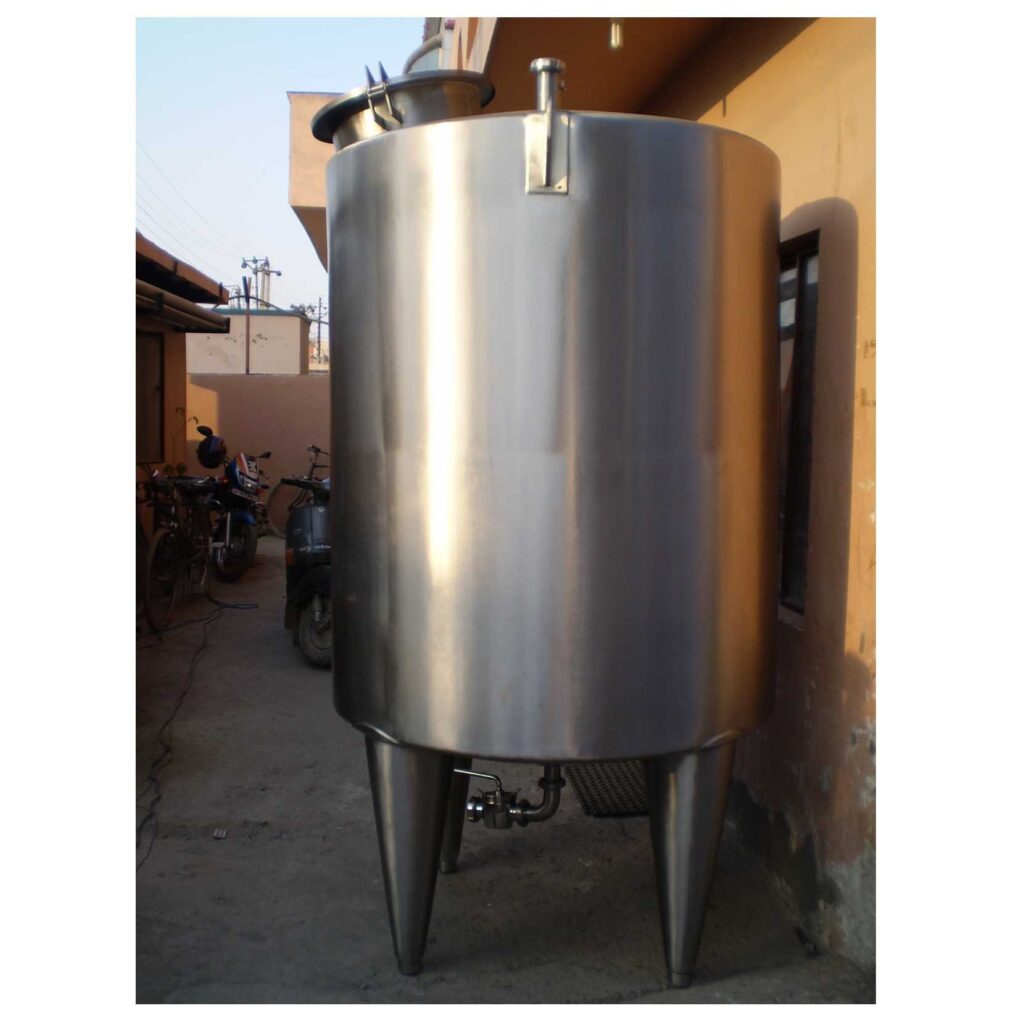
What Is a Heating Jacketed Mixing Tank?
A heating jacketed mixing tank is a stainless-steel vessel with a “jacket” — a double wall around the mixing chamber — through which a heating medium (like steam, hot water, or thermal oil) circulates. This medium warms the jacket, which in turn heats the product inside the tank gently and evenly.
Inside the tank, an agitator or mixer ensures the contents are stirred, blended, or emulsified, making these tanks ideal when both temperature control and mixing are critical.
Why South African Manufacturers Use Heated Jacketed Mixing Tanks
- Precise Temperature Control
For many chemical or cosmetic processes, it’s vital to maintain a specific temperature. The jacket allows you to control heating very accurately. - Uniform Heating
Because heat comes from the jacket and is distributed around the product, there are no hot spots; this reduces risk of burning or degrading sensitive materials. - Safe Heating
Indirect heating (via jacket) is safer than direct flame or direct heater, especially for volatile or heat-sensitive products. - Good for Viscous & Delicate Products
With a proper agitator, even thick creams, pastes, or reactive chemicals can be handled smoothly. - Flexible Scale
These tanks come in a range of sizes — small pilot tanks through to large industrial vessels — making them suitable for both startups and larger factories. - Energy Efficiency
Well-insulated jackets help minimize heat loss and make the heating more efficient.
Key Features to Consider When Buying
When selecting a heating jacketed mixing tank, focus on the following:
- Material Quality:
Use food- or chemical-grade stainless steel (like 304 or 316) for durability and resistance. - Capacity:
Determine the right size based on your batch volumes. Options can range from small (tens of litres) to many thousands of litres. - Heating Method:
- Steam: Very common for high heat and fast heating
- Hot water: Good for gentler heating
- Thermal oil: Very effective when very high temperature is needed
- Agitator Type:
Choose based on your product:- Anchor or scraper agitators for very viscous mixtures
- Propeller or paddle agitators for more fluid or less viscous mixtures
- High-shear mixers for emulsions, creams, or complex blends
- Jacket Pressure Rating:
The jacket must be rated for the pressure (if you’re using steam) — check safety specifications. - Insulation:
Insulated jackets help maintain temperature and save energy. - Instrumentation:
Thermowells, temperature probes, pressure gauges, and level indicators are critical for precision. - Safety Features:
Pressure relief valves, manways, and strong welds are essential for safety. - Cleaning & Maintenance:
A well-designed tank should be easy to clean; consider how accessible the interior is and whether CIP (clean-in-place) is possible. - Local Support & Parts:
Make sure there is local technical support for spare parts, agitators, and jacket maintenance.
Common Applications in South Africa
Heating jacketed mixing tanks are used in a variety of industries:
- Chemical manufacturing (resins, solvents, detergents)
- Cosmetic & personal care production (creams, lotions, gels)
- Food processing (sauces, syrups, fruit concentrates)
- Pharmaceutical production (suspensions, medicinal creams)
- Specialty industries (adhesives, waxes, reactive formulations)
Because these tanks combine heating and mixing, they are especially valuable where reactions or blending require both careful temperature control and thorough mixing.
Maintenance Tips for Longevity
- Regularly inspect jacket for leaks or wear.
- Clean the inner chamber thoroughly after each batch.
- Check and maintain agitator seals and bearings.
- Verify temperature sensors and pressure relief valves periodically.
- Circulate the heating medium per the supplier’s recommended maintenance schedule.
- Train your staff properly on how to operate and clean the tank safely.
Example Heating Jacketed Mixing Tanks to Consider
Here are a few example models that are relevant (or similar to what you might source):
- Jacketed Blending Tank with Agitator: A stainless-steel tank with mixing capability and jacket for heating — good for intermediate batch production.
- Double‑Jacket Heated 950 L Conical Tank: Large capacity, double-walled, with a mixer and heating jacket — ideal for viscous or reactive liquids.
- 100‑5000 L Heated Storage & Mixing Tank: Wide range of sizes, suitable for creams, chemicals, or food products, with heating and mixing features.
- Electric Heated 10‑200 L Double‑Wall Mixing Tank: Compact, jacketed, with electric heating; great for small-scale or pilot production.
- 1000 L Stainless Steel Heating & Mixing Tank: Large-scale mixing tank with heating and powerful agitator — suited to serious production volumes.
- Industrial Jacketed Cooking / Mixing Pan: Industrial-grade jacketed tank with mixer and heating — ideal for heavy-duty processes or reactive chemical production.
Pros & Trade-Offs
Advantages:
- Precise temperature control + safe heating
- Uniform mixing quality
- Scalable — from small batches to large industrial volumes
- Versatile — works for many industries
- Energy-efficient if well-insulated
Drawbacks:
- Higher capital cost than simple unheated tanks
- Requires a heating medium setup (steam boiler or thermal oil)
- Maintenance of jacket and agitator can be more complex
- Safety risk if temperature or pressure not managed properly
How to Choose a Supplier in South Africa
To get the best value and ensure reliability:
- Ask for local manufacturers or distributors that offer jacketed mixing tanks.
- Request a quotation with your required volume, heating medium, and agitator type.
- Confirm whether the supplier provides after-sales service, spare parts, and technical support.
- Visit or ask for a demo unit or video of a working tank.
- Make sure your supplier understands pressure vessel safety if you’re using steam.
- Ensure the supplier provides weld quality documentation, instrument specs (temperature, pressure), and a maintenance plan.
Conclusion
A heating jacketed mixing tank is a powerful investment for any South African business involved in mixing, heating, or reacting liquids or semi-liquids. It gives you:
- Consistent temperature control
- Thorough mixing
- Scalable and flexible production
- Safety and energy efficiency
If you’re producing chemicals, cosmetics, sauces, or any product where heat + mixing matter, choosing the right jacketed tank can take your operation to the next level. Focus on capacity, heating method, agitator design, and local support when selecting a supplier — and always maintain your equipment well.