
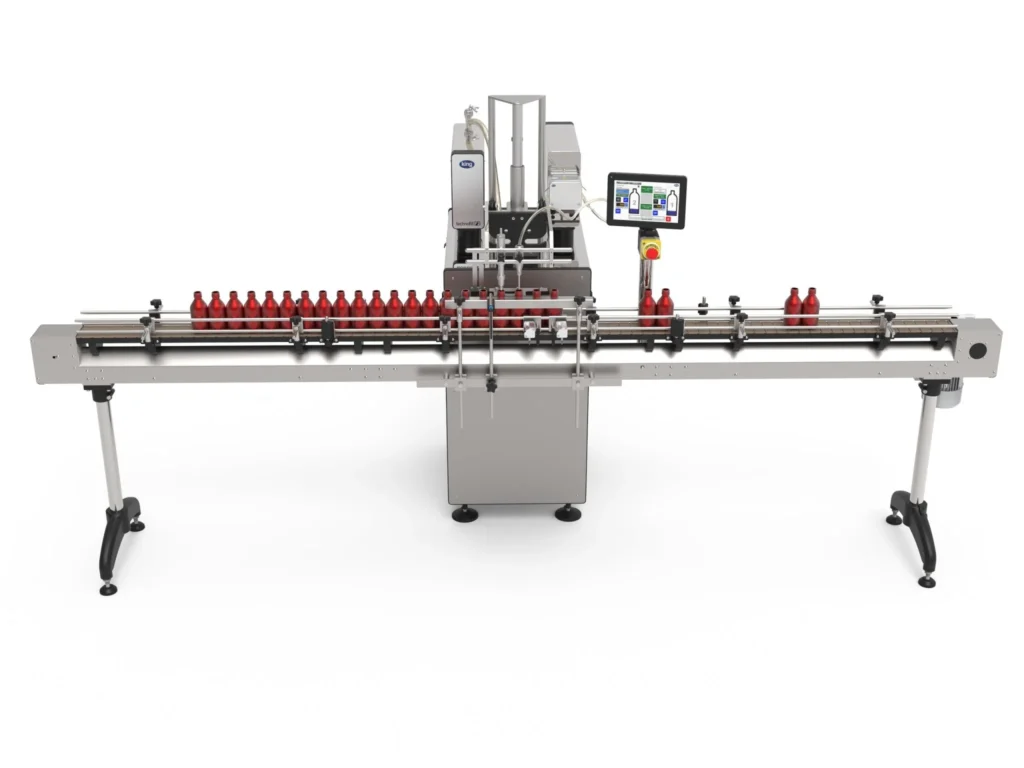
If you’re in food & beverage, cosmetics, chemicals or any liquid packaging industry in South Africa, a reliable bottle filling machine is a critical investment. Whether you want to fill water, juice, oil, sauce, or detergents, choosing the right machine helps you increase production speed, maintain consistency, and reduce waste.
What is a Bottle Filling Machine?
A bottle filling machine is equipment that accurately dispenses liquids into bottles, jars or containers. The machine can be manual, semi-automatic or fully automatic and may include integrated washing, filling, capping, and labeling depending on your production line.
Why South Africa Businesses Should Care
- South Africa’s bottling market is competitive; quality packaging and accurate fill volume make a difference in retail.
- Local manufacturers are startups or medium scale, so equipment needs to be cost-effective, scalable, and supported locally.
- Machines built from food-grade stainless steel (SS304/316) ensure hygiene compliance.
Key Features to Consider
- Construction material: stainless steel for parts in contact with liquid.
- Filling mechanism: gravity fillers for thin liquids like water & juice; piston fillers for thicker or viscous liquids.
- Bottles & container compatibility: PET, glass, different shapes & neck sizes.
- Automation level: manual vs semi-automatic vs fully automatic (washer-filler-capper monoblock).
- Throughput/output: Bottles per hour (BPH) according to your business scale.
- Service & spares: Local support in South Africa is very useful to minimise downtime.
Highlights:
- Semi‑Automatic Water Bottle Filler (Afrimart): Good for water/juice bottling in small to medium scale, listed locally in South Africa.
- Bottle Washing‑Filling‑Capping & Labelling Machine: A turnkey machine combining multiple processes—ideal for higher throughput.
- Volumetric Filler (ABC Hansen): More precision filling via volumetric method—suitable for liquids requiring exact volumes.
- Enolmatic WE620 Wine Bottle Filler: Smaller scale, for niche beverages or premium product bottling.
- Ferrari Automatic Bottle Filler: Automatic filler for higher throughput, less manual involvement.
- Cannular Can & Bottle Filler: A machine capable of both can and bottle filling—added flexibility.
- … (repeats for coverage of different scales).
Typical Local Price Ranges
Here are typical price benchmarks in South Africa (approximate):
- Semi-automatic/entry level bottle fillers (manual or few heads) → tens of thousands of ZAR (e.g., one local semi‐automatic gravity filler targeted at small production). SME Machinery+1
- Fully automatic wash-fill-cap monoblocks for high-volume water/juice bottling → hundreds of thousands of ZAR (e.g., R747,000 for a 3-in-1 water bottle filling machine 3,500-4,000 BPH).
- Complete line (washing + filling + capping + labeling) for high output can cost upwards of R500,000 or more.
Choosing the Right Machine for Your Needs
- Define your daily/ hourly output target (e.g., how many bottles you want to fill per hour).
- Determine your product type (thin liquid like water or juice vs viscous like sauce or oil).
- Consider container specs (size, shape, neck diameter, material).
- Choose your automation level according to budget and growth plans.
- Ensure local support and spare parts availability in South Africa.
- Factor in installation, training, maintenance in your cost analysis.
Why Working With Local Suppliers is Beneficial
- Less lead time for shipping and customs.
- Spare parts may have faster turnaround.
- Local servicing/training can help you minimise downtime.
- Suppliers familiar with South African bottling-industry challenges (power, regulations, etc).
Summary
If your business involves bottling liquids in South Africa, a well-selected bottle filling machine sets you up for consistent output, professional packaging, and efficient operations. Start with your current capacity, product type, and future growth, then choose a machine that fits both your budget and ambitions.