
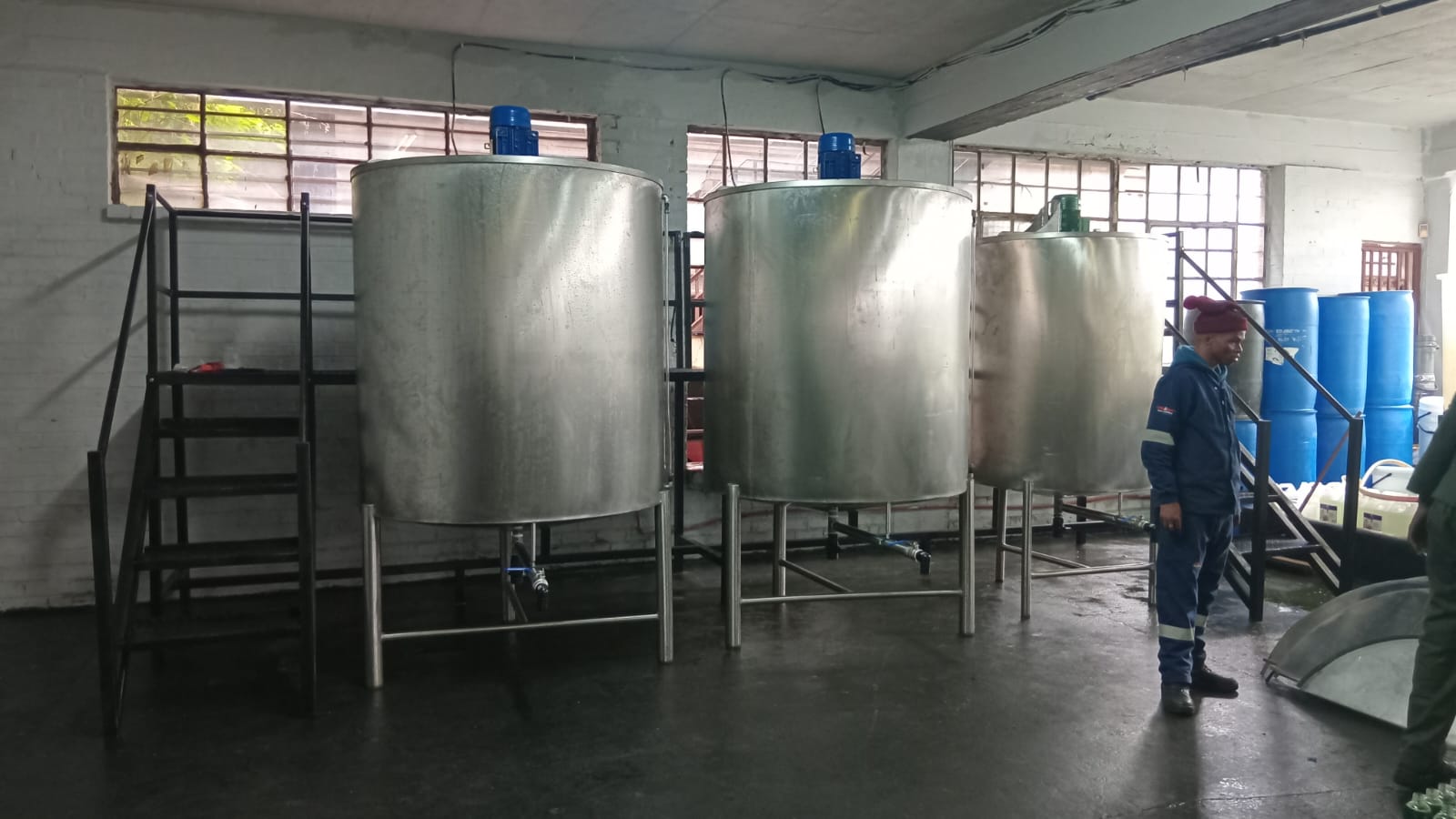
A detergent mixing machine is an industrial machine used to blend raw materials together to produce liquid detergents, cleaning solutions, and washing products. These machines ensure that ingredients mix evenly to create a consistent and high-quality final product. Detergent mixing machines are widely used in cleaning product manufacturing plants, cosmetic factories, and chemical processing industries. They play a crucial role in producing products such as: Using a detergent mixing machine improves production efficiency, product consistency, and manufacturing speed. How a Detergent Mixing Machine Works The working principle of a detergent mixing machine is based on mechanical agitation and controlled blending of liquid and powder ingredients. Basic Working Process This process ensures the detergent formula becomes smooth, homogeneous, and ready for packaging. Types of Detergent Mixing Machines Different types of detergent mixers are used depending on production scale. 1. Small Detergent Mixing Machine These machines are suitable for small businesses and startups producing cleaning products. Features: They are commonly used by entrepreneurs starting home or small factory detergent production. 2. Semi-Automatic Detergent Mixing Machine Semi-automatic machines offer higher efficiency for growing businesses. Key features include: These machines are popular among medium-scale detergent manufacturers. 3. Fully Automatic Detergent Mixing Machine Fully automatic machines are used in large manufacturing plants. Features include: These machines allow companies to produce large volumes of detergent quickly and efficiently. Advantages of Using a Detergent Mixing Machine Using a detergent mixing machine offers many benefits for manufacturers. Consistent Product Quality The machine ensures uniform mixing of ingredients, which improves product quality. Faster Production Compared to manual mixing, machines significantly increase production speed. Reduced Labor Costs Automation reduces the need for manual labor during the mixing process. Efficient Ingredient Use Precise mixing helps minimize waste of raw materials. Scalable Production Manufacturers can increase production by using larger mixing tanks or automated systems. Applications of Detergent Mixing Machines Detergent mixers are widely used across different industries. Household Cleaning Products Manufacturers use them to produce: Personal Care Products They are also used for: Industrial Cleaning Chemicals Factories produce products like: Key Components of a Detergent Mixing Machine A typical detergent mixing machine includes several essential parts. Mixing Tank The tank holds the raw materials and mixing solution. Agitator or Mixer This rotating component blends the ingredients together. Electric Motor The motor powers the agitator and controls mixing speed. Heating System (Optional) Some machines include heating jackets to dissolve ingredients more efficiently. Control Panel The control panel allows operators to adjust speed, temperature, and mixing time. How to Choose the Best Detergent Mixing Machine When selecting a detergent mixing machine for your factory, consider the following factors. Production Capacity Choose a machine that matches your daily production requirements. Tank Material Stainless steel tanks are preferred because they are durable, corrosion resistant, and easy to clean. Mixing Speed Machines with adjustable speeds provide better control over the mixing process. Automation Level Decide whether you need: Maintenance Requirements Select machines that are easy to clean and maintain. Maintenance Tips for Detergent Mixing Machines Regular maintenance ensures the machine operates efficiently. Recommended maintenance practices include: Proper maintenance extends the lifespan of the equipment and ensures safe operation. Why Detergent Mixing Machines Are Important Detergent mixing machines are essential for manufacturers because they provide: Without proper mixing equipment, it would be difficult to produce high-quality cleaning products at scale. Conclusion A detergent mixing machine is a critical piece of equipment in the cleaning product manufacturing industry. It allows manufacturers to produce liquid detergents efficiently while maintaining consistent product quality. Whether you operate a small detergent business or a large manufacturing plant, investing in the right detergent mixing machine can significantly improve productivity and product performance.
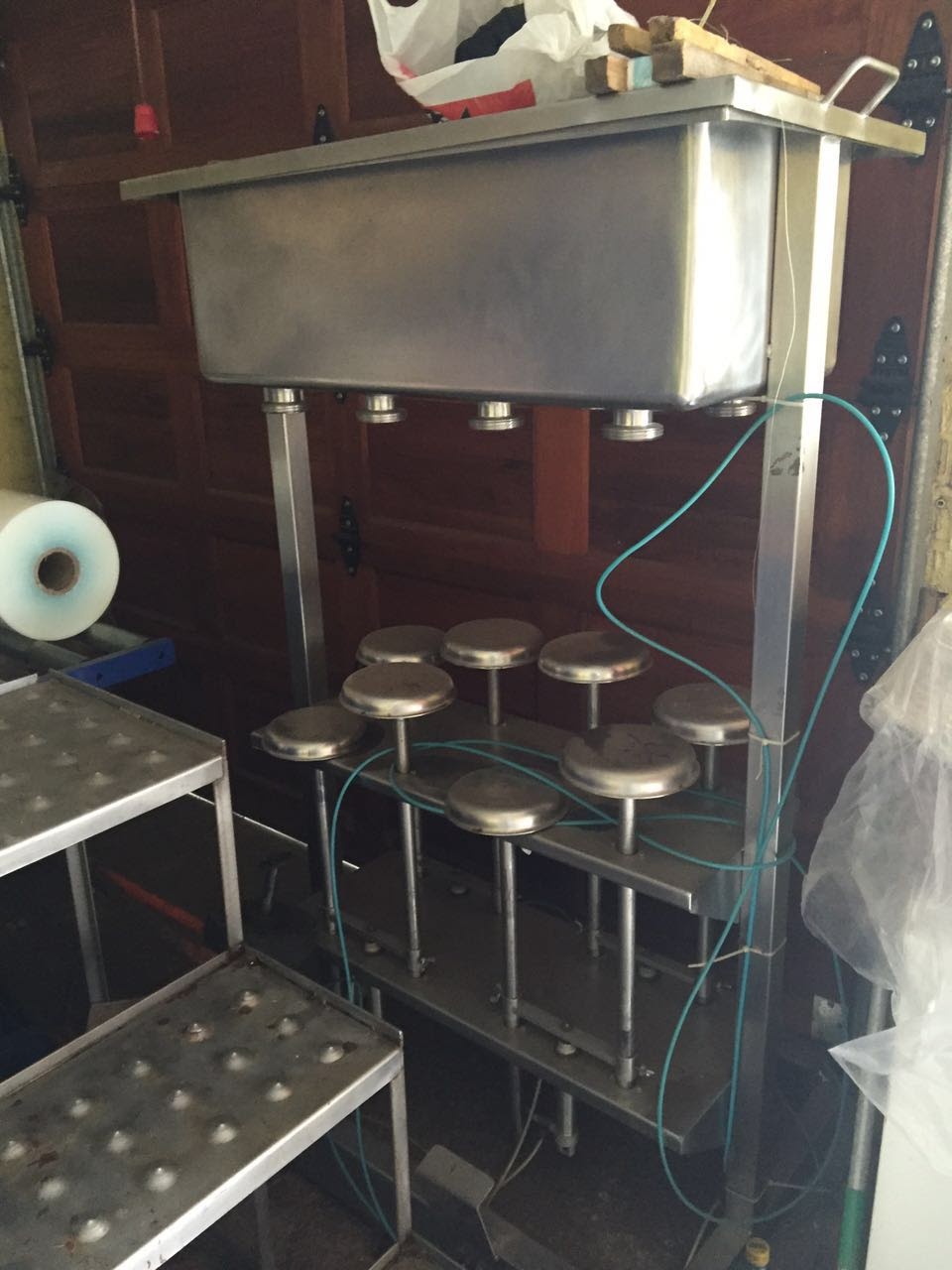
Gravity Filling Machine: Complete Guide
A gravity filling machine is a packaging machine used to fill liquids into bottles or containers using the natural force of gravity. It is one of the simplest and most reliable liquid filling systems used in manufacturing industries. These machines are commonly used for thin liquids that flow easily, making them ideal for many industries including food, beverage, chemical, and cosmetic manufacturing. Because of their accuracy, simplicity, and low cost, gravity filling machines are widely used in both small businesses and large production lines. How a Gravity Filling Machine Works The working principle of a gravity filling machine is simple. The machine uses an elevated tank that holds the liquid product. Once a container is placed under the filling nozzle, a valve opens and the liquid flows down into the container using gravity. Basic Process Because the process relies on gravity instead of pressure or pumps, the system is low maintenance and easy to operate. Types of Gravity Filling Machines There are several types of gravity filling machines depending on the production scale. 1. Manual Gravity Filling Machine Manual machines are ideal for small businesses or startups. Features: These machines are commonly used by small food producers and cosmetic startups. 2. Semi-Automatic Gravity Filling Machine Semi-automatic machines offer higher efficiency. Features include: They are commonly used in growing manufacturing companies. 3. Automatic Gravity Filling Machine Automatic gravity filling machines are designed for high-speed production lines. Features: These machines are commonly used in large factories and beverage production plants. Advantages of Gravity Filling Machines Gravity filling machines provide many benefits for manufacturers. 1. Simple Design The machine has fewer mechanical parts compared to other filling systems, making it easy to operate and maintain. 2. Cost-Effective Gravity filling machines are cheaper than pump or pressure filling machines, making them ideal for startups. 3. Accurate Filling With proper calibration, gravity filling machines provide consistent fill levels. 4. Low Maintenance Because they rely on gravity rather than complex pumping systems, they require less maintenance and fewer repairs. Applications of Gravity Filling Machines Gravity filling machines are widely used in many industries. Beverage Industry Used for filling: Food Industry Common products include: Cosmetic Industry Used for products such as: Chemical Industry Often used for filling: Gravity Filling Machine vs Other Filling Machines Understanding the differences between filling machines helps businesses choose the right equipment. Machine Type Best For Key Feature Gravity Filling Machine Thin liquids Uses gravity flow Pump Filling Machine Thick liquids Uses pumps Piston Filling Machine High viscosity products High precision Pressure Filling Machine Carbonated drinks Uses pressure Gravity filling machines are best for low-viscosity liquids that flow easily. How to Choose the Best Gravity Filling Machine When buying a gravity filling machine, consider these important factors. Production Capacity Choose a machine based on how many bottles you need to fill per hour. Number of Filling Heads Machines may have 2, 4, 6, or more filling nozzles depending on production speed. Container Type Make sure the machine supports the bottle shape and size used in your business. Material Quality Stainless steel machines are recommended for food and beverage production. Automation Level Decide whether you need: Maintenance Tips for Gravity Filling Machines Proper maintenance helps increase the lifespan of the machine. Recommended practices include: Routine maintenance ensures consistent performance and product safety. Why Gravity Filling Machines Are Popular Gravity filling machines remain one of the most popular liquid filling solutions because they combine: For businesses filling thin liquids, gravity filling machines provide an efficient and reliable solution. Conclusion A gravity filling machine is an essential piece of equipment for businesses that package liquid products. Its simple working principle, low cost, and reliable performance make it an ideal choice for many industries. Whether you run a small startup or a large manufacturing facility, investing in the right gravity filling machine can significantly improve your production efficiency and product consistency.
Semi-Automatic Bottle Filling Machine
Reliable Liquid Filling Solution for Small and Medium Production A semi-automatic bottle filling machine is widely used in manufacturing industries to accurately fill liquids, oils, chemicals, cosmetics, and food products into bottles or containers. These machines combine manual bottle placement with automated liquid dosing, making them ideal for businesses that want improved efficiency without the cost of a fully automated filling line. Semi-automatic fillers are commonly used in industries such as food processing, cosmetics, pharmaceuticals, beverages, and chemical manufacturing. They provide precise filling volumes while maintaining flexibility for different bottle sizes and liquid viscosities. How a Semi-Automatic Bottle Filling Machine Works A semi-automatic filling machine uses a controlled dosing mechanism to dispense a specific volume of liquid into each bottle. Basic operating process: This system improves production efficiency and filling accuracy compared to manual filling. Key Features of Semi-Automatic Bottle Filling Machines Accurate Filling Control Semi-automatic fillers allow operators to set precise filling volumes, ensuring consistent product levels in every bottle. Adjustable Filling Range Most machines can fill a wide range of volumes, typically between: Multiple Filling Heads Machines are available with different nozzle configurations: More filling heads increase production speed and output capacity. Stainless Steel Construction Most industrial filling machines are manufactured from SS304 or SS316 stainless steel, which ensures durability, corrosion resistance, and hygienic production. Pneumatic Operation Many semi-automatic machines operate with compressed air, which improves filling consistency and machine reliability. Technical Specifications (Typical) Specification Typical Range Filling Volume 50 ml – 5000 ml Filling Accuracy ±1% Production Speed 10 – 30 bottles per minute Number of Nozzles 1 – 4 Air Pressure 0.4 – 0.6 MPa Machine Material Stainless Steel Actual specifications depend on the machine model and application. Applications of Semi-Automatic Bottle Filling Machines Food and Beverage Industry Semi-automatic fillers are used for packaging: Cosmetics and Personal Care These machines are ideal for filling: Chemical Industry They are commonly used for: Pharmaceutical Industry Semi-automatic filling machines are used to package: These machines can fill PET bottles, glass bottles, HDPE containers, and jars. Types of Semi-Automatic Bottle Filling Machines Piston Filling Machine Piston fillers are designed for thick and viscous liquids, including sauces, creams, and gels. Gravity Filling Machine Gravity fillers are suitable for thin liquids such as water, juice, and alcohol. Peristaltic Pump Filling Machine These machines are used for high-precision filling, especially in pharmaceutical and cosmetic production. Gear Pump Filling Machine Gear pump systems are ideal for oils and medium-viscosity liquids. Advantages of Semi-Automatic Bottle Filling Machines Lower Investment Cost Semi-automatic machines are much cheaper than fully automatic bottling lines. High Filling Accuracy They provide consistent product volume, reducing waste and improving product quality. Flexible Production Operators can easily adjust the machine to fill different bottle sizes and liquid products. Easy Operation Most machines require minimal training and simple maintenance. Ideal for Growing Businesses They are perfect for small and medium manufacturers increasing production capacity. Semi-Automatic Bottle Filling Machine Sizes Semi-automatic filling machines are available in different capacities depending on production needs. Common filling ranges include: Machines may also be configured with single or multiple filling heads to increase output. Semi-Automatic Bottle Filling Machine Price in South Africa The price of a semi-automatic bottle filling machine depends on machine size, filling range, and nozzle configuration. Typical price ranges: Machine Type Price Range Small tabletop fillers R3,000 – R15,000 Single-head piston fillers R15,000 – R45,000 Double-head semi-automatic fillers R20,000 – R60,000 Multi-head industrial fillers R60,000 – R120,000 Larger machines with higher filling capacity and multiple nozzles are generally more expensive. Industries That Use Semi-Automatic Bottle Filling Machines Semi-automatic fillers are commonly used by: They are particularly useful for small and medium production facilities that require efficient bottle filling without a full automation system.
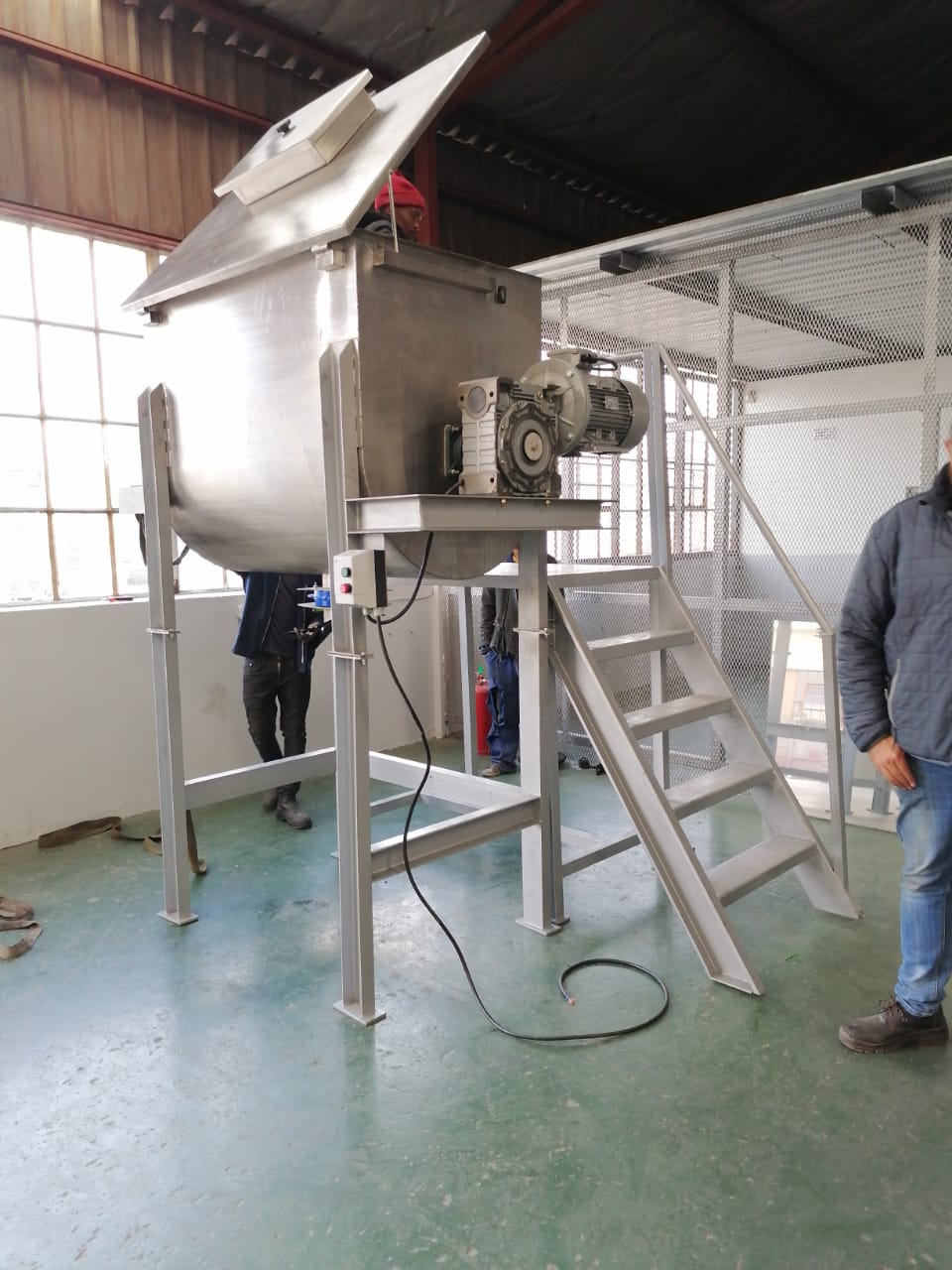
1000kg Ribbon Blender Powder Mixer – Industrial 1 Ton Powder Mixing Machine
Industrial 1000kg Ribbon Blender for Powder Mixing A 1000kg ribbon blender powder mixer is a heavy-duty industrial machine designed to mix powders, granules, and dry ingredients in large batches. With a 1 ton mixing capacity, this machine is widely used in detergent production, food processing, chemical manufacturing, animal feed production, and cosmetic powder blending. Ribbon blenders are one of the most reliable industrial mixing machines because they provide fast, uniform, and efficient blending of materials. The machine uses a double-helical ribbon agitator mounted on a central shaft that rotates inside a horizontal U-shaped mixing trough. This mixing design ensures that all ingredients move continuously inside the chamber, producing a consistent mixture within minutes. How a 1000kg Ribbon Blender Powder Mixer Works A ribbon blender operates using two spiral ribbons attached to a central shaft. The mixing process works through two simultaneous material movements: This counter-flow movement circulates the materials through the entire mixing chamber, creating homogeneous blending. Typical mixing time is 10 to 15 minutes per batch, depending on the product being mixed. Key Features of a 1000kg Ribbon Blender Large Industrial Mixing Capacity The machine can mix up to 1000kg of powder per batch, making it suitable for medium to large manufacturing operations. Double Ribbon Agitator System The dual ribbon structure provides faster mixing and improves blending efficiency. Heavy Duty Construction Industrial ribbon blenders are available in: Stainless steel models are commonly used in food, pharmaceutical, and cosmetic industries. High Torque Motor and Gearbox The machine is powered by a heavy-duty motor and industrial gearbox designed to handle dense powder mixtures. Bottom Discharge System The mixer includes a bottom outlet for quick discharge of mixed materials. Common discharge valves include: Dust-Controlled Mixing Closed lids and sealed systems prevent dust contamination and product loss. Technical Specifications – 1000kg Ribbon Blender Powder Mixer Specification Typical Range Batch Capacity 1000 kg Total Volume 1500 – 1800 litres Motor Size 7.5 kW – 15 kW Mixing Speed 25 – 40 RPM Mixing Time 10 – 15 minutes Construction Mild Steel / SS304 / SS316 Power Supply 3 Phase Motor size may vary depending on the density and type of material being mixed. Applications of a 1000kg Ribbon Blender Powder Mixer Detergent Manufacturing Food Processing Industry Animal Feed Manufacturing Chemical Industry Cosmetic Manufacturing Ribbon blenders are widely used because they provide consistent and uniform powder mixing. Advantages of a 1 Ton Ribbon Blender Powder Mixer High Production Efficiency Large batches reduce production time and improve productivity. Uniform Powder Blending The double ribbon agitator ensures consistent mixing throughout the batch. Fast Mixing Time Most materials blend within 10 to 15 minutes. Durable Industrial Design Heavy duty construction allows the machine to operate continuously in manufacturing plants. Versatile Mixing Applications The mixer can handle powders, granules, and light paste materials. Optional Features for 1000kg Ribbon Blenders Industrial ribbon blenders can be equipped with several optional features depending on production requirements. Common options include: These features improve mixing performance and allow integration into automated production lines. 1000kg Ribbon Blender Price in South Africa The price of a 1000kg ribbon blender powder mixer varies depending on construction material, motor size, and automation features. Estimated Price Range Machine Type Price Range Mild Steel R120,000 – R250,000 Stainless Steel 304 R250,000 – R450,000 Stainless Steel 316 R400,000 – R700,000 Machines with automation systems, heating jackets, or specialized features may cost more. Industries That Use 1000kg Ribbon Blender Powder Mixers A 1 ton ribbon blender is commonly used in industrial manufacturing environments such as: These machines remain one of the most efficient industrial powder mixers available for large batch production.
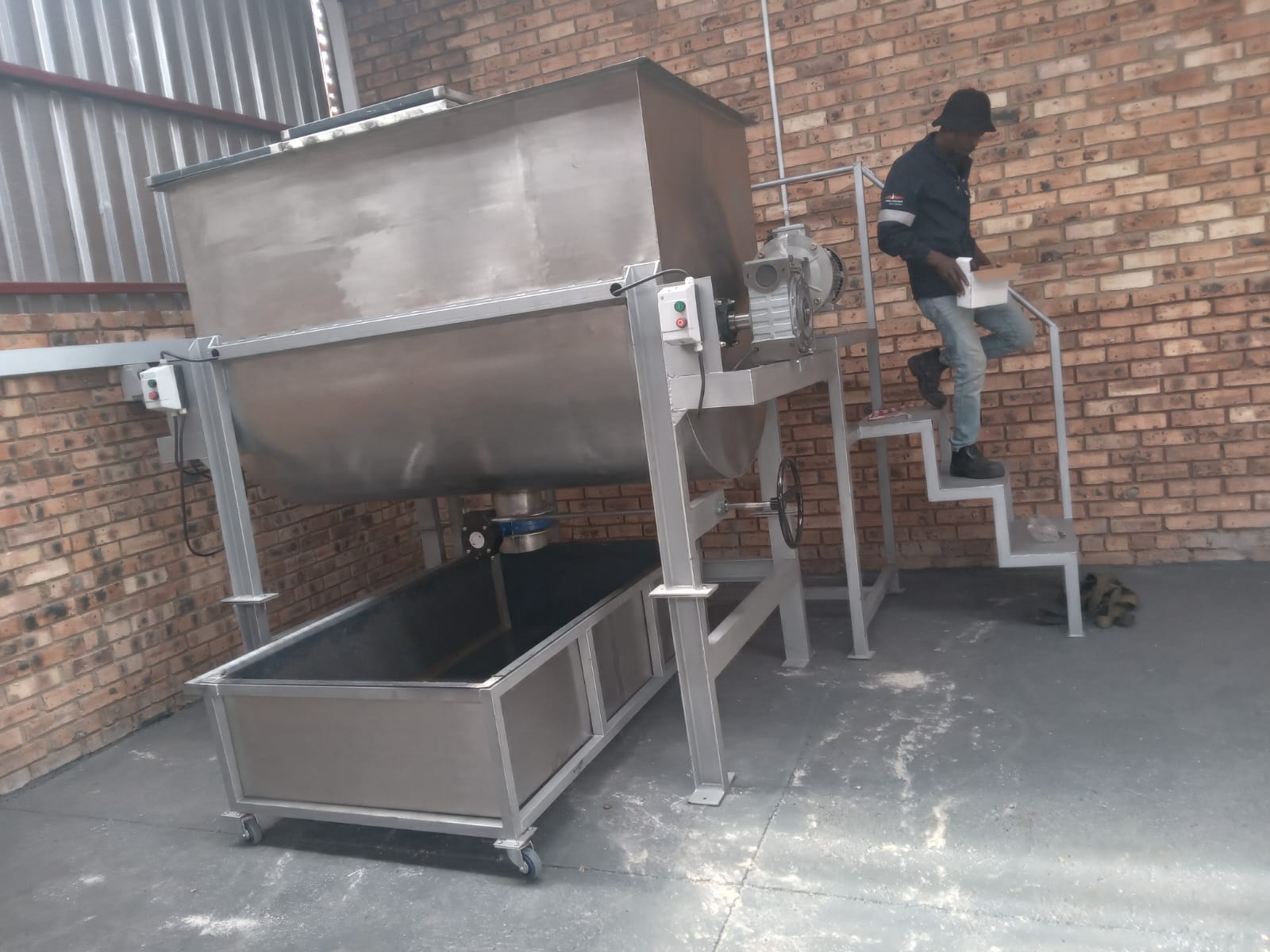
3000kg Ribbon Blender – Industrial 3 Ton Powder Mixing Machine
High-Capacity Ribbon Blender for Industrial Manufacturing A 3000kg ribbon blender is a large industrial mixing machine designed for blending bulk powders, granules, and light pastes in high-volume production environments. This 3-ton ribbon mixer is widely used in industries such as detergent manufacturing, food processing, animal feed production, cosmetics, and chemical manufacturing. With its horizontal U-shaped mixing trough and double-helical ribbon agitator, the machine produces a continuous flow of materials, ensuring fast and uniform mixing across large batches. For manufacturers producing high volumes, a 3000kg ribbon blender significantly improves production efficiency and product consistency. How a 3000kg Ribbon Blender Works A ribbon blender uses a dual ribbon agitator mounted on a horizontal shaft inside a U-shaped trough. The mixing action works through opposing material movement: This counter-flow mixing action creates a continuous circulation of ingredients, ensuring a uniform blend throughout the batch. Typical mixing cycles take 10 to 20 minutes depending on the material. Key Features of a 3 Ton Ribbon Blender Large Industrial Capacity Double Ribbon Mixing System The inner and outer ribbons create fast and efficient mixing for powders and granules. Heavy-Duty Construction Machines are available in: Powerful Motor and Gearbox High-torque motors allow the blender to handle heavy industrial loads. Bottom Discharge System Material is discharged through: Safety and Dust Control Industrial ribbon blenders are fitted with sealed lids and safety features to prevent dust contamination. Technical Specifications – 3000kg Ribbon Blender Specification Typical Range Batch Capacity 3000 kg Total Volume 3000 – 4000 litres Motor Size 18.5 kW – 30 kW Mixing Speed 20 – 40 RPM Machine Weight ±3000 kg Construction Material SS304 / SS316 / Mild Steel Power Supply 3-Phase Industrial The motor size may vary depending on the density of the material being mixed. Applications of a 3000kg Ribbon Blender Detergent Manufacturing Food Industry Animal Feed Production Chemical Industry Cosmetic Manufacturing The ribbon blender can achieve very high mixing uniformity, making it suitable for industries that require consistent product quality. Advantages of a 3000kg Ribbon Blender High Production Output Large batch sizes reduce the number of mixing cycles required. Fast Mixing Time Most batches mix within 10–20 minutes. Uniform Blending The dual ribbon agitator ensures consistent mixing. Energy Efficient Despite its size, the machine operates efficiently with properly sized motors. Versatile Applications Handles powders, granules, and light pastes. Optional Features Industrial ribbon blenders can be customized with: These features allow the mixer to integrate easily into automated manufacturing lines. 3000kg Ribbon Blender Price in South Africa The price of a 3 ton ribbon blender depends on factors such as: Estimated Price Range (South Africa) Machine Type Estimated Price Mild Steel R350,000 – R500,000 Stainless Steel 304 R500,000 – R750,000 Stainless Steel 316 R700,000 – R1,100,000 Prices may vary depending on machine configuration and supplier. How to Choose the Right 3000kg Ribbon Blender When selecting a ribbon blender, consider the following: Material Density Heavy powders require larger motors. Hygiene Requirements Food and cosmetic production require stainless steel construction. Production Volume Ensure the mixer capacity matches your daily production needs. Maintenance and Spare Parts Choose machines with accessible components for easy servicing. Industries That Use 3000kg Ribbon Blenders Large ribbon blenders are commonly used in: These mixers remain one of the most reliable industrial machines for large-scale powder mixing.