
Introduction
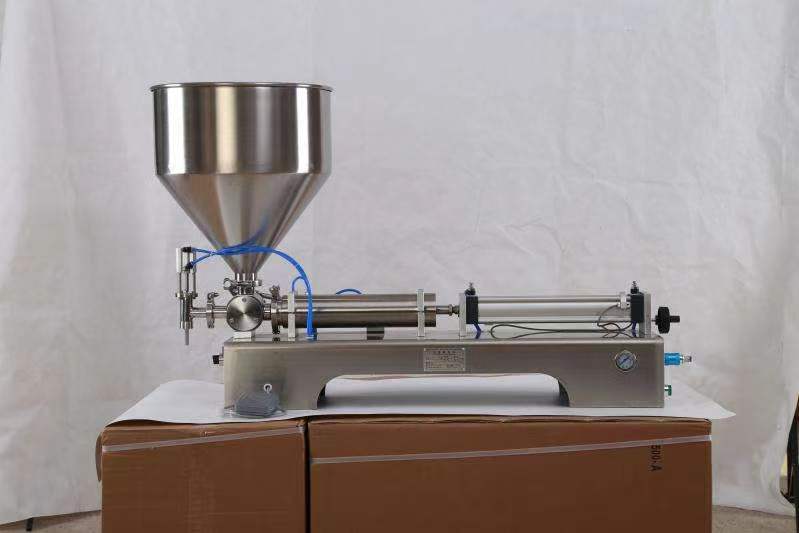
A piston filling machine is one of the most reliable and widely used filling solutions in modern manufacturing. Designed for accuracy, consistency, and versatility, piston fillers are ideal for handling liquids, semi-liquids, and viscous products across industries such as food processing, cosmetics, chemicals, pharmaceuticals, and detergents.
For manufacturers looking to improve filling speed, reduce wastage, and maintain precise volume control, piston filling machines remain a proven and cost-effective investment.
What Is a Piston Filling Machine?
A piston filling machine operates using a volumetric filling principle. A piston draws product into a cylinder during the intake stroke and then dispenses a precise volume into containers during the discharge stroke. The fill volume is controlled mechanically or electronically, ensuring uniform fills across every container.
This method makes piston fillers especially suitable for thick, viscous, or particulate products that are difficult to fill accurately using gravity or overflow systems.
Key Features of Piston Filling Machines
- High filling accuracy with minimal product loss
- Adjustable fill volumes for different container sizes
- Suitable for liquids, creams, pastes, and gels
- Hygienic stainless steel construction
- Easy cleaning and maintenance
- Manual, semi-automatic, and fully automatic options
- Optional hopper heating, agitators, or no-drip valves
Products That Can Be Filled Using a Piston Filler
Liquids
- Water
- Juice
- Vinegar
- Cooking oil
- Alcohol-based solutions
Semi-Liquids
- Shampoo
- Liquid soap
- Detergents
- Syrups
- Body wash
Viscous & Paste Products
- Sauces
- Chilli paste
- Mayonnaise
- Peanut butter
- Creams and gels
Products with Particulates
- Atchar
- Chunky sauces
- Herbal mixtures
Industries That Use Piston Filling Machines
Food & Beverage Manufacturing
Used for sauces, oils, syrups, condiments, dairy products, and spreads.
Cosmetics & Personal Care
Ideal for creams, lotions, gels, shampoos, and conditioners.
Chemical & Detergent Production
Perfect for dishwashing liquids, hand wash, industrial cleaners, and detergents.
Pharmaceutical & Herbal Manufacturing
Accurate dosing for medicinal syrups, gels, and topical products.
Types of Piston Filling Machines
Manual Piston Fillers
Best suited for startups and small-scale operations with low production volumes.
Semi-Automatic Piston Fillers
Foot-pedal or button-operated machines ideal for growing manufacturers seeking improved efficiency.
Automatic Piston Filling Machines
High-speed systems integrated with conveyors for large-scale industrial production lines.
Piston Filling Machine Models & Capacities
Common configurations include:
- Single-head piston fillers
- Two-head and four-head piston fillers
- Inline multi-head piston filling systems
Typical Filling Ranges
- 5 ml – 100 ml
- 100 ml – 1 litre
- 1 litre – 5 litres
Motor Sizes & Power Options
Motor sizes vary depending on machine type and capacity:
- Small semi-automatic units: 0.5 HP – 1 HP
- Medium production machines: 1.5 HP – 3 HP
- Industrial automatic systems: 3 HP – 7.5 HP
Pneumatic-driven piston fillers are also common in industries requiring explosion-proof or low-electrical environments.
Advantages of Using a Piston Filling Machine
- Consistent fill accuracy across batches
- Reduced spillage and product waste
- Flexible for multiple product viscosities
- Easy changeover between products
- Scalable from small to high-volume production
Choosing the Right Piston Filling Machine
When selecting a piston filler, manufacturers should consider:
- Product viscosity and temperature
- Required production speed
- Container size and shape
- Level of automation needed
- Cleaning and hygiene requirements
Conclusion
A piston filling machine is an essential piece of equipment for manufacturers seeking precision, efficiency, and versatility. Whether you are a small business entering the market or an established producer scaling operations, piston fillers provide reliable performance across a wide range of products and industries.
With the right configuration, a piston filling machine can significantly improve productivity, reduce operational costs, and ensure consistent product quality.