
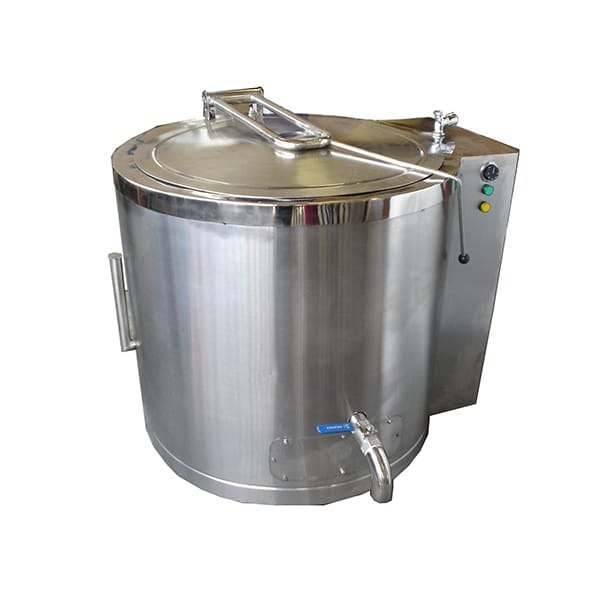
A 100-liter oil-jacketed pot is a versatile and powerful piece of processing equipment used in diverse industries. With thermal oil circulating through its outer jacket, this pot offers precise, even heat — ideal for gentle and controlled heating of heat-sensitive or thick materials. Its capacity and thermal design make it a strong choice for small-scale factories, pilot plants, and niche product manufacturing.
Why a 100 L Oil-Jacketed Pot Is a Smart Investment
- Medium-Scale Capacity
A 100 L pot bridges the gap between small lab units and large industrial kettles. It’s especially suitable for companies scaling up but not yet at mass production levels. - Accurate Thermal Control
Oil jackets maintain stable temperature without rapid fluctuations. This is vital for processes like melting waxes, cooking sauces, formulating lotions, or heating chemical solutions. - Energy Efficiency
Once heated, thermal oil retains heat well, reducing the need for continuous high power input. This makes heating more efficient compared to direct steam or electric heating. - Product Safety & Quality
The indirect heating method prevents scorching, burning, and localized overheating. Sensitive ingredients remain stable, preserving quality. - Versatility
Suitable for food, cosmetics, chemicals, pharmaceuticals, or any application where consistent, gentle heating is needed. - Compact Footprint
While 100 L is a sizeable capacity, the unit remains relatively compact compared to large steam kettles. Ideal for indoor production areas with limited space.
Key Features to Evaluate When Buying a 100 L Oil-Jacketed Pot
To make the most of a 100 L oil-jacketed pot, keep these essential features in mind:
- Material Construction
Choose stainless steel 304 or 316 for the inner pot and jacket to ensure durability, corrosion resistance, and cleanliness. - Temperature Control
Include a reliable thermostat or PID controller for precise temperature setting and stability. - Heating System
The jacket should support thermal oil circulation. Confirm the heating capacity (kW) to reach your required operating temperature. - Agitator / Mixer Options
If you plan to cook or melt thick materials, an internal agitator helps maintain uniform temperature and texture. - Lid Design & Access
A hinged or removable lid, preferably with a secure locking mechanism, makes loading and cleaning easier. - Discharge Valve
Look for well-designed drain or outlet valves, such as butterfly or ball valves, to empty the pot safely and efficiently. - Safety Features
Include a pressure relief valve, over-temperature protection, and proper sealing to avoid oil leaks. - Insulation & Heat Retention
Insulated jackets help retain heat between batches, increasing efficiency. - Support & Mobility
Stable legs or wheels (if mobile) and a robust structure ensure safe and practical use.
Common Applications for a 100 L Oil-Jacketed Pot
Here are industries and uses where a 100 L oil-jacketed pot shines:
- Cosmetics & Personal Care
Melting butters, waxes, and creams for balms, lotions, and soaps. - Food Production
Cooking sauces, syrups, caramels, or chocolate in manageable batches. - Chemical Processing
Heating resins, adhesives, wax-based formulations, and other reactive materials. - Pharmaceuticals
Warming temperature-sensitive compounds, creams, and formulations without damaging active ingredients. - Research & Development
Pilot-scale product development, formula testing, and small-batch production.
Advantages & Disadvantages
Advantages
- Controlled, gentle heating
- Good capacity for scaling
- Energy-efficient once hot
- Maintains product quality
- Flexible for multiple types of production
Disadvantages
- Higher upfront cost than a simple direct-heat pot
- Requires thermal oil maintenance
- Needs a reliable heating system or boiler
- Cleaning may take longer than simpler units
- Safety precautions necessary for pressurised or heated jackets
Maintenance Tips for Long-Term Use
- Regularly check the level and condition of the thermal oil in the jacket to prevent degradation or contamination.
- Clean the interior after each batch to avoid buildup and cross-contamination.
- Inspect and maintain the discharge valve to ensure smooth draining.
- Calibrate your temperature controller and safety cutoffs periodically to prevent overheating.
- Train operators on safe use, including loading, heating, draining, and cleaning.
Buying Advice for South African Manufacturers
If you’re in South Africa and shopping for a 100 L oil-jacketed pot, here’s how to make a wise choice:
- Confirm whether local suppliers or manufacturers offer buyers technical support and spare parts.
- Ask for a demonstration or trial with a product similar to what you will process.
- Ensure that the pot complies with local safety and quality standards.
- Plan for installation, including heating system, thermal oil supply, and any insulation needed.
- Consider service contracts or preventive maintenance plans to protect your investment.
Conclusion
A 100 L oil-jacketed pot is a powerful, efficient piece of equipment for any business looking to scale up its thermal processing capabilities. With exceptional temperature control, solid construction, and flexible capacity, it’s a strong choice for industries ranging from cosmetics and food to chemicals and pharmaceuticals.
By selecting the right pot—with reliable heating, safety features, and support—you’ll gain a vessel that not only protects your product quality but also helps your production team work more efficiently and safely.