
Introduction
In today’s fast-paced manufacturing industry, efficiency and accuracy are key to staying competitive. Piston filling machine is a popular solution for businesses that package liquids, creams, gels, and even thick pastes. Known for its precision, versatility, and reliability, piston fillers are widely used in industries ranging from food and cosmetics to pharmaceuticals and chemicals.
Whether you’re packaging honey, shampoo, sauces, or lotion, the right piston filler can transform your production line.
Table of contents
What is Piston Filling Machinery?
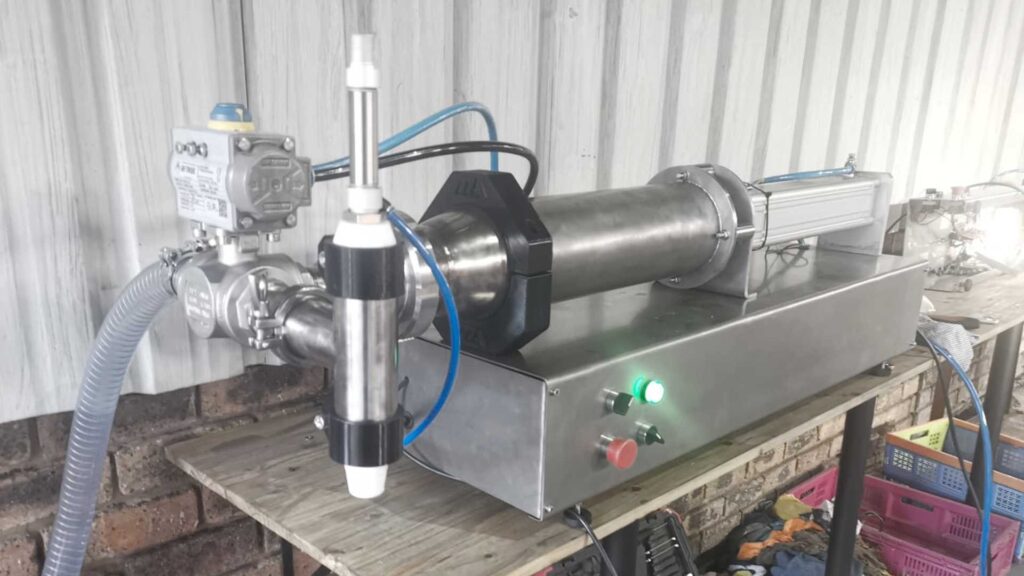
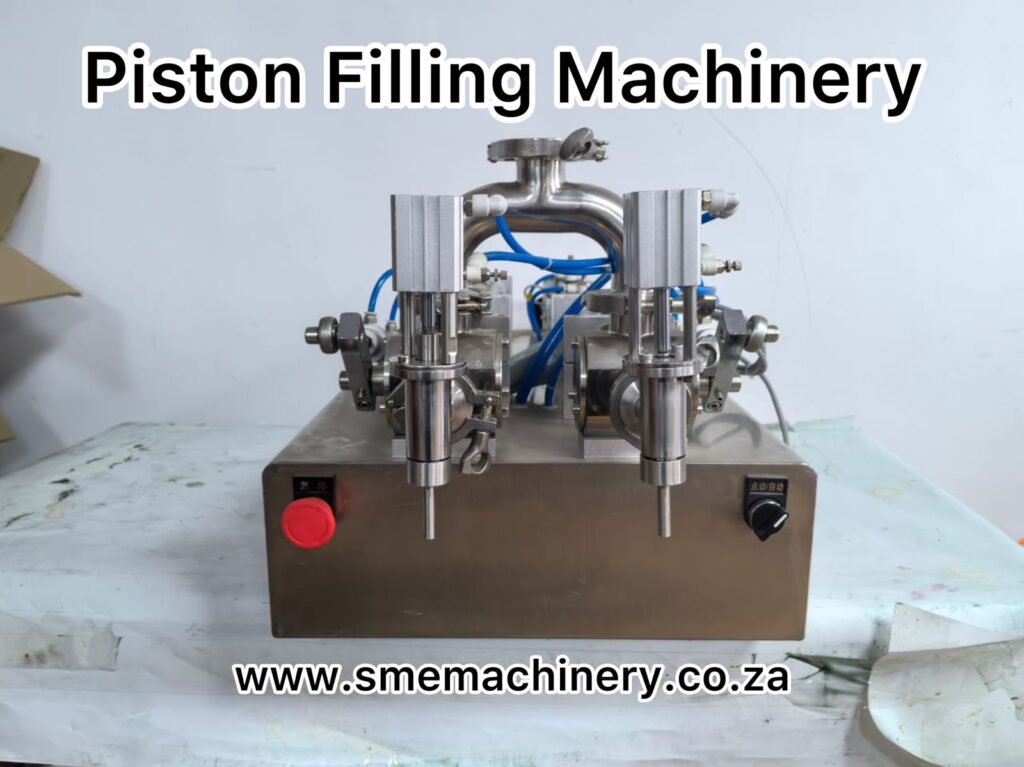
A piston filling machine uses a piston-driven system to draw product from a hopper or tank and dispense it into containers with exact volume control. This method is ideal for:
- Liquid products like juice, oil, and detergent.
- Viscous products such as peanut butter, creams, and pastes.
- Particulate products like salsa or sauces with chunks.
The piston’s stroke length determines the fill volume, ensuring consistent quantities for every container.
How Does It Work?
- Product Intake: The piston retracts, pulling product into the cylinder.
- Filling: The piston pushes forward, dispensing the product into the container.
- Cycle Repeat: The process continues automatically or semi-automatically depending on the model.
This straightforward yet highly effective mechanism ensures minimal wastage and accurate fills every time.
Benefits of Piston Filling Machinery
✅ High Accuracy: Consistent product volume for every fill.
✅ Versatility: Handles liquids, semi-liquids, and thick pastes.
✅ Hygienic Design: Suitable for food, cosmetic, and pharmaceutical standards.
✅ Cost Efficiency: Reduces product loss and speeds up production.
✅ Easy to Clean: Simple disassembly for maintenance.
Industries That Use Piston Fillers
- Food & Beverage: Sauces, dressings, honey, jams.
- Cosmetics: Lotions, creams, shampoos.
- Pharmaceuticals: Syrups, gels, ointments.
- Chemicals: Cleaning products, lubricants.
Choosing the Right Piston Filling Machine
When selecting a piston filler, consider:
- Product Viscosity: Thicker products require stronger pistons.
- Production Volume: Automatic models for high-speed lines; semi-automatic for small batches.
- Container Types: Bottles, jars, pouches.
- Cleaning Requirements: For products like food and pharmaceuticals, opt for stainless steel and easy-clean designs.
Maintenance & Care
- Regularly check seals and gaskets.
- Lubricate moving parts.
- Deep clean after every production run.
- Calibrate volume settings periodically.
Conclusion
Piston filling machinery is a smart investment for businesses that value speed, accuracy, and versatility in their packaging process. With the right equipment, you can streamline production, reduce costs, and maintain consistent product quality.